Congratulations to the New 2026 Board Members
A tight election for Board seats among an impressive slate of candidates vying for six volunteer leadership positions yielded the following results....
4 min read
William Wagner is the Berenfield Endowed Chair of Bioengineering and Distinguished Professor of Bioengineering, Surgery, and Chemical Engineering at the University of Pittsburgh. He is also the Founding Editor and Editor-in-Chief of one of the leading biomaterials journals, Acta Biomaterialia. He is now the 2026 recipient of the BMES Robert A. Pritzker Distinguished Lectureship Award,
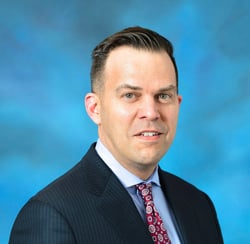 Wagner’s career has centered around casting a wide net, seeking to fully understand the impact of what biomedical engineers do. His passion for translating research into real-world solutions has placed him at the center of conversations across academia, industry, and clinical practice. This interdisciplinary approach is what has granted Wagner the 2026 BMES Robert A. Pritzker Distinguished Lectureship Award.
Each year, BMES bestows this prestigious award on an individual who has demonstrated impactful leadership and accomplishments in biomedical engineering science and practice.
Graciously, Wagner attributes the award to the many people who helped him reach this point in his career, noting that in 1991 he made the move from University of Texas to University of Pittsburgh where he felt the university was front lining clinical interactions.
“What was so opportune and impactful was the ability to get right in front of the problem, to be embraced by clinical colleagues and be treated by those senior surgical colleagues as one of their partners,” he said. “Obviously not doing surgery, but someone who can help them and collaborate with them on their problems. Engineers, we love problems, give us more problems, we want to try and understand.”
After joining the University of Pittsburgh, Wagner soon realized that his understanding of engineering and his connections to clinical practice were not the only areas he had to grasp.
“Solving clinical problems is not just applying one’s engineering background, but integrating the clinical background, and as I've learned over the years, the patient background and the commercialization and regulatory backgrounds, all these have to have their say and be considered as you try to develop a better option for the condition you're dealing with,” he said.
This sort of forward thinking led Wagner into several leadership roles, like serving as Director of the McGowan Institute for Regenerative Medicine at the University of Pittsburgh from 2012-2023. He also has recently served as president of the Society for Biomaterials (US) and is a past president of the American Society for Artificial Internal Organs (ASAIO) and past chairman of the Tissue Engineering and Regenerative Medicine International Society (TERMIS) Americas region. He is a fellow and former vice president of the American Institute for Medical and Biological Engineering (AIMBE) and has also been elected a fellow of the Biomedical Engineering Society (BMES), the International Union of Societies for Biomaterials Science and Engineering, TERMIS, the International Academy of Medical and Biological Engineering (IAMBE) and the American Heart Association.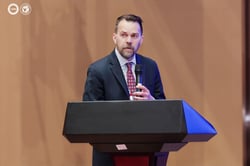
With more than 30 combined years of experience in leadership roles, several awards, and 64 issued patents worldwide, Wagner has learned to manage extracurricular responsibilities with his own research. Finding that while the journey may not have always been perfect, each opportunity allowed him to learn, grow, and adapt.
"When you engage as a leader with an array of individuals and resources, you learn things that help you with individual research projects,” he said. “Much of leadership is identifying and supporting individuals that can make a difference. However, in our profession, failure is much more common than not. Learn from the failures, recycle the efforts and remodify them so that they're better next time, for maybe even a similar or different problem.”
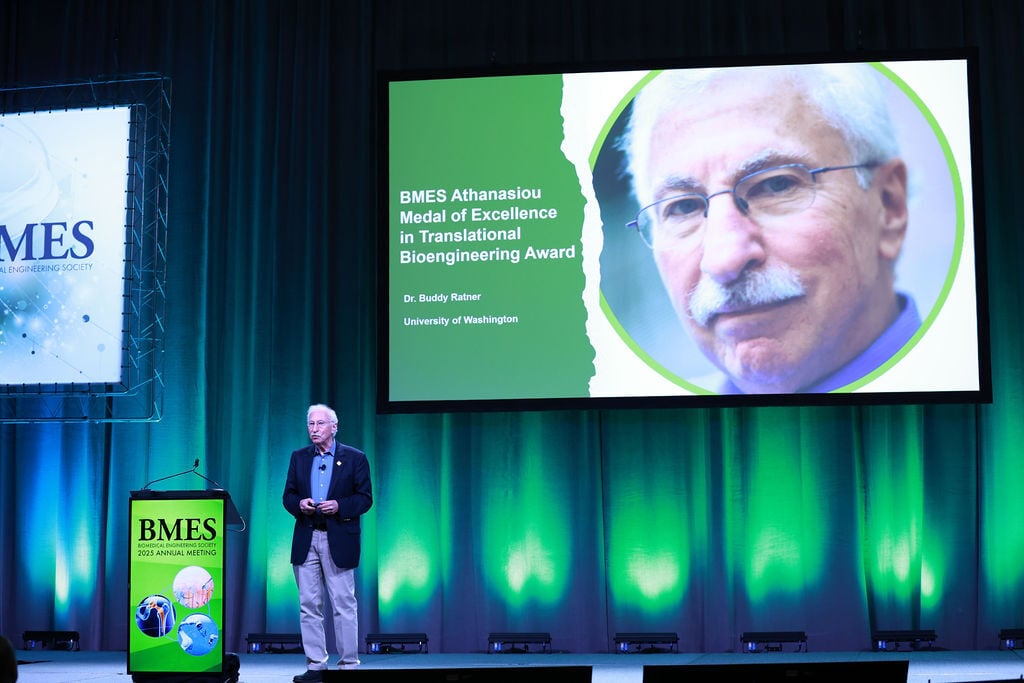
His roles and recognitions do not stop there, he also undertook the lead editor role of the 4th edition biomaterials textbook, “Biomaterials Science.” Handed off by Dr. Buddy Ratner, the BMES 2025 Athanasiou Medal of Excellence in Translational Bioengineering awardee and one of four founding editors of the textbook, Wagner also collaborated with BMES President Dr. Shelly Sakiyama-Elbert, Dr. Guigen Zhang, and Dr. Michael J. Yaszemski on the production and is currently working with partner editors on the 5th edition.
Collaborating on these textbooks allows Wagner to contribute to a broader legacy, creating resources students can return to as reference tools when solving future problems, something he frequently encourages them to do.
"Go back 25 years, grab a journal, your [the student’s] favorite journal, look at the reports, especially in biomaterials and biomedical engineering, and look at the last couple paragraphs where they predict how their research is going to ultimately have impact,” he said. And read article after article that does that, and then ask yourself, did any of them move forward as envisioned? And the number is so vanishingly small. And then the question becomes, ‘Why? What might have prevented their vision from being realized?”
His encouragement does not come blindly though. Wagner’s asked himself similar questions in cardiovascular engineering as he addresses medical device biocompatibility and design, biomaterial development, and tissue engineering. Utilizing unspoken guidance he learned during his tenure like “Be your own worst critic. Don’t share too soon, share when you’re happy with it;” “Don’t be in be intimidated by language, learn the terms;” and “Keep your eye open for unexpected opportunities and don’t be afraid to take a detour.”
All the advice he’s learned from his mentors and experience. While his work continues, he recalls a time when all his career experiences came to the forefront. When out with his family, he spotted an elderly gentleman wearing a battery pack for a ventricular assist device, which Wagner had a “small” role in developing.
“I said, ‘Excuse me, I don't want to disturb you, but do you mind if I ask, are you being supported by a HeartMate 2 ventricular assist device?’ And he said, 'Yes, I am.’ I asked him, ‘How's it going? What do you think?’ And he said, ‘Not everything’s great about it, but in general, I feel so much better than I did before I got the pump.’ I said, ‘Thanks so much. I appreciate you sharing that.’”
Wagner saw the broader picture; the impact of the technology he helped develop.
“To run into that randomly, to have my boys see it. We were worried about how the blood interacted with that device and verifying that it was relatively safe and then seeing that translate. I know 10s of 1000s of patients have been treated with that device, still to this day that encounter really hit home," Wagner said.
His career trajectory was not made by chance, but through steady growth, collaboration, and translation. Wagner attributes his legacy to integrating fully within the clinical environment, which allowed him to “go deep” and learn as much as he could, something he encourages students and early career engineers to do as well.
Dr. William Wagner will deliver his plenary lecture on Thursday, October 22 at the BMES 2026 Annual Meeting in Orlando, Florida. For more information on the conference, visit www.bmes.org/2026/annualmeeting
%20(2).png)
A tight election for Board seats among an impressive slate of candidates vying for six volunteer leadership positions yielded the following results....

BMES and the International Foundation for Ethical Research (IFER) are offering an opportunity for for high school and undergraduate students...
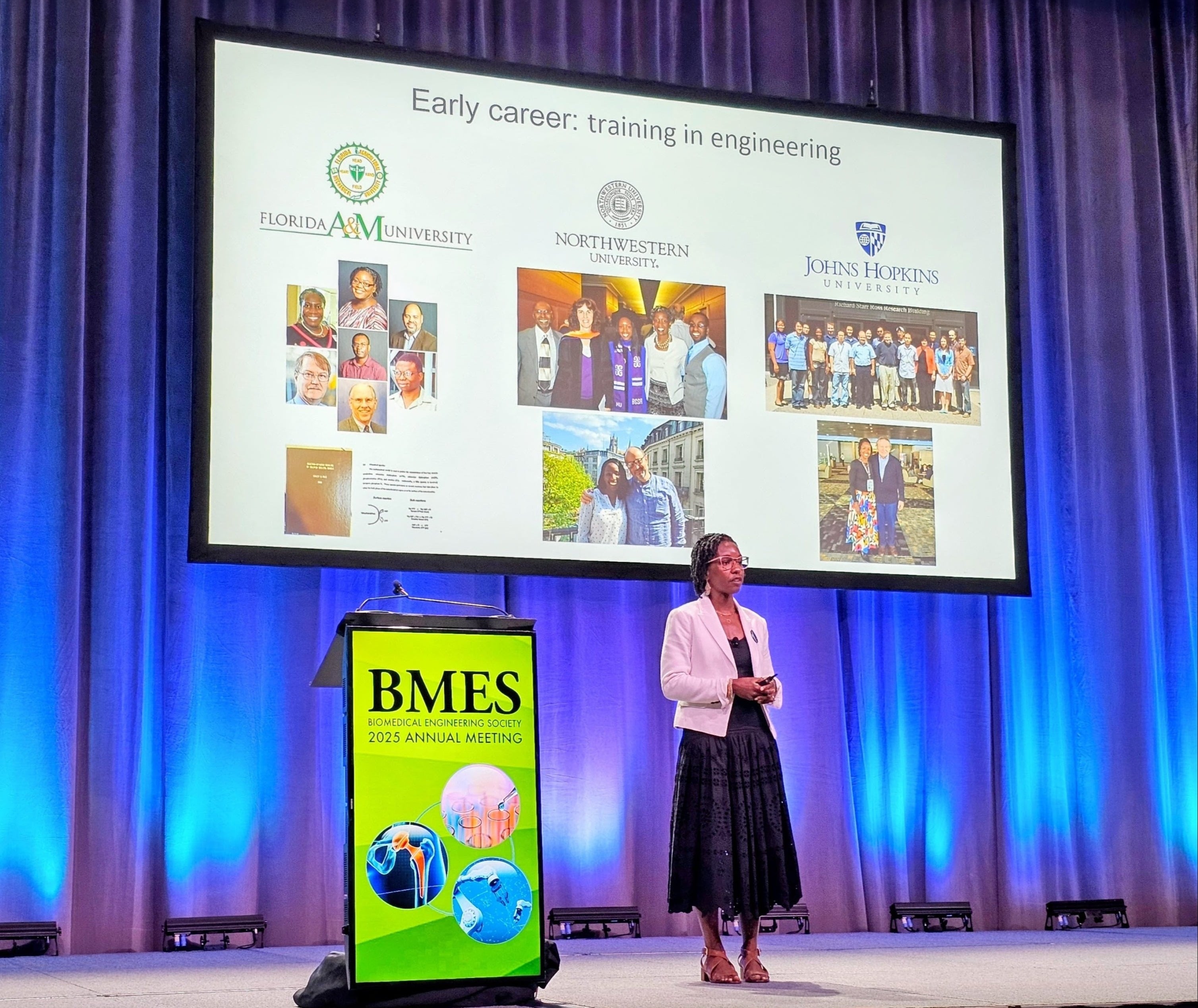
For Stacey Finley, PhD, Professor of Biomedical Engineering and Quantitative & Computational Biology and the inaugural holder of the Nicole A. and...

1 min read
BMES is proud to announce that Linda Griffith, PhD, is the recipient of the 2025 Robert A. Pritzker Distinguished Award Lecture.
1 min read
For Buddy Ratner, BMES Member and Professor of Bioengineering and Chemical Engineering at the University of Washington, translational bioengineering...