

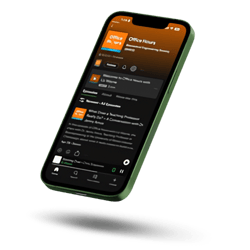
What does life really look like after earning a biomedical engineering degree? In this episode of Office Hours with Liz Wayne, she chats with Dr. Jose Rios Lizarraga, Director of Formulation Sciences at Nuvalent, to unpack the realities of building a career in the biopharmaceutical industry, from graduate school uncertainty to landing that first job and beyond.
Dr. Lizarraga shares how a single undergraduate course sparked his passion for drug delivery, leading him from research at MIT to a PhD at Cornell and ultimately into pharmaceutical development. Along the way, he shares the challenges of breaking into industry, the pressure of the job search, and the importance of learning how to translate academic experience into real-world impact.
Office Hours: Episode 9

What Comes After Graduation? Finding Your Path in Biomedical Engineering —
A Conversation with Dr. Jose Rios Lizarraga
Available on: .svg.png?width=39&height=39&name=Podcasts_(iOS).svg.png)

Podcast Addict | Podcast Index | And Other Podcast Players | Download the Episode
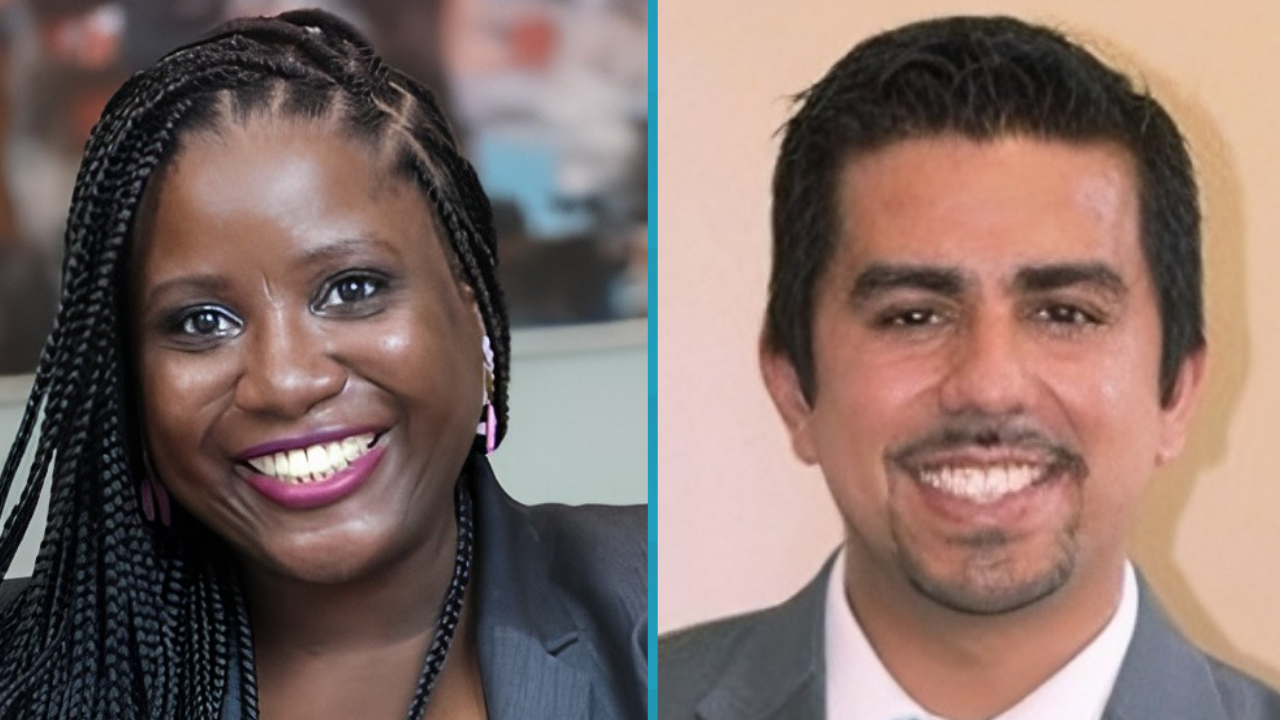
Dr. Liz Wayne, Office Hours Host & Assistant Professor at University of Washington; Dr. Jose Rios Lizarraga, this month's guest, Director of Formulation Sciences at Nuvalent
Episode Extras
-
Learn More About Dr. Jose Rios Lizarraga
Dr. Jose Rios Lizarraga was born in Mazatlan, Mexico and moved to Arizona at an early age. He attended Arizona State University where he earned a Bachelor's in Bioengineering. During his undergraduate studies he performed research at the Langer Lab at MIT as an Amgen Scholar. After earning his undergraduate degree, Jose went on to Cornell University where he completed a PhD in Biomedical Engineering. While at Cornell University, Jose’s research focus on the synthesis of new polymeric materials for the development of prolonged release formulations. After academia, Jose joined the biotech industry as a formulation scientist. He worked at Agios Pharmaceuticals and Lyndra Therapeutics. He is now at Nuvalent working in the development of oncology drugs. Jose is motivated to work hard every day by the impact that his work contributions have on the improvement of human health.
When not focus on work, Jose loves to travel and has been to many countries. He has traveled internationally both for personal reasons and business. The more that he travels, the more he believes that we are more alike than different and hopes everyone could have the opportunity to travel and experience other cultures.
-
Read the Transcript
Introduction
Hi everyone, and welcome to the office hours with Liz Wayne, a brand-new podcast brought to you by the Biomedical Engineering Society. I'm Liz, an assistant professor in bioengineering, and I'm going to introduce you to the world of biomedical engineering through my eyes or my voice. From genes to machines, biomedical engineers can do it all. We'll dive into how discoveries are made, how research becomes medicine, and what it's actually like working in academia today. So, whether you're a student, researcher, educator, or just someone who is curious about science and how the academic world works, you’ve come to the right place.
Liz Wayne
Welcome back to the podcast. You know, it dawned on me recently that I'm no longer a new graduate, and I feel like I'm always still learning, but I've come a long way, but I haven't just graduated anymore. But I look at my students, both in my research lab and in the classroom, and I see how nervous they are. I see the existential “what am I going to do after I graduate?” kind of crisis that happens, the excitement and the fear about grad school, or “I'm absolutely never going to grad school”, but now you're worried about the job market, and the uncertainty is enough that even the most confident person can blink. So, this Office Hours, I thought I'd bring on someone who is also not a new graduate and talk about how they find their way after getting a biomedical engineering degree. Welcome to the podcast. Dr. José Rios Lizarraga. Hi, José.
José Rios Lizarraga
Hi, Liz. Dr, Wayne, how are you?
Liz
Dr, Wayne, okay, we don't have to “doctor” anymore. How are you doing today?
José
I'm doing good. Thanks for inviting me. That is very true about not being a new graduate. I definitely remember going through and assessing my professional career. And when I first finished school and I started a job in industry, I would think myself as a young professional. And now I think, Oh, I have caught myself recently where I'm just that professional, now. [Laughs]
Liz
Yeah, what is happening? Did we really make it? Did we? I don't know, yeah, let's talk about that later, about this feeling of like, how we actually made it. What does it really feel like to make it? But right now, you have this awesome, amazing career in pharmaceutical development, and when I first met you, you were a grad student making polymers. So, why don't we start there and tell me how you first got interested in this field at all in science.
José
Yeah, definitely. So, when I first started thinking about my higher education and going to university, I always gravitated towards the sciences. At some point I decided, oh, I want to do engineering because I wanted to also have career prospects outside academia. At least, that's how I used to think back then. And when I started looking into the different engineering careers, bioengineering really caught my attention. I wanted to use a kind of science for human healthcare overall, and initially I was more interested in, like medical devices and that area of the field, so more on the electrical engineering side.
Liz
Like prosthetics, or something?
José
Like prosthetics, or even like implants, pacemakers and so on. But I ended up taking a class, which it was even an elective class called polymeric drug delivery as an undergrad. And that's when I kind of got introduced into this whole world of pharmaceutical formulations and drug delivery sciences. And he really piqued my interest I love doing things like pharmacokinetic compartment models and kind of trying to model how the release kinetics of a drug would impact how it gets distributed in the body, etc. So after taking that class, I started looking into that field. I was able to apply to summer research experiences. And I had a dream lab that I wanted to do one of this, which was the Langer lab at MIT.
Liz
Oh, that's a big dream, yeah.
José
Which is kind of like the forefather of all these delivery sciences. And, you know, I was able to get into a program called Amgen Scholars program that they kind of funded all of this as an undergrad. So, I was able to go to MIT for one summer, do some research at the Langer lab, under the direction of a postdoc there, and that's basically where I started learning polymer chemistry and taking, you know, all of these things that I just read about that I knew in theory and putting them into practice, and kind of seeing the more practical way of sciences, where, like in the paper, everything is very beautiful and put together, but now I can see how much work it takes to get there when I try the same reaction, you know, several times, and it keeps oxidizing just because I'm not purging enough with an inner cast, or have good enough seals, so you start troubleshooting all of these little technical things in the experiments. But anyways, that summer internship kind of set me in the path for a PhD program after the fact.
Liz
Yeah, and I'm really curious that you mentioned Langer lab. As an undergrad, how did you know that Langer was, like, the place to be? I mean, he obviously is. He's the godfather of biomedical engineering, basically.
José
I don't know if I exactly remember how. I want to say that it was because there were two things about it. I think one of them was that in the polymeric drug delivery class that I took, we spent a good amount of time looking at POGA as a polymer and release out of POGA. And one of the citations from the textbook was a paper from the Langer lab.
Liz
I see, okay, okay.
José
When I first kind of searched it up, and then I started noticing, oh, this guy, you know, this is the Big Shot in the field.
Liz
Yeah, okay, that's fair.
José
And then there was a Nature paper at some point, it was just a fun paper, like a fun article. It was a day in the lab of Bob Langer or something like that. [Both laugh]
It takes you from- he's waking up, to running two miles while reading papers on his treadmill. It's like an insane day. And as a young scientist, that made a big impact on me. So I was like, who is this man? I want to meet him.
Liz
No, I like that. And, you know, I think maybe people aren't reading, okay, people are still reading Nature papers, that will never go away. But maybe someone listened this podcast and go, “Man, I just heard like this, this guy named José, and he just really did some amazing like polymer work. And I'm gonna, this is what I'm gonna be.” That's pretty awesome. So you got your interest in polymers, and you're like, I really want to not oxidize things anymore, and I want to work hard and figure out how to make these polymers and make better drugs. And you got into Cornell graduate school, which is also a high, a pinnacle, like a really good achievement to get into grad school. Did I actually never, don't think I've ever asked you this. Why did you choose Cornell?
José
Yeah, so, I mean, I think the answer is going to be quite simple. PhD programs are quite competitive, you know, so I did work really hard in my applications. I took the GREs, I don't know if they're that important anymore, and out of all the programs that I got into, Cornell offered me really good funding at the time. So, they gave me a really good fellowship. Their BME program was quite new at the time, so it had a fancy new building. And, yeah, it was also the prestige of Cornell that I thought, like, it would be really cool to go there. Yeah, it was- that was kind of the main drivers. I know some people, when they do this decision, they already have a dream lab to work in or something similar. Me, personally, I did not have that at the time, like I had an idea, but it wasn't fully formed in my head. I was kind of still open to change and evolving, etc., and I ended up doing the same type of work in grad school, but it happened, you know, that way.
Liz
And so, what did you think your career would look like, I guess after graduation, but while you were in school, what did you think? Were you thinking you go to industry? Were you thinking maybe a professor route?
José
I was really open to both academia and industry, but I always leaned a little bit more towards industry. That was a little bit kind of where my main interest lied. And, you know, I wanted to- being from an engineering department in undergrad too. I did get a lot of exposure to engineers in industry and their product development, and while they don't really get the fame, because when you think of a product, you think of the company that launched it, right? But, you know, they do become authors in those patterns. And just kind of, they know the nitty gritty inside of the development cycle of certain products that have really high impact. So, like, I just found that really, really interesting, and that's kind of why I was more leaning towards the Industry side.
Liz
You know, I like that you mentioned that there's so much impact that happens in ways that you can make your skills and make a difference. And yeah, the engineers, the unspoken heroes, the ones who make the patents, but aren't really the big names. And so, you talk about how you made your decision, and then talking to you is even bringing me back to graduate school. I remember that starting graduate school, people would say, “Okay, well, you know, like, it's easy to get a job in industry, just, you know, you can have a paper, then all of a sudden, boom, you've got, like, a six figure job, no problem.” And then it felt like when it was our time to graduate, that was not the case. It just didn't feel easy. And it was like, wait, you need papers now, How many papers? How competitive is this? And it was really nerve-wracking. Can you talk about that?
José
Yeah, it is not easy.
Liz
Yeah, with a Cornell degree, that was the other thing too.
José
Because I think at least for me, you know, when you're young and you don’t think a lot. [Both laugh]
You're young, and you think you know a lot, and then you learn more. But the more you learn, the more you realize you don't know. It was a little bit of that going on with me. You know, I thought I was doing all these really cool things in grad school, which I still think I was, I was doing really cool things, you know, I really liked the work that I did, but it was learning to make that transition of when you're applying to an industry job, the people doing the hiring may agree. Like, yes, you do the really cool work. Like, it's really interesting, you know, but they are not hiring you to do the same type of work exactly, per se, right? So, then it takes a lot of thought and skill on how to take that work and take the skills that you develop to make your PhD happen and those publications happen and present it in a way that matches the type of career you want to do, you know? And sometimes it's taking it in a way that matches, or the particular job description for a particular type of job that you want to apply for. So it is not easy. It's not like, just because you have a PhD, the jobs are going to be lined up for you. You still have to market yourself.
Liz
And just because you have a Cornell PhD or a PhD from some really top tier institution, also doesn't mean that you will get some sort of advantage or, you know, this job offer. And I think that was an important distinction as well. And so, you had to figure out how to repackage all these things that you thought were, and were, really great, and think about what the job market wanted and what companies were asking for. And then sometimes, I'm imagining that those were things that I'm just repackaging. Were there ever times where it was like, Oh, wait, I'm actually not what they're looking for, but I want to be?
José
Yes, yes. I think so. Some of these were more for training programs, which really big companies might have. This was, this particular one was for BD [Becton, Dickinson and Company] So, it's kind of like a leadership program they run within BD, where they look for, they actually look for PhDs, and then they take you to different parts of the organization for a period of a year, something like that. Like, three months here, three months there, or it might be three or four rotations. And then they place you somewhere that is within your interest. So that's one where, you know, my skills didn't exactly match BD, per se, but kind of- my experience combined with one other training programs could get me there. I think I was a competitive candidate for them. This was kind of at the beginning of my, interviewing, getting experience, interviewing for these types of professional jobs, and looking back at it, I think I botched the interview a little bit, but that speaks to how important that is as well, like getting that interview practice, because now also being at on the other side, being part of hiring committees or interviewing people, sometimes, you know, one extra sentence that the person- you are loving everything the candidate is saying, and then just that one extra sentence gives you doubt.
Liz
Oh, I know what you mean.
José
And that's kind of like what I did back then. You know, I should have stayed quiet and learned to sit with that silence. You know?
Liz
I know. I know what you're talking about. I'm thinking of some things right now. You know, I also remember at this time, you got an offer, but it wasn't what you wanted and you kind of held out.
José
Yeah, that is right, I did get an offer.
Liz
And that was very stressful for you.
José
It was very stressful because I almost took it, and it wasn't exactly what I wanted, and geographically wasn't in a place that made sense for me. But at the same time, just because it wasn't easy to get an offer and get there, it was really hard to just decide to reject it, you know, right? Because of the uncertainty that if you reject it, like, you don't know if something better is coming, right?
Liz
And at this point, I think it was also- you know, the other thing to add here is that six months to a year is how long it can take to get a job. And so, sometimes it even takes longer than that, and so that timeframe really makes the anxiety get higher.
José
Yeah, it's definitely that first, that first job after graduation can be quite difficult to get. But now, like when I look back at me rejecting that offer that was like, the best decision I could have made. Yes, it took me another couple of months, I think, one or two months, to get the offer of the job that I ended up taking. But the job that I took, it just, like, set me up really well to, like, develop and make a career in the biopharmaceutical industry, where, if I would have taken this other job, it would have really restricted my future growth potential.
Liz
Ooh, that is interesting. Let's talk about your first job that you got. Is it okay to talk about your role and what you did?
José
Yeah, definitely. So, the first job that I got after finishing my PhD was as a formulation scientist in a company in the Cambridge area called Agios and I was a formulation scientist there. Now I was doing a very different type of work. Where, for my PhD, I was synthesizing polymers for the control release of proteins, here I was more formulating small molecule drugs, so a different type of drug, essentially right, small molecule drugs. And I was not synthesizing new materials from scratch. I was formulating with GRAS excipients, which they are Generally Recognized as Safe[GRAS] excipients. and starting to learn this whole area, product development side of the formulation sciences space. So within this job, I sort of learned the ropes of drug product development in an industry setting, and also learned about kind of the virtual model of drug product development, where some of the work gets done in house, like in an in house lab within the company and all that, but a lot of the work gets also done outside. So, outsourced to what we call CROs or CMOS, which are Contract Research Organizations or Contract Manufacturing Organizations. So, when we contract, this workout is not that we just sign the contract and wash our hands. No, you're very much still part of the technical input into the project. It's just kind of like the execution capabilities lie within the contracting organization, on equipment or resources that you might not have in house.
So that's where you start learning some management skills here. So it's kind of like when you're a PI, you manage a lab, and you're not day-to-day in the lab, executing the experiments, a little bit like that. where you are, like managing the team, executing the experiments, writing or reviewing the protocols, but they are the ones that execute the experiments and gather the data. So, the reason this was kind of pivotal for my career at the time is that it just gave me a lot of exposure into the into the pharmaceutical field, and it also put me in a place where I was able to actually take a product and carry it all through the development cycle, and get some experience writing like NDA application to the FDA and all of that. So, it just set me up on a really good path.
Liz
I see. You were able to take a drug and go from phase one to, let's say, phase three, or submitting that application to the FDA to where it might actually see patients.
José
Exactly. Yeah, the first drug I worked in is actually already approved by the FDA, so it's already in patients.
Liz
Yeah, and I remember those because we were taking these different paths, you were going to industry, and then I had decided to go into a postdoc, which was deflating for me in some sense, because I had imagined, or let's say, my parents had imagined that you're graduating with a PhD, surely now you're going to make a lot of money. [both laugh]
And I'm like, Oh, I'm not that kind of doctor. And in fact, I have a PhD, and I'm going to make $40,000.
And so I remember thinking Oh, I'm in a basement doing this work. And then, you know, José is going to Switzerland, going to Germany, going to these different places where the clinical trials were happening. I was happy for you. I wasn't jealous, like I actually enjoyed being in the basement. I enjoyed what I was doing. But it was, like, really interesting and hopeful to see that juxtaposition. Part of what you're talking about too, though, I'm curious. You mentioned, big companies and then small companies, and I think this kind of midsize companies, allowed you to have a lot of ability to see those different stages, right? And to learn.
José
yeah, so, just to put like a pinpoint on what you just said, I was also looking at you giving TED Talks and- [Both laugh]
Liz
What? Oh, my goodness. Okay.
José
And I was also thinking, oh, wow, Liz is doing so amazing, you know, like, she gets recognized in all these places. So, like, similar to what you were thinking at the time, but about me. So it's funny that you always kind of see these things different.
[Music Break]
Liz
I asked if the type of company you went to made a difference, like the size of the company, in terms of your ability to see all of the different aspects that you mentioned.
José
Yeah. So, what I've seen is that, and this is talking about what we call innovator companies, like companies that are developing new drugs, and not generics, right? What I have seen is that for the very large companies, you might work on many drugs, but only on like a particular section of the development pipeline. So, you might be working in pre-formulations only. So, you are like formulating all these drugs to help do the preclinical studies in animal models. And you might see a lot of compounds that way, but the moment they decide to nominate one of those drugs as a drug candidate to develop for clinical studies, then you are not doing the formulation for the phase one clinical studies, right? So you only see like particular sections, or you might be working only in the validation or commercial side, which is the last part of the pharmaceutical pipeline, and in this point now, you are more working in quality and routine manufacturing and making sure you know you are manufacturing and having enough supply for patients, but you don't see a lot of the development part of it, right? Because you already received this kind of developed formulation and you're more managing routine manufacturing. But in a small company, they don't have a lot of development assets, right? They don't have a lot of molecules that they're developing. So, you might start working as the drug product or formulations person on one particular molecule that has a lot of potential, but you will be able to carry that through the development stages, right? So you might start working on it right, as they're going to go into when they make it like a drug candidate, and you have to develop the formulation for what we call GLP [Good Laboratory Practice] tax, which is like the toxicity studies before you go into humans, and then develop the first in human formulation, and then keep developing the process through phase two and phase three, to where it's already a robust process that you could tell the FDA in the quality module of the application that you are able to manufacture this drug, the quality that is needed to be commercial medicine.
Liz
Yeah, I think this is also relevant for people who are coming on the market now and thinking about the landscape of their first job. What would you say is similar between the market when you first started versus now for someone first starting out?
José
Yeah, similar. I think that, like the scientific principles are going to be pretty similar. You know, there's always kind of a set of very fundamental core principles to different types of science-y jobs. I remember, even though I had this really cool seminar when I was presenting most of my PhD work, when I was interviewing at companies, in a lot of the one-on-one interviews with technical people, a lot of the questions that came up were from fundamental Pharmaceutical Sciences, so like crystal lattice polymers, pKa, pH dependent, solubility, you know? Very fundamental core things, and they ended up being just as important as more advanced chemistry stuff that I was presenting, even though that's probably the first three to five lectures of a Pharmaceutical Sciences course.
Liz
Yeah, so being an expert in your discipline is still very, very important, and I think even more so than people might think, because people in industry want to know that you know what you're doing. And the things that matter aren't always the things that get highlighted in academia where you do it once and it worked once, it's fine. But reproducibility or robustness are things that matter longer term. When the pandemic happened, there was like an influx of jobs or openings in positions. And I remember, you know, as a faculty, people were just like, “oh, I don't need to do this. I'm going to go straight to industry, and I'm going to make a lot of money, and I don't need academia.” And then I think there seems to be a closing that's happening, because now all those jobs that were seen to be in excess are shrinking, or people are getting laid off. And the way that the markets, or what demand is happening and funding situations change, seem to affect graduates. And I think that always seems to happen. It's just about when you're hitting the market,
José
Yeah, it's cyclic. Sometimes when you start looking for jobs that you will find a lot of jobs that match what you want to do and your background, and sometimes it will be less, like right now, it's a little bit the Hallmark, the job marketing, Pharma has cooled down a bit. And there's been layoffs in the industry. There's definitely a cycle there, yeah.
Liz
And maybe the advice here is to stay motivated, stay aware to know what these cycles are. But I'm thinking about something. So, getting that first job, hard. There's a lot of conversations about it, at least, or I think media focus and attention on that first job. What's the market like for the first job? And then it feels like it just drops off. And so, what happens when you're thinking about your second job and different changes in roles. How has a journey of figuring out what job you want changed over time? Because you're not the same company anymore.
José
Yeah, I think after that first job you gain some confidence, because now you’ve seen the inside on what it’s like to work in industry. And then you gain some expertise that you're able to sort of translate, like one to one, to the new job description, where, as a student, coming out of a PhD, you're still trying to build those bridges to market these skills in a way that match these particular requirements, even though I haven't done that exactly. But after the first job, you see like a bullet point in the job description, and you say I did that exactly. It gives you some confidence to match that if you want to keep going within that particular type of field of work that you got in your first job.
Liz
So, you get better at picking the jobs, because now you've got the bullet points, and they're really more directly accessible to you, like one to one. I know what's happening. I know the landscape, yeah. But then there's also no real guidelines. And what I mean by that is, let's say in grad school or undergrad, even, there's a curriculum. If you've done X things, it's time to move on to the next course or the next degree. And now this is no guidelines on how to know when it's time to leave or what to do. How do you find mentorship, or how do you even decide when it's time to change, and how to make those kind of pivots?
José
It gets a lot messier, because it's a lot of personal choice. Sometimes those changes come to you without you looking for them. Let's say that there was a layoff or something like that. At the time I had reached these kinds of pivotal milestones within my current job. You know, worked on an NDA that was submitted to the FDA, a drug that was getting approved, and all that. And I basically got recruited by another company with an attractive job offer. At the time, it did not require a relocation. And I was also in a life stage where this was kind of a riskier job, but I could still manage that risk, and it was kind of coming back to sort of more working with polymers and whatnot in a different way. So I did end up taking that job. I basically was, you know, recruited. It actually ended up not working out that well, I was there for about 10 months.
Liz
What happened?
José
After a few months there, I thought, well, this is not the work environment I want to be in. It wasn't a very good match. So, you know, I started producing job listings, started looking, and I found the current opportunity, which is the job that I'm at now. And I reached out and I got an interview and got an offer and decided to leave. So, the first time, I made the switch was because what I thought was an attractive offer came up to me and I was approached and recruited for it. The second time I was in a work environment that I didn't think worked very well with myself, so I decided to make that switch. But as the more you grow in your career, and if you make a family and start settling in, in a place geographically, and so on, then all of those things start influencing your decisions. Just because someone approaches you with a bigger salary and a higher job title, it might not make sense for you to make that move at the time, you know? So it does become a very personal decision.
Liz
And speaking of not new graduate, I think what's been settling in on me as I think about, “wow, I've really changed. I've really grown,” is that I feel more like it's okay to have life decisions and personal life be a factor in where I go next and what I do or don't do, and it's more okay to have all those in balance or choosing things that may not always be bigger/best or bigger/best also means that I'm happy or in a space that I enjoy.
José
Yeah, it's like whatever is the bigger/best for you? What is going to be the bigger/best when you put it on paper and show it to someone else, right?
Liz
Yeah, and I would say early on that it was bigger/best. It just wasn't defined for me yet. And so, then I was just kind of going for things, or trying things and like, I want to be the best. What does that mean? Well, you know, what does that mean actually? You know, that's the real answer. But it is so interesting to think about life after graduation, and the conversations we have, and how you are growing and what you want changes. And I like how you said, this just wasn't a match for me. Sometimes, you know that one line that people say, sometimes that one line is something that like trashes people or trashes situations, and kind of doesn't really highlight what's really happening in a way that makes people not question. I mean, I don't know what your situation was. I'm just thinking about sometimes, being able to understand that I cannot want something, but something can also be okay for other people, but that's not for me.
José
Yeah, exactly. And then you're going to be more happy with your own decisions. You also gain that confidence, you know, gain the confidence to say this is what's best for me or what's best for my family and you take that decision with confidence.
[Music Break]
Liz
I'm going to ask you an age-old question. So do you think a biomedical engineering degree prepared you for this career that you're having?
José
Yes, at the graduate level, that's what I would say for that first job. The school that you go to does matter, because it catches people's attention. You know, when you see a resume and it says MIT there, like, it's going to cut to your attention and you going to read it, but it only opens the door. It's still up to you to walk through it. I did my undergrad in bioengineering at ASU, and I did gain a lot of engineering technical skills. I think with the undergrad alone it would have been hard to get into the industry, at least the way that particular degree was structured at the time, because you had to fit all the anatomy and physiology and all of that into the curriculum. You didn't get as much depth into electrical engineering, or mechanical engineering, or chemical engineering, even though you studied all those fields. So in the undergrad sense, it was kind of hard to compete. Let's say like, for example, a company like Medtronic, even though they make medical devices, a lot of times they would lean for the person that has the electrical engineering undergrad, over the- let's say the bioengineering undergrad degree, even if they had a concentration on the electrical. That's something I found out after the fact, that I wish someone did tell me. But on the graduate level, when you get to specialize more in a particular area or field, then I think that's where it does prepare you for these jobs in industry. That was my experience.
Liz
Thank you for saying that. And I will say even at the graduate level, I remembered being on the market, and when people would say what degree they want, they would not always say biomedical engineering, even though the things they were talking about were things that I did in my experience. And this was for me, when I was looking at immunoengineering or immunotherapies, and they either wanted an immunology PhD or, like some biology PhD. And occasionally I would find someone says biomedical engineering and where it applies. And I remember for a second feeling like, Man, I have this BME PhD. People don't know what it is, what's happening, and I have to sell myself harder than if I just had the degree that they listed. And I think that kind of happened for a lot of people. And you know, we figured it out. We figured out how to- kind of how you were saying before, José. You have to figure out how to make your skill set match what they're talking about. You have to be more explicit in saying, you know, my PhD is in biomedical engineering, but hey, I've done a lot of immunology, and so check out this paper and look at the things I've done here. Or, you know, my advisor is an immunologist, for example, or something else. You had to have those deeper connections, yeah? And you had to make sure they were explicit, because a degree alone wouldn't tell you that. And that was true even at the PhD level.
José
Yeah. That's why, when I mentioned my interviews, I was interviewing with a degree in Biomedical Engineering, but you know, I did a lot of crafting on my resume with a lot of outside feedback. A lot of outside feedback to sort of get it to match the formulation scientist job that I was seeking.
Liz
What were some of the feedbacks you got for people who might be looking for advice or things to do, in this case?
José
Sometimes less is more. You know, all of the background behind your work, and you want to really explain it, but really, just one bullet point of this particular study is going to fit the job description much better, so you stick with that bullet point and leave the rest for the interview. That was some of the feedback there that I got from other people. And the other thing that I wanted to say was how I mentioned those very fundamental questions on pharmaceutical sciences that everyone would ask me, from the technical interviews. So that was like a thing if you get a degree in pharmaceutical sciences, right? That's what you would know. And there's a lot of people in my field whose degree and PhDs in pharmaceutical sciences, so you had to prove yourself against that too, you know. So that's why it was really important to know the very fundamentals. But one thing that I would say is that, because we also do a lot of process development and they work with a lot of manufacturing machines, the engineering background ended up becoming very useful and impactful. All the science works really beautifully on paper. When you're out on site manufacturing, you're going to control a lot of challenges, and the engineering background has been very useful in sort of troubleshooting a lot of things, and bringing, a new perspective into this kind of Pharmaceutical Sciences work.
Liz
That's interesting, and I'm glad you said that. It made me think about two different things. So I don’t know if you remember, but I did my undergrad in physics, and then I went to biomedical engineering, and one of the consequences of that is that I didn't take those undergrad engineering courses, like any engineering courses. And I would always ask, you know, what is engineering? Because it feels like physics, and what's the real difference here? And people would say, well, engineering is just better. Like, okay, yes, engineers are cool. I'm just- I'm not trying to say they're not. Your building is super fancy and mine is from World War Two. You know, it's like, no women's restrooms in them whatsoever, because women weren't in physics. [both laugh] No, really, there were urinals in... anyway, you get it.
You know, the odds are good and goods are odd. So, engineering here, what we mean is the ability to design and model systems and to optimize the process of designing that, right? And I think that engineering skill set, I think it's interesting, because by the time something's fully engineered, it's just a tool that other fields use. But then that process of when the tool isn't automated yet, that is engineering, and it can be hard for people to conceptualize what that means, especially when you're around it all the time, and someone says, “Well, what is engineering?” I don't know. And then you leave and “Oh, I was doing engineering”, and they were doing science. But also, so when you were talking about this, you were talking about your resume, and maybe even highlighting, for instance, if they're all Pharmaceutical Sciences PhDs, and I'm biomedical engineering and they don't know what that means, I have to highlight that I actually do know formulation. So, what were some ways you did that? What you did to highlight that you do formulation, that you were going to be as qualified as a pharmaceutical sciences PhDs?
José
So, like I said, because you know your PhD work very detailed, because you know so much about it, and just because you know so much about it, you can just talk about it endlessly, right? But in the resume itself, the goal of the resume is to get the interview. So that's why it was a lot of summarizing all of this into just like the most fundamental part, like a particular experiment or a particular project, just summarize it fully and try to match what you know the job description is, and then if there were also kind of minors within your graduate field, or something like that, like highlighting those, I remember for our PhD program, we had to have two minors, that type of thing. And because we just took the courses, and it seemed like we didn't do anything more, but take the courses, you don't really think about it, but putting them on the resume was actually important, to be able to put Pharmaceutical Sciences and chemical engineering there, you know, something that kind of highlights some of that. And then some of the skills are very simple, like statistics, and so make sure you highlight you had the statistics training and so on.
Liz
Those are good points. Thank you. So, I'm going to ask you maybe two more questions before we wrap up today. And I'm kind of thinking about who you are. Now, we've done a lot of talking about your progression, and the way you thought about things. And I'm really curious how you define success at this stage of your career. I think we're solidly mid-career, I would say, now. Where you're not new, but you're also not old yet in the career. And there's a lot of changes, and you're still navigating change too. What does success look like for you?
José
I think it really looks like working in something that you feel passionate about and that you feel like your work matters. I've gotten better at stepping back and looking at my work like from the outside and being like, oh, is this important or not? And I'm like, Oh, it is important. And I feel so lucky to be able to do this, this type of work that is having an impact in patients’ lives. So yes, being able to get to that point, I think I would define that as being kind of success and professional development.
Liz
And I'm going to ask a follow up question, why is it so important for you for the success to be making a difference?
José
I think it just helps one stay motivated, because sometimes it can be dry, very dry work. It can be reviewing a technical document that's very dry language, not like, not the most fun, you know.
Liz
Not a Ted Talk. [Both laugh]
José
So it's kind of like yes, it helps get through some of the grant work. You know, at the end point this is helping people live. That's why, you know. And another thing that I really like about the sciences overall in this field is how international it is, and how because of it, I've gotten to work with people all over the world, in different continents. And not only do you have a lot of like scientific discussions and a lot of technical sharing, solving these problems together, just because of those continued interactions, inevitably you end up having some cultural exchange as well. So, you end up learning about different cultures and the more you learn about different cultures and costumes, the more you find out we are more alike than not. And that has been, like, really impactful in my own life, and just the way I see things overall.
Liz
It’s very fulfilling. It makes it all worth it. And you need those moments where everything feels all worth it, like you're saying, for the moments when this does not feel worth it. [Both laugh]
José
Yes, exactly.
Liz
Thank you so much. This was a great interview. I'm so excited. Always happy to talk to you again. This was Dr José Rios Lizarraga, and catch you next time.
José
Yes, thank you, Liz. Bye.
[Outro music]
If you have questions or ideas for a future episode, feel free to email us at communications@bmes.org
you can also stay up to date by following us on social media at BMESSociety and visiting our website at BMES.org/podcast/office hours. We look forward to hearing from you and hopefully featuring one of you on the podcast.
-
Want to Advertise with Us?
Reach our growing community of biomedical engineers, researchers, and students by becoming a podcast sponsor. For advertising inquiries, email us at communications@bmes.org.
Share Your Thoughts!
Have questions, comments, or great ideas for the show? We'd love to hear from you! Contact the BMES team at communications@bmes.org.