

What does it take to build a human organ, and how can biomedical engineering help close critical gaps in women’s health research? In this episode of Office Hours with Liz Wayne, Dr. Kayla Wolf, Assistant Professor of biomedical engineering at Cornell University, explores how tissue engineering, mechanobiology, organoids, and bioprinting are advancing our understanding of kidney function and women’s reproductive health. The conversation dives into the surprising similarities between the kidney and uterus, the challenges of modeling human tissues, and Cornell’s Menopause Health Engineering Initiative. Dr. Wolf highlights the importance of studying women’s health beyond reproduction, exploring how menopause influences health across the lifespan and where biomedical engineers can make a meaningful impact. She also shares her journey into biomedical engineering and advice for the next generation of researchers.
Office Hours: Episode 16
Building Better Organs: Advancing Kidney and Women’s Health — A Conversation with Dr. Kayla Wolf
.png?width=1280&height=720&name=v2_Wolf_1200%20x%20627%20px%20(1).png)
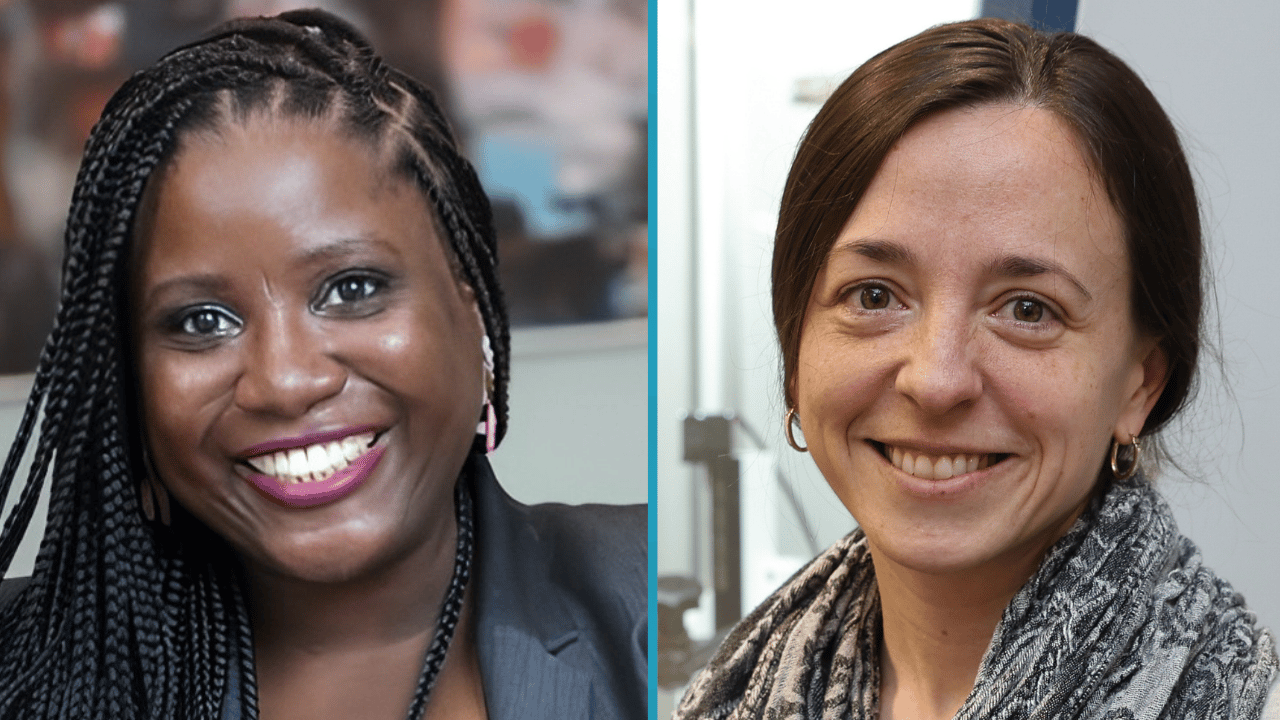
Dr. Liz Wayne, Office Hours Host & Assistant Professor at University of Washington; Dr. Kayla Wolf, this month's guest, Assistant Professor at Cornell University
Episode Extras
-
Learn More About Dr. Kayla Wolf
Dr. Kayla Wolf is an assistant professor in biomedical engineering at the Meinig School. Her laboratory is addressing clinical needs in kidney and gynecologic health by engineering tissues on-chip and investigating biophysical forces that direct tissue function. Previously, she was an NIH Ruth L. Kirschstein NRSA Postdoctoral Fellow in Dr. Jennifer Lewis’s laboratory at Harvard University, where she has developed a stem cell-derived perfusable kidney collecting duct on-chip that can be used for disease modeling or embedded within biomanufactured tissue. She received her Ph.D. in bioengineering from the joint program at University of California, Berkeley – University of California, San Francisco. During her graduate studies, she investigated how tumor cell-matrix interactions influence cell invasion and could therefore be leveraged as therapeutic targets. Dr. Wolf is a National Science Foundation Graduate Research Fellow, Ruth L. Kirschstein National Research Predoctoral Fellow (F31), and Siebel Fellow. Prior to her PhD, she earned a B.S. in chemistry and a B.S. in human biology from Michigan State University.
Links to Dr. Wolf's Work
-
Read the Transcript
Coming Soon
-
Want to Advertise with Us?
Reach our growing community of biomedical engineers, researchers, and students by becoming a podcast sponsor. For advertising inquiries, email us at communications@bmes.org.
Share Your Thoughts!
Have questions, comments, or great ideas for the show? We'd love to hear from you! Contact the BMES team at communications@bmes.org.