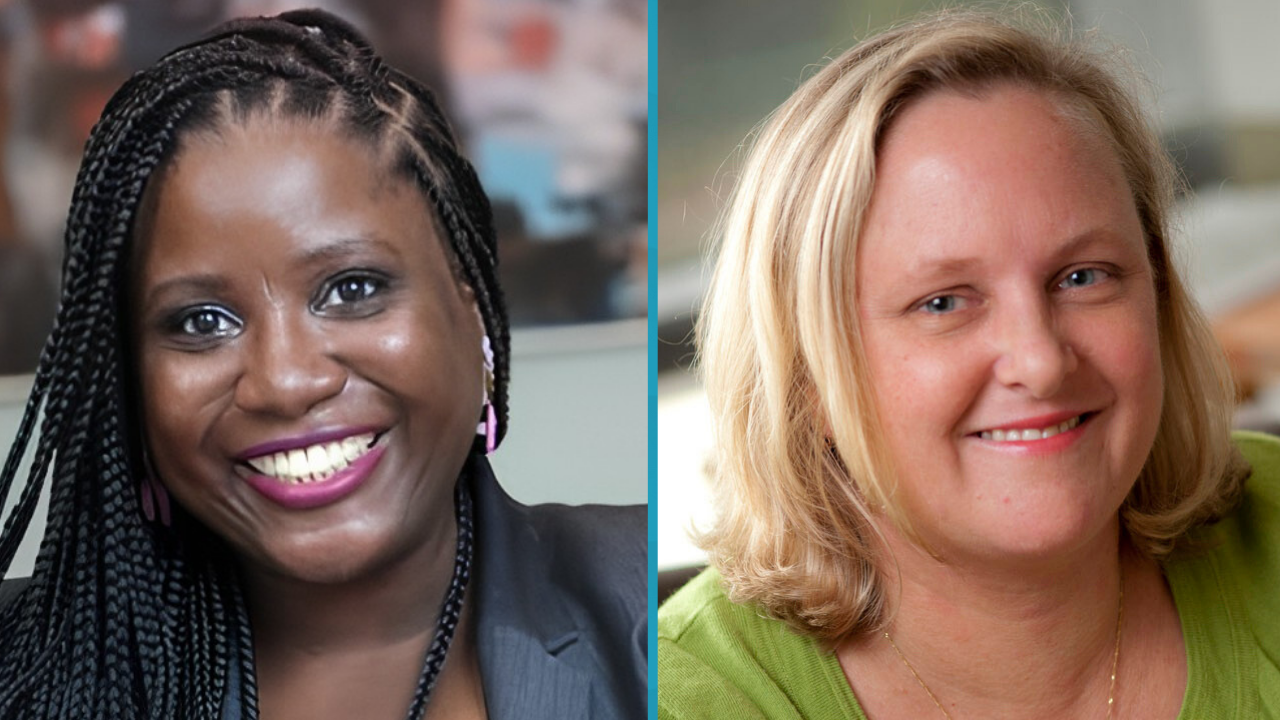
Gregg Duncan, 2026 BMES Annual Meeting Co-Chair
One incredible week in Orlando. The BMES 2026 annual meeting welcomed more than 4,800 registrants for four unforgettable days of innovation, collaboration, and connection. From countless scientific sessions and poster presentations to a fantastic exhibit floor, this year's meeting truly showcased the best of biomedical engineering. And the excitement didn't stop there. We connected with colleagues at university-hosted receptions, celebrated our amazing community at Member Appreciation Night at Icon Park, and brought students and professionals together through our industry mixture and resume reviews. Thank you to everyone who helped make this year's meeting such a success.
Nathan Schiele, 2026 BMES Annual Meeting Co-Chair
As we wrap up an incredible BMES 2026, we're excited to pass the torch to next year's annual meeting co-chairs, we can't wait to see everyone in Columbus, Ohio, October 6 through the ninth, 2027, for another unforgettable celebration of biomedical engineering. See you in Columbus.
[Intro]
Liz Wayne
Hi, everyone! Welcome to Office Hours with Liz Wayne, a podcast brought to you by the Biomedical Engineering Society. I'm Liz, an assistant professor in bioengineering. I'm going to introduce you to the world of biomedical engineering through my eyes or my voice. From genes to machines, biomedical engineers can do it all. We'll dive into how discoveries are made, how research becomes medicine, and what it's actually like working in academia today. So, whether you're a student, researcher, educator, or just someone who's curious about science and how the academic world works, you've come to the right place.
Hi, everyone. We're back. This is another episode of Office Hours with Liz Wayne, and I have a very special guest. Actually, the most important guest, if you think about it, because they are going to shape the future of BMES for the next year and beyond. I'd like to welcome Dr. Jane Grande Allen Jane is the senior associate dean and Isabel C. Cameron Professor of Bioengineering at Rice University, but more importantly for our conversation, she is the BMES President-elect. At the time of this recording, she's the elect, but then when it gets released, she will actually be president. [Sings “Hail to the Chief”] So, I promise I won't bother you with my singing after that. Welcome to the show, Jane.
Jane Grande-Allen
Thank you so much. It's great to be here.
Liz
It is very great to see you. So, I want to have a conversation now where we basically figure out who is Jane? Who is the person that's about to take the helm of the presidency of BMES? What is she and what is she looking forward to when she does that? So, in your own words, Jane, why don't you say, on the day-to-day basis, who you are and what you do?
Jane
Well, I'm always trying to figure that out. You can help me with this. Yeah. Thanks. It's on a day-to-day basis. I could wear many, many different hats.
Liz
That's fair.
Jane
Today, I was actually serving a lot as a BMES representative. I was attending a conference about engineering health, and so trying to think about like some of the issues that we're going over, how engineering works into these clinical problems, but then I also took a break, came back to my office, and had a Zoom call with a student about a paper.
Liz
Those are always fun.
Jane
Yeah, and you know, then there's frequent texts from my family members reminding that allowance is needed. Yeah, just a lot of coordinating back and forth between different aspects of my life. I also am getting emails about my activities as Senior Associate Dean, my activities with there. So there's days when it all really blends together, and there's days when I focus on one thing more than another, but really, it's a it's a mixture of educator and investigator, administrator and family member constantly.
Liz
I love it. Constant chaos, beauty, and chaos, and figuring out how to make it all work. And so, before you became such a really great multi hyphenate, I guess you could argue you were scientist first, right? And so, what do you study?
Jane
Yeah, I would say nerdy scientist my whole life. My study in my lab is in the area of mechanobiology, biomechanics, and we have focused for many years on cardiovascular biomechanics and mechanobiology. And when I was doing my PhD, I became very interested in mechanobiology, and it was I feel it was it existed, but was really developing and getting started. We, I also became very interested in developing in vitro models of disease, which it's really exciting now that NIH has- is terming these new approach methods, and I feel that they're getting a lot more recognition now, and that feels very gratifying. However, for me, I remember attending conferences as a postdoctoral fellow and hearing tissue engineers say, "Why would we ever want to tissue engineer a diseased heart valve?" And I was thinking, "Well, don't really know what causes this disease. Why not?" And that's really driven a lot of the work in my research group for a long time, we focused on heart valves. I've been looking at heart valve biomechanics.
Liz
So you study the heart, and you try to study what happens when the heart goes wrong, right? And you try to make models so you can look at that. Okay, so what does the heart look like, and what does it really- I mean, I know it beats, and I really think about all the love songs. I think about when my heart is breaking, but I'm assuming my heart doesn't break as easily, like physically. And so, how does it actually work?
Jane
Yeah. Well, I mean, it has a it has a unique geometry and composition that means that blood can flow through it in one direction, ideally. It has a coordinated function that contracts and has little chamber doors close in time in order to make sure that blood goes in one direction and not backwards. But it can also expand like a balloon and then contract very muscularly in order to generate blood pressure and blood flow, and the force to move blood through the entire body, and so it is essential to the function of our body as an organism. And it may seem hard to break. But really there are a lot of things that could go wrong, and just as a there's profound changes in the heart that, and I focus on the really the heart valves that happen as a function of aging from the time of embryonic development all the way through aging, it's just not constant.
Liz
You mean the valves changed over time? And the valves are the valves the parts that flap, that move?
Jane
Yeah, they are the parts. So they are like the doors that are entrance and exit to the chambers of the heart. So they're the entrance of the ventricles and the exits of the ventricles, and they open in this one direction, and so blood is able to go, like from the lungs to it goes from the in the left ventricle, it comes from the lungs and goes through one chamber into another chamber, and then into the aorta, and from there goes to the whole rest of the body, and that's on the left side of the heart. On the right side of the heart, it's a little bit similar, but it sends blood to the lungs, and so not just the heart valves, but also the heart and the blood vessels that are around it. They really do change a lot with age and with development. And there is an interest in studying what makes the heart tick and why does it work the way it does, and I think that a number of people will look at it at a particular age of an organism, disregard the fact that that is very much a snapshot of what it's like at that particular age, and so that's definitely the case for heart valves. We've done a lot of looking at heart valves at different ages. We can get them. We use the pig model a lot. It's about the same.
Liz
It's the closest model, right? That we have.
Jane
It's the right size. And pig heart valves are used as a replacement for human heart valves in in a lot of bioprosthetic valves, so commercially available heart valves, whether they're implanted surgically or through transcatheter device, often are prepared from pig heart valves.
Liz
I didn't know that. decellularized, like taking all the cells out?
Jane
No, not decellularized. They are treated with glutaraldehyde so that they will not cause a foreign body reaction when they're implanted, and but yeah, they are derived from pigs, and there are other varieties of bioprosthetic valves that are made from bovine or porcine pericardium and then cut into a valve shape, but not human tissue. And so, you could also have a transplant of a human heart valve from a donor into the normal valve position, but the transplants are rare because there aren't enough donated tissues. Also, it's a really long surgery to have those implanted, whereas a transcatheter heart valve, for example, can be implanted very quickly.
Liz
And what is transcatheter?
Jane
Yeah, I'm so glad you asked. That is putting a valve through a long tube, and the tube is implanted, or not implanted, but it's inserted usually through a vein in the leg, and then the catheter is snaked up all the way through into the heart, and then-
Liz
That is crazy.
Jane
It’s how stents are implanted, right? So, stents are implanted. Stents are much much smaller. The catheter that is used for installing a valve is a much larger one. A cardiologist I know calls it the size of a garden hose, but I think it's not quite-
Liz
[Laughs) Okay.
Jane
Yeah, but it still is a large catheter, and the valve is in a- It's folded up and extruded in a stent, sort of like in those like finger traps. So then, a little bit, through the catheter and delivered into the right location, and then released and fitted into place. And that is a much faster procedure than having an open-heart surgery to put a replacement valve in.
Liz
I really just had like a. I went back to like a elementary thing about the magic school bus. Like this is something Miss Frizzell would have done with those kids. Let's do a little journey. Let's put a catheter in.
Jane
Absolutely, it's like fantastic voyage, right?
Liz
Fantastic voyage. Except this is real bioengineering. I also love when the guests when you guys start talking about like your research because you're like oh my god and this thing happens and it's so cool and then it's one thing and wait I'm so glad you asked me let me tell you.
Jane
Well, I mean actually when I was in grad school also at the University of Washington I was having a conversation with my roommate at the time just and she said “they put pig heart valves in people?” And I love that people are still asking that. It's true. It's the standard. There's mechanical heart valves, and people are looking into polymer heart valves, and of course, tissue engineered heart valves are a really big area of research.
Liz
Right, right, because I mean I guess I just wasn't sure we were doing the pig ones yet because I didn't realize that they weren't- what the foreign body response was, or the rejection rate for those was, but it seems like it must be existing, but not terrible.
Jane
Yeah. So they were believed to be completely inert for a long time, but there are some interesting studies these days about the immune response to them. So even though they're glutaraldehyde fixed, there can be some little bit of foreign body response. Transcatheter implantation of heart valves really got started about 15 years ago in really geriatric patients, and now it's moving down in age. So that worked really, really well. But now they're it's being done in younger and younger and younger people, and with that, there has been a rising rate of infection. So, time will tell how we need to treat people who are getting transcatheter heart valves in people my age, for example. glutaraldehyde but it's really exciting because it's a lot faster and has better recovery compared to open heart surgery, yeah, there are far more transcatheter valve implantations than surgical valve implantations. So, it's a big business, and it's been exciting to see the technology develop.
Liz
And I'm sure to think about what you learned. So, before we move on, I guess you know you said you talk about about age and how valves change with age. What do you think is something that you've researched or learned through your research that is helpful for having people who put these transcatheter valves and understand about putting valves in for people of different populations and age?
Jane
Yeah, yeah. Well, we always try to talk about the extracellular matrix and how the valve behaves mechanically because of the way it is structured, and so my lab focuses on how certain combinations of extracellular matrix give rise to very specific mechanical behaviors and how that influences the normal biology, mechanobiology, and pathology of the heart valve cells, and so I haven't done as much work in the area of bioprosthetic valves, but I've been really, really interested in proteoglycans ever since I did my postdoctoral research, and I had an opportunity to work on a project involving the proteoglycans of bioprosthetic valves, and having looked at what I would expect to find in a normal heart valve of a particular age pig, and then looking at bioprosthetic valves, either ones that had been implanted and then removed many years later, or ones that have just been glutaraldehyde fixed and stored for a period of years, I was able to get a sense of how the extracellular matrix changes in this process. Even though it's like a fixed tissue, it is opening and closing within the body again and again and again, and there will be some wear on the tissue, and how that has changed as a function of being implanted. Lots of people have looked at how the collagen has changed, and I was able to add to that information how the proteoglycans have changed and what that means to the then mechanical function of the of the valve tissue. And I really enjoyed having these just moments of connection and clarity about how the extracellular matrix all works together and sort of company in order to drive tissue function.
Liz
It's like the connection getting right to the heart of things. Yes, like I, I don't know how you go a whole day not making a heart like pun. I just like I could not be a heart researcher. You would not. I would be insufferable, insufferable. Okay, the beating of my heart.
Jane
I managed to do it, but yeah, it comes up in my head.
[Music Break]
Liz
And speaking of the heart of the matter, I think you really took this to heart, and now you're going to be you are president elect, and so what makes someone go from studying the heart at like a really kind of cellular protein level to now thinking about I guess the heart of our society or of our professional society BMES.
Jane
Well, I've always been a very service oriented person. Always enjoyed a lot of mentoring, and I mean, I've been mentoring undergraduate interns ever since my postdoctoral time, and so I really got into a lot of service that way. And when I joined Rice University, I had an opportunity to not only set up my lab, but get involved with summer undergraduate research programs, and then working on various committees. At some point, I decided to take a leap and not just work within committees in my department, but also join faculty senate and serve on university committees. And it was fun. I really enjoyed meeting people from across campus. We also had interdepartmental mentoring programs so that I could meet faculty from other departments like biosciences and physics. And I really enjoyed getting a sense of the university as opposed to just seeing how things were in my department and so service really gave me a lot of exposure to an appreciation for higher education and for education more broadly, and I really liked that. I felt more like I belonged at the university because of that, and it gave me more of the long view.
Liz
I see, and so you started thinking about what the long view of BMES.
Jane
Well, I'd always I'd always been going to BMES ever since I was a graduate student. Back when I started going to BMES, they used to be held on university campuses. The first one I went to was at the University of Memphis.
Liz
Oh wow, that's cool.
Jane
And it was it was fun. Like I gave a presentation in a classroom.
Liz
That's great. I would love to see pictures. I hope they have pictures of these.
Jane
Wouldn't that be something. And it was fun. And I've always been going. And I loved how student-oriented it was. There are people that I met at the BMES meeting who I am still friends with today. I met I met Kris Billiar there in San Diego back in the 90s when we were both graduate students, and you know we were just laughing about that recently, we met there, and you know here we are, both officers of BMES years later.
Liz
No, that's always cool. I love going to BMES for the reunion to get to see so many people now, especially now that we're not all on the same campus anymore. We're not grad students just like leaving the building at the same time and then going to get dinner. Now, yeah, it's always funny to see that person you knew at 21 acting like an adult. And BMES lets you do that at least once a year. We're like, whoa, look at how far we've come.
Jane
The networking is exceptional at BMES and. So when I was a an assistant professor, I got asked if I would run for the board of directors, and you know I said yes. You can put my name on the ballot, and so I was elected, and I served for three years, and it was it was really eye opening. I served on a couple of different committees, and again I got to know people from different institutions, and it was really interesting. I had a pretty heavy dose of imposter syndrome at the time.
Liz
Oh wow! Why?
Jane
You know, I always felt like everyone was so much more networked than me, and all these people went to school together and they know each other. I managed to pass somehow.
Liz
Okay, all right.
Jane
Who really knew what they were doing?
Liz
But maybe we can, you know, talk about that part a little bit about the being not as networked, you know, because I think that, you know, we were just talking about how much we love BMES because we love seeing the people we already know, and reminiscing with the people we already know. And it can be really hard to kind of get out of that circle and go, okay, I need to meet new people, or I need to allow new people to feel like they can come talk to me because they can always talk to me, but they might see me kind of chatting with a friend, like really, really friendly, and like, and that might be different. And I think that can be hard for newer people, either new to the profession, where we do seem quite chummy, or a new student who's just like, "How am I ever going to get to be able to talk to that professor?"
Jane
That was it for me. I was really, really comfortable with my peers, and really nervous around people who were in a more senior position. That was something that was an unfounded fear because I had nothing but friendly conversations with them when we were able to connect, and I found a lot of like very genuine interest in who I was and what I was doing, and an appreciation for what I had to contribute. But I was pretty shy at first.
Liz
Yeah, and everything happened so quickly. You know, I will even have meetings with trainees where I say I will be floating around all the time. I will be moving and just doing lots of things. If there's someone you want to meet, tell me you want to meet them, and I will make that introduction. But you know, I try to kind of tell them like how the pace of BMES is, so they don't assume that because I'm chatting with someone that I can't be interrupted. Or like I will make that introduction for you. Like that's easy for me to do. You just have to tell me you want it, or like, you know, it's harder for me to plan what I'm going to do two days into the conference in comparison to like, are you free in 15 minutes, right? Because it just it's so in flux.
Jane
Yeah It needs a little bit of coordination, but I have found everyone to be very friendly.
Liz
Yeah, people I really want to meet with. It's like okay, let's meet at 8am. And I actually have done this thing, and I'm sure like so this is like your tips and tricks from the BMES elective and you know how to manage the conference. Someone I really want to meet, I say let's meet at 8am. or I say let's meet we meet and then we have to meet outside of the conference hall. And the reason for that is that we will get stopped,
Jane
Yes.
Liz
And then it will not. And then if I say let's meet at one in the conference hall, we may have every intention to meet at one. There's no guarantee that I'll make it to you at one because in between this meeting and the next meeting, I would have been stopped and stopped and stopped and stopped, and I'll lose track of time. And like, okay, I love this conversation, so I try to do it like when everyone's moving a certain way, or like really early in the morning when like you can't… I well, maybe I can't be distracted. I get distracted.
Jane
Yeah, I've tried to help the younger people by being the one who says yes and help them out. So, when I go to one of the lunches, for example, come up to a table, put my stuff down, and then just immediately say hi, everyone. I'm Jane, and then just explain and just start the introductions, just because. And I know that the students are probably wondering, you know, how do I bring this up? And I definitely know how they feel, so I try to be the person who breaks the ice first. And in fact, I always hang with the same person when I go because this is one of my one of my very close friends from grad school, Ruth Ochia. She and I always- this is our time to connect every year is at the BMES meeting, and so we will just be walking around, and she and I will go to lunch together. And she always knows that I will start introducing you at the and she says, "Can I just have like a quiet lunch once?".
Liz
Oh, I know. I know. There's two types of people at BMES. The talkative person and the person sitting next to the talkative person, and the person who is the quiet, reserved person.
Jane
I generally try to think about like the me who was quiet and a little unsure about talking and just reach out to you know young Jane and help them along.
Liz
So you're going to have a great time at this BMES in October. I can already tell. Just bring all of your throat lozenges. You know, just bring your teeth. You're going to be so ready. And so, I love that you talked about education and how you were really drawn to educating people about the heart, doing undergraduate research and mentoring, and also figuring out ways to mentor at the conference. And so, for as your new role as BMES president, I'm curious about how you want to encourage or facilitate this kind of educational spirit as the leader of BMES.
Jane
Well, I'm glad that you brought that up. So, I want to really focus on a couple of directly educational aspects. I would love to see if it is possible while supporting a lot of the research activities. I would like to see if it is possible to expand the education track and the education areas during my term, I would do- and that could be several ways. So just I'd like to talk with people who are more involved in the education track, and find out what are some things that they have been wanting to get done. What are their aspirations for sessions they haven't been able to do that they would like to do some exploring of that. How can we support some of those activities? Because I think that we have to really lean into our education at the moment.
Liz
And why would you say that's more important now? It sounds like it's more important now than ever in your mind? I wonder why, if you could explain that for our listeners.
Jane
Well, this is a time when our research is being threatened, and people are making some decisions not to go to graduate school, or they want to go to grad school, but they are not finding the same traction in their applications that they were anticipating. That is having a trickle-down effect on like the research that we are doing, and that some of the students are doing as graduate students and as undergraduate researchers. They are taking the temperature of what they're experiencing in the lab and some of their making decisions about what to do with their career. And I think that if we can be thinking about how to support them in how to integrate what they're learning about with what they want to do as a career. It will reinforce the importance of biomedical engineering, not just as learning about something that can take you to like this job that you want or in graduate school, but also something that helps connect them with who they are as scientists. Who you are as a biomedical engineer is more than just what you have learned about and what you do at your job. Frequently, it's about how you explain the way things work.
Liz
How you approach the problem. I think sometimes it's a philosophical question.
Jane
How you approach explaining things to people who are scientists and who are not scientists.
Liz
I agree.
Jane
I think biomedical engineers are able to make connections between innovation and problems in healthcare, in life sciences, and in many other fields that make them uniquely capable of social impact. And having a way of supporting them in this weird time is a, I think, really important. I want to, with respect to ABET accreditation requirements, we do have a connection to real world problems, for example. Right, and I think that that is really important for us to make sure is being conveyed to the students. These requirements that we ask them to answer open ended questions and to come up with creative solutions to problems, and to figure out, analyze a situation, and propose solutions, and work through the scientific method, and then explain what are the ethical impacts of this. These aren't just things that are in our accreditation. They are how we justify our activities, and I think that that is a critical aspect of education. And I'd love to hear more about that from, you know, the educational track.
Liz
I think I'd be excited for that. Okay, Jane, that was such a moving description of how you think about education and what you think BMES's role is in that. And what I love about it is that you think that the society can and should be doing things to facilitate that identity as a biomedical engineer and also sustaining it through tough times.
Jane
Yes, and that doesn't just apply to students, right? We also have faculty members who are anxious and struggling, and I have to say, as a as like a proud Gen Xer, I feel like I've rolled with it every single every time.
Liz
Every time.
Jane
Something happens, I'm like, fine, I'll just figure it out on my own. Right? I was raised this way, and at the same time, there are really serious constraints about getting funding. And universities are being asked to think about, like, how can we protect our students? We want to make sure they have a quality degree. How can we protect our junior faculty because they're just getting started, and then there are mid-career and senior faculty who are sometimes in a situation of going “I don't know what my next step will be. What happens if I lose funding?” And so there may be people who are considering like a mid-career pivot or retirement, which may have been something they didn't consider originally, and so I am really interested. Part of my role as senior associate dean at in the School of Engineering and Computing at Rice is about mentoring. There just aren't as many resources for mid-career and senior faculty. And so, I think that a lot of the mentoring is a little bit more about well, you know, here you are in the middle of your career. Is it time to take on a leadership role? What about running a center? What about jumping off into a new project? Some of that guidance may be appropriate, and some of it may be not the right time right now at the economy, and so I am really interested in seeing if we could work in some guidance for- And maybe that could be like a new podcast, is next steps. At a different time in your career, how can you get the support that you need?
Liz
Right.
Jane
Or for reflecting on what's important to you and what may be possible? I think there may be more people than expected who have to do some sort of second act, and it doesn't have to change them being a biomedical engineer. Right, it changes just the way they do that.
Liz
I like this because one of the things that the society can do is actually identify that there's a national problem, which may make people feel less alone, right? And so, if you had people saying, "We know that mid-career or late senior people are going through this challenge," we know junior people are going through this challenge, and we know that people who are still in their training are going through specific challenges. And here are some things that we want to use to help you get through those steps. I think that that awareness is already like really, really important for people, especially as I think about resources. And I like how you said second act because I can tell you that sometimes I, as a faculty, get frustrated when I say my problem is money. Do you have money? Well, if not, bye. Right, but you know that's how you want to respond to everything. But the reality is, resources are constrained everywhere, and you really have to think creatively.
Jane
Yeah.
Liz
And even thinking like, wait, do I enjoy this anymore? What am I doing? Is this the right thing for me at this phase, this time? So there's so many difficult conversations, and at least having the society help people who are doing this for the first time realize that this is not the first time it's happened could be really powerful.
Jane
You know, I think everyone asks these questions, and that it's really, really normal, and just, am I doing the right thing with my life is a really common question to have you know come over you. And there are mental health support resources that are good to be aware of, no matter what position you're in. And if you have an opportunity for a mentoring relationship, it is really helpful to just talk to someone about “these are the things I like. This is what I enjoy about my job.” Sometimes just articulating that helpful of for feeling less isolated. It's a tough. Right now, and faculty positions can be an isolating job. You're working on things that no one else is working on, but that doesn't mean that your approach is like yours uniquely. Other people are going through a lot of the same things, and talking about options may reveal something that seems exciting that you didn't know about, or your conversation may help someone else. So it is really good to connect about these things.
Liz
I love that. And am I right in saying that when people see you at BMES this year in Orlando, they should come and talk to you about these things, or stop at the BMES booth even?
Jane
Yeah, I'm a good listener. I would like to.
Liz
I’m getting that vibe.
Jane
I would like to spend some time absorbing what people are wanting us to share with them about what they would like to see at BMES. So, thank you very much for asking me to drill down about that.
Liz
No, I'm really happy I did, and I just know so many people that would benefit from this and feel seen, heard, understood. You're probably going to help people in their departments to say, "Okay, wait, let's look at this guidance that they just had," because maybe this can help us align the conversation that we would have to start at our own institutions. I love this idea that you're bridging all these different ideas, and you're willing to think outside the box, and you're willing to collaborate across disciplines. And so, I googled you, and I did some researching. Don't be scared, but I found something super cool about you, which you did the collaboration with the visual arts department. You have a comic book?
Jane
I have worked really closely for about 10 years with a professor in the visual arts department at Rice, Christopher Sperandio, and he is the comic book specialist. But he and I, as well as my colleague Caleb Bashor, have done a lot of educational programming about using graphic design and comic-related storyboarding as a way of communicating your ideas effectively. So, in fact, I think that all the senior design students should learn storyboarding. Yeah, you know a lot of the kids really like manga, and there are just fantastic books about how we see concepts abstracted in comics form that are great for conveying an idea and having the viewer see it as relating to them. And it really jazzes things up.
Liz
I love this, and I really hope you bring this into your presidency at BMES. This is going to be awesome working with artists. I just love that, and I love how you brought that to the students. Thank you, Jane, so much for joining us on office hours, and congratulations and best wishes as the new incoming president of BMES.
Jane
Thank you. I am really, really excited. I've got big shoes to fill. We've had some outstanding presidents, and I'm excited to take the presidency as a person who's really grown up in the society and who has gone from being a kind of more shy student to a more polished speaker and someone who is going to reach out a hand to people who want to network and think about what they can do for having an impact on society.
Liz
I love that. Thank you so much. And as a closing, I gave a heart pun. What's your best heart pun?
Jane
Oh my God! Well, I don't know if I can come up with one better. The two stories that I like. Okay, one of them is when I am talking with students about heart valves for the first time. Like to remind them that they open and close with enough force that you can hear it outside the body because that's the heart lub-dub sounds that you hear. Our heart valves closing, closing. So, to me, that is super impactful. The other thing that I like to do as a just a thought experiment with students to try, this is always hard with scientists, is we talk about the importance of the heartbeat on society. So, this is particularly relevant when patients. We talk about this in my medical device class. When patients have a like a continuous flow ventricular assist device, they often no longer have a pulse. So, if you no longer have a heartbeat, like what does that mean from a broader perspective?
Liz
Yeah I can't…
Jane
And these are scientists, biomedical engineers taking my class, and they're always like, "Well, they would not be able to like check their pulse if they were exercising." And I'm like, "Okay, that's a start." And but I try to like get them to think a little bit more broadly about like what does your heart beating mean like from a humanistic perspective? Like how would you know if you're in love,
Liz
CSI. Oh my God, this is like some sort of Sherlock Holmes, you know, sci-fi. Like I can get away with everything because you can't feel my pulse. Oh my God, I just figured it out. True Crimes.
Jane
Anyway, that's really fun thought experiment to have. It's like the effect of the heart valves and your heartbeat. It's such a mechanism of poetry.
Liz
Yeah, that is way better than any of the puns. I that like I was just performing at a very low level, and you just came and just oh,
Jane
I love a pun. I'm good with a pun. So I love every one of those.
Liz
I look forward to hearing more. I'm going to ask for like a bunch more. Thank you so much, Jane, and see you guys next time.
Jane
Thank you so much, take care.
Liz
If you have questions or ideas for a future episode, feel free to email us at communications@bmes.org. You can also stay up to date by following us on social media at BMESSociety and visiting our website at bmes.org/podcast/office hours. We look forward to hearing from you and hopefully featuring one of you on the podcast.