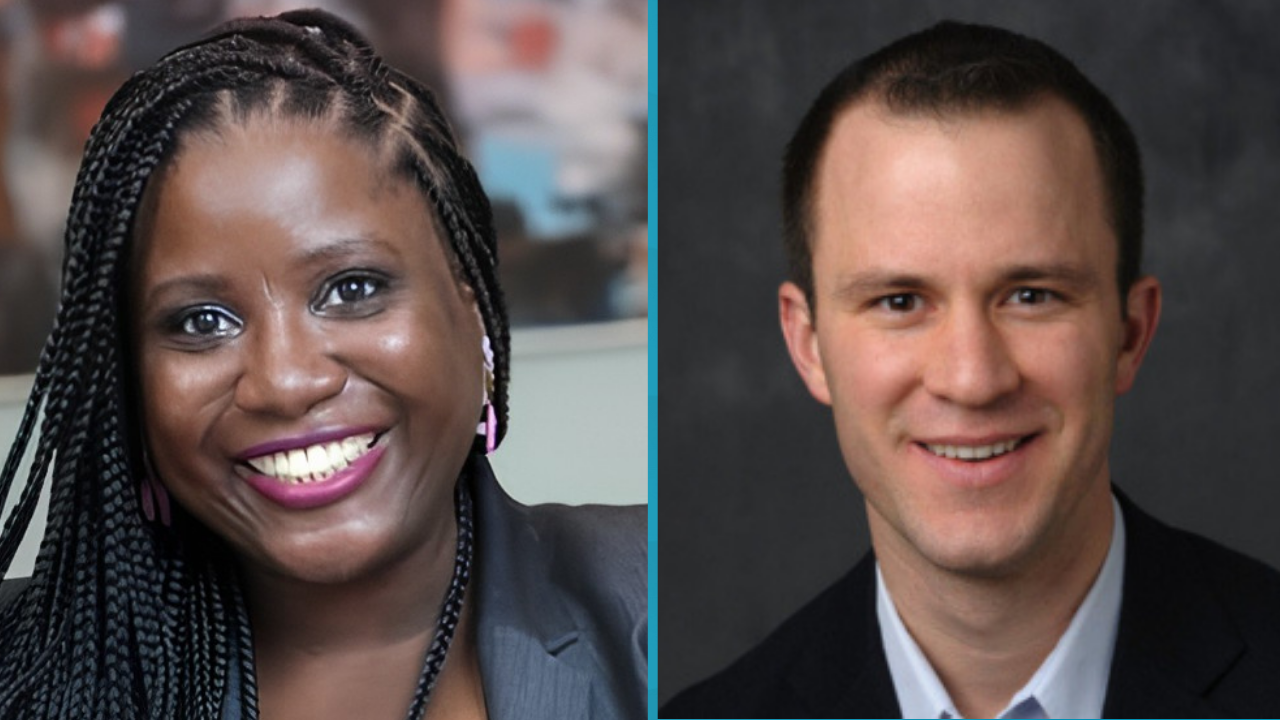
Gregg Duncan, co-chair of the 2026 BMES Annual Meeting
Hi, I'm Gregg Duncan, associate professor of bioengineering at the University of Maryland, and one of the co-chairs of the 2026 BMES annual meeting. I want to personally invite you to join us in Orlando, Florida, from October 21st through 24th for this year's meeting. Our theme this year, "Engineers Empower Human Health”, highlights the central role of biomedical engineering in enabling transformative biomedical discoveries, and addressing grand challenges in health and medicine. The annual meeting is one of the best opportunities each year to come together as a biomedical engineering community to hear about exciting new research, meet people doing incredible work across the field, reconnect with colleagues, and build new collaborations. This year's program includes an exciting new AI in BME track, as well as expanded networking and career development programming. Our opening plenary session will feature an inspiring lecture by renowned neuroscientist, engineer, and psychiatrist Dr. Kafui Dzirasa, and we've put together an exciting meeting. And we hope you'll be there with us in Orlando. Visit BMES.org/2026/annual meeting to learn more and register for the 2026 BMES annual meeting. We'll see you in October.
Liz Wayne
Hi everyone, welcome to Office Hours with Liz Wayne, a podcast brought to you by the Biomedical Engineering Society. I'm Liz, an assistant professor in bioengineering. I'm going to introduce you to the world of biomedical engineering through my eyes or my voice. From genes to machines, biomedical engineers can do it all. We'll dive into how discoveries are made, how research becomes medicine, and what it's actually like working in academia today. So, whether you're a student, researcher, educator, or just someone who's curious about science and how the academic world works, you've come to the right place. Hi, everyone. Welcome to Office Hours with Liz Wayne. Today, we're going to talk about clinical engagement. The conversation explores what clinical engagement actually means in biomedical engineering, how students can gain meaningful clinical exposure, and why interdisciplinary collaboration is essential for translating ideas into patient impact. Right now, there are a lot of discussions about how connected academics actually are to the world. Do we exist outside of our lab coats? And I know it drives some faculty crazy because on an everyday basis, we're teaching undergrads, we're mentoring future grad students, and we're just thinking about the future. And like our research is doing things that actually translate to what happens today. So how is it that we're not doing that? Translation is in our job title; it literally says biomedical engineer. But even with all of that, there's still ways, at least it falls short in translation or how the general public doesn't get it. So, I thought this might be worth a deeper dive. It might be time to ask what a real connection between the real world and research looks like. Are we actually doing it? How could we be better at making those connections in our research and making it click with the public? For this office hours discussion, I brought in an expert. Dr. Craig Goergen is the associate head for clinical engagement and professor of biomedical engineering at Purdue University. His mission is to use his imaging tools to enhance the quality of human life. He also collaborates with other people to translate his work. I think after we talk with Craig, we're going to feel a lot more hopeful and inspired about clinical translation. Welcome to the show, Dr. Goergen. How are you, Craig?
Craig Goergen
Well, thank you, Liz. Thank you so much for the opportunity to be on this.
Liz
I'm super excited to talk, so I brought you in as the expert, and I was hoping maybe instead of me saying it, you could say in your own words who you are, what you do, and why you do it.
Craig
Perfect, absolutely. So, as you mentioned before, I'm a professor of biomedical engineering at Purdue University in Indiana. I've been here since the very end of 2012, and have gone through starting as an assistant professor pre tenure to now a full professor and associate head for clinical engagement, which I don't think there's a lot of other associate heads for clinical engagement out there. It was a position that I worked with our leadership to create because I think it's just so important in our educational mission, our research mission, and mission as a land grant institution as well, where we as engineers, as biomedical engineers, need to think not just about what can happen in a lab, but translate into the clinic and be always focused on the patients as well. So, my personal lab is often interested in cardiovascular disease, but we've now expanded into areas where we're thinking about diabetes, oncology, orthopedics, and especially pediatrics and broad areas there as well. So, it's been a really wild run. It's been fun to connect with BMES over the last 15 years and more to learn about what's happening across the whole field and across the whole society. And I think these podcasts, Let's just commend you for doing these as a way to reach out to the whole Biomedical Engineering Society membership as a way to talk about great topics of interest. I've been listening to a few of your podcasts, and they've been fantastic.
Liz
Awesome. Well, this is going to be another introduction to the great podcast and the great conversations. So, I want to thank you because you're going to be telling me things that I don't know, so it seems like from your brief introduction, you've got a lot of experience in how to actually translate, or think about clinical work, as an engineer. And maybe for the audience, let's first talk about what clinical engagement-that's kind of like a big word-and maybe just define what that means for someone who might be unfamiliar.
Craig
Yeah, so engagement, right, is more than just showing up and watching a procedure or two, right? It really then is meeting the clinician where they're coming from and even speaking their language if you can. And so, what I realized when I started in this role was that we did a great job teaching our students underlying physics, the fundamentals of chemistry, and why mathematics was important. We didn't, though, then show them how all those underlying tools and fundamentals can be applied to healthcare and to medicine. And so that's where we started thinking about classes that weren't just about equations, but about what does it look like in an operating room, or as you look at the technology in the ICU, what's been the latest advancements, and how can we make that better? And so, when we think about clinical engagement, right? It's really talking to the cardiologist, the surgeon, the radiologists, the oncologists, figuring out where their pain points are, where there's unmet clinical needs, what technology we have currently or could develop that might address some of those, but really thinking about what's the most beneficial for the patients in the current practice and clinical care that we're thinking about. And it's amazing how advanced medicine is, yeah, and then also how simplistic and sometimes barbaric you know some of these surgeries are right. They're not advanced tools. They're things that have been around for hundreds of years.
Liz
No, I love that. I'm going to talk a bit more about that too because we're going to talk about some of your research. But before we do, I kind of want to ask, how did you come to this idea that we need to be more clinically engaged? Did you always start that way? Was there like an example or a moment, a-ha moment for you where you thought this is what we need to do?
Craig
Yeah. So just a little bit of my background. I went through traditional biomedical engineering and then bioengineering undergrad and graduate degrees, both great institutions. Washington University and St. Louis for my undergrad that had a medical school, and then at Stanford as well, bioengineering was part of both the medical school and engineering, but when I went to my postdoc, I went and worked at Massachusetts General Hospital in Boston, and so that was part of the radiology department there in the Martino Center, where it was all clinical, and I got to see firsthand what it was like in a clinical department where the focus was on patient care and improving quality for patient care, and that was eye-opening. It was amazing. I loved my time there, but I realized also that I missed the student education in the university setting, and so that's where Purdue came about for at least my career. And I've loved being here for over a decade now, but realizing then we missed the clinical components, and so that's where, as I brought in students, trained them in my lab, but also brought them into classes, both undergrad and graduate. We really went to the ends of the earth to make sure that they had experiences in the hospital and with clinicians, so that they can see firsthand how biomedical engineering is impacting lives currently, and where we could go in the future.
Liz
Right. I like this idea of clinical immersion too, because I imagine that it also helped you train students in a different way, and maybe even made your research better by allowing them to have that insight. If you talk about what some of your research is, what do you study on a day-to-day basis?
Craig
Sure. So we're an imaging group, and our work does a lot in cardiac and vascular disease. And we have access to a high frequency ultrasound system, and so that's really great for rodent models of heart attacks and aneurysms. And so we're often developing new ways to acquire datasets and improve what we can do with the standard, you know, two-dimensional ultrasound to more volumetric or even four-dimensional data, where we have gated volumetric imaging, and that has then led to, well, what's happening in the clinic, right? When we get a data set from one of our rodent models, how do we analyze it? What can we measure from it? And how does that compare to the pediatric patient that we're studying and trying to help. And so that's where the students in my group, I think the best ones and the ones that have really excelled have done the models, have worked with the system themselves, and have acquired the data. They're the anesthesiologists, they're the radiologists, they're the technician, they're the surgeon, they're the staff afterwards when looking at how animals are recovering. And then they go to the hospital, and they see the exact same thing. They see the radiologists, they see the sonographers that are acquiring data, and they see this process of how data is collected and then analyzed, often by hand manually. That can take a long time and be not always accurate or repeatable. And so, right, they see then, oh right, this is ways we can think about doing work better in our own lab, but also translate that work into what's happening in the clinic and improve the patient care, the processing, and the speed that some of this can happen.
Liz
What I like about your work is that you both have a problem that's very clinically motivated, and I think to do clinical work, it has to be in your mission, and you have to solve problems that actually need the clinical input, but also need the engineering, and you're finding the balance in between. And so, you're doing a lot of imaging, which anyone who's gone to the doctor's probably had a diagnostic test or heard, oh, what did your test say? What did it tell you? And being able to answer those kinds of questions that allow you to do that. I was reading through some of your papers and I was trying to get a sense of this, but I was interested in like some of your imaging because you're also trying to look at clinical related things like do you have this or do you not, but also looking at some of the underlying like biological principles, like the biomechanics of it, and so looking at different scales, and so how do you integrate those kind of seemingly different tasks?
Craig
Sure, yeah, I think you know we're just scratching the surface on what imaging can tell us about patients, and especially as artificial intelligence has taken off. I know you've talked about that in previous episodes, but it's going to speed things up. It's going to make it more repeatable, and it's going to help us detect subtle changes that we couldn't previously see with a manual approach. We've always come with our lab, though, from a biomechanics viewpoint and thought about, especially what the forces are on tissue, how the tissue deforms and moves through a heartbeat, right? Which is maybe slightly different than some of my colleagues that are in the imaging field that have electrical engineering signal processing backgrounds that get really deep into the underlying electrical components of how to reconstruct complex signals. That's important. We collaborate with those groups, it's really interesting to think about. But oftentimes, you then get a reconstructed data set, and then you draw a manual line after all this work at a time. So, can we do something more than that? Can we use better approaches for analysis, and then use biomechanical components and thoughts about strain and deformation that aren't currently being used, and so that's where a lot of the work has been with pediatrics and thinking about how the heart changes in patients with Duchenne muscular dystrophy, and that led to a whole big project with a consortium of DMD pediatric cardiologists around the country, and they often collect cardiovascular MRI datasets, cardiac MRI from these patients, and with these, usually young boys, that come in every year for repeated scans, and so it's a really interesting and rich dataset that you can then look back and see not just when have they developed dysfunction, but when can you then predict dysfunction down the road based on what you've been measuring initially.
Liz
You earlier mentioned that you were looking at different diseases or different contexts to apply these imaging, and in pediatrics, my understanding is that they're often an underlooked population in the in the sense that a lot of models that work for adults don't work for children, and they're not made for children. They're just sort of like shrunk down rather than thinking of them as a whole different system, and so how do you address those kind of problems?
Craig
Yeah, it's it's a great point. Something we're really interested in, and it's been great to be at Purdue, where there's a whole group of investigators interested in pediatrics and pediatric applications for technology. I think we are one of the first programs in the country that has a whole course for graduate students dedicated to pediatric medical devices, and so they bring in guest lectures. They do group projects. Students can go and see what happens specifically with our partners at Riley Hospital for Children in Indianapolis, and groups from different departments down there come up and talk about how care happens for pediatric patients that can be similar, but are often different from adults. And the big takeaway point is, kids and pediatric patients are not little adults. They have different physiology. Yeah, they can be certainly, depending on how old your own kids are. Yeah, but when you're designing a device or thinking about treatment. You can't just scale down what happens and what you do for a six-year-old to a six-year-old or a six-month-old, right? Those are all very different physiologies and diseases that we need to be studying on their own.
Liz
My mom recently had a transplant, and I was very interested in like some of the imaging studies that you were doing. In terms of transplants, or trying to determine if it was successful or not, I'm not explaining this well at all. But how does you how do you use imaging in transplant?
Craig
So there's a couple Clyro projects. One is with a group at Columbia, Giovanni Ferrari, who's looking at transplants and how to increase the amount of time a heart can be outside the body with perfusates and other strategies. So, thinking about ways to improve the longitudinal care of these hearts when they're out of the donor before they can get to the recipient. We've also then been talking to a company and learning more about the mission of 34 Lives, which is based out of West Lafayette, they have a service that help with kidney transplants, and so kidneys come in from all over the country. They have a technology that helps perfuse these kidneys at normal temperatures, room temperatures, and then allows the kidneys can stay healthy and even be thriving, so that they can go into patients days after instead of just hours, which really opens up the possibility for transplantation.
Liz
That's amazing. Yeah, I still remember getting that call. Like they call you and say, "Well, it's whatever time of day, and then they say, "Can you come in like three hours? You know, and you're like, "Wait, really? Now? Okay”. And you got to go, and then you go do all the testing and see if you're compatible, and it takes time. And but that's such a really cool application, and it's been really nice just talking to you. But also, when I was looking up some of your papers, just scrolling through your Google Scholar and seeing what all the applications that you can use your imaging technology and apply, and then do this at different scales, where they're looking at the biomechanics to the whole organism function, and then you've already been talking about students and training because you work with students and the team of people to do that. It seems like you've been trying to make the ecosystem so that you can do this kind of work together. And so, maybe can you talk to me about what aspects you need to make a clinically engaged program work?
Craig
Yeah.
Liz
And maybe talk about this because I think you have different perspectives now. Maybe from a like individual lab perspective, but then you've also got this, you know, really rich. You've made a whole program about this, so maybe talk about both of them separately.
Craig
Sure, I'll touch on the program first. You know, I've been always passionate about clinical immersion and education for engineering students, knowing that that was some of the most enriching and worthwhile training I received as a student. And so, both at the undergraduate and graduate level, Masters and PhD, we're trying to explore ways to increase those opportunities for our biomedical engineering students, at the undergrad level. It's we've been doing this now for over 10 years, right? We set up a two-week, we call it a May-mester class, where students can go into the hospital for 10 days and get an experience where every day there's a lecture, there's a chance to go observe a procedure, there's a chance for a discussion, and in a cohort of six or so students, they can partner up and work with each other to see what happens in the operating room, in the ICU, rounding with the clinical hosts as they see their patients. And it honestly, it and not just for the pre-med students in our undergrad program, but even those that want to work in the medical device field, that work as clinical specialists, that want to work at the FDA or think about technology, it's been a great experience for them. Right, they've taken classes, they've learned about some of these things, but to see what happens when you put in aortic valve or a pacemaker or a new knee, right, and actually watch those procedures, you can't describe that in front of a classroom and really give the students the same experience, right? So, we expanded that to a couple more times throughout the semester. We started with cardiothoracic surgery, and now it's expanded to ear, nose, and throat, to neuro, and to some nursing aspects as well. And so it's been fantastic to partner not just with Indiana University Health and IU School of Medicine, but Parkview Health and other clinical partners for these short-term undergraduate programs. My own class, then, I offer to juniors and seniors, and the same idea there. If they couldn't do the two weeks in the summer, they'll go and at least twice, sometimes three times, visit a hospital and make it part of their course. Go and shadow, see an open-heart procedure, watch a procedure, and then write about it. And specifically, I focus on identifying unmet clinical needs. Right, we talk a lot about that. Not just whoa, was it interesting and how neat it was, but what did you see that you think could be improved, or seem like a hangup, or took forever, or was something that didn't go quite as well as they were hoping. What could we think about that might address some of those needs? And so, we talk a lot about the terminology, the anatomy, the language, the acronyms that clinicians often use, and the fact that surgeries usually don't start 1 in the afternoon. They're starting at seven a.m. and so sometimes it requires to get up, you know, at five in the morning and drive an hour and be there at the beginning of a procedure. But that's how clinical medicine is practiced, and so to be there and be part of it, you got to make that effort.
Liz
I love that you're introducing them to this as if it were like learning a language. You know, when you go to a different country, you ask what the social customs and the norms are. How do you say where's the bathroom? How do you learn all the swear words? But you know, how do, you know, you really get caught up today? And so, you're doing this, but for clinic and to help them translate. I love this. So, and little caveat about myself: I did my PhD at Cornell, and the medical school is in New York City, and then the other campus is four hours away in Ithaca, and so the biomedical engineering department actually did a clinical immersion program where we would spend the summer in the dorm. So we would live where the med students were. So, schools out, we'd stay in their dorms, which is right across the street from Presbyterian Hospital, and we spent the whole summer like shadowing a doctor and doing all this stuff, and it was first of all like, unhinged how amazing an experience that was getting like living rent free in Manhattan. But even beyond that, we just got an ID and we got to go and see surgery. So I got to see like what a brain looks like. You got to see the ENT doctors. You got to see why the neurosurgeons and the orthopedic surgeons have the reputations that they do.
Craig
Yeah, yeah, true.
Liz
Because you learn so much, and it really opened my eyes. I'm curious how you think about impact, because one of the challenges that I heard about these kind of programs is that it's very experiential, but a lot of times, when you're trying to get funding for these kinds of things, like they want to bean count, and it's hard to bean count someone's experience, especially when it could be 10-20 years before you realize how you affected that person's life.
Craig
Yeah, that's a great question, and we've thought about that, and then did a small, we would call it, you know, social study where we basically just try to follow up with everybody that had participated, and we asked them basically, you know, what was your experience like, and what did you reflect on, how did you what did you learn, but also what was your career plan before the program, and then what was your career plan after? And so this ended up in a publication in the journal Biomedical Engineering Education, which is part of the BMES suite of journals, where at least a good portion of the students that participated had a transition, and some decided they did want to go to med school. Others decided, oh, actually, there's a career in perfusion that I had no idea about, but I talked to the perfusionist running the system for an open-heart procedure, and now I want to go to perfusion school and use my engineering technology and understanding to explore this career path. So, it's been really interesting and worthwhile and rewarding for me to see students internalize this experience and then even shift some of their future career plans based on it.
Liz
I see. So there are short-term, meaningful goals that help people open up new career pathways, or even thinking about how to improve them.
Craig
Absolutely.
[Music Break]
Liz
One thing I learned that I still carry with me, and you mentioned this a little bit about the archaic-ness of some of the technologies that we used in biomedical engineering, and I think this is one of the differences of what clinical engagement means. Because before that immersion experience, we just design a whole bunch of stuff, and we just like go crazy, and we're like, you know, we're going to control cell behavior by making a nanoparticle that has five tiered systems, and it's going to be implemented. You know, and we have this whole big grand scheme. And then I went to the doctors, and they were just like, you know, you can't even say the first sentence. Like, no, it's not going to work. I'm not going to do that. It's not simple. Is CMS going to pay for it. I can't make that work. I don't have time. I'd rather just do what I'm already doing, and so it made me think about that technology difference. And I'm curious how you think about that process.
Craig
Yeah. No, absolutely right. Adoption, ease of use, the human factors component are all things that are super important and to think about, and so while a lot of the undergraduate programs we've been spearheading often focus on this career aspect or a senior or junior design project as part of a class, that we have a complementary program for our graduate students called the Bottorff Fellows Program that funds PhDs to go. Sounds similar to your program. Spend two months in the summer in the clinic, and learn as much as possible, knowing that they have a PhD thesis to write, and they're going to often be working in technologies that will hopefully end up in the hands of the clinicians they're shadowing at some point. And so that was-it's been enlightening. I'm talking to a student that's participating this summer. Right, he is seeing. What happens when an echo is collected? How it was then analyzed? How difficult that can be, and then how much uncertainty there is, even based on those measurements. So he got to see that firsthand, and I think it really helped him figure out what his PhD thesis is going to be focused on and how he might take what he learned, what might be a simple first step, what we would do in the lab pretty easily, but to get it in the clinic, approved by the FDA, adopted by key opinion leaders, the rest of the field thinking it's worth it, right? There's a lot of steps there that even the best technology can sometimes fail if you don't think about.
Liz
Yeah, I'm curious about your opinion on this. I was just thinking about how when I see people's research labs, and it seems like either you're a translational lab or you're not, right? And so, do you think that's like intentional? Is it hard to be both?
Craig
That's a good question. I still like to think we're doing some fundamental work, even though we have a translational focus, and I do think even some of the best basic science and fundamental labs I know still have their eye for what does this mean for a patient? Maybe it's 30 years down the road or 40 years down the road, but why we're studying it and why we're interested in it. Even if the tools they're creating will never go into the clinic or into a patient, right? Maybe it's a research tool or method, but it can open up opportunities for that patient down the road. I do think when you're thinking about justifying funding or why the work we do is important, having that kind of conversation, even for the most fundamental, basic science questions, being able to answer that in a way that your neighbor, your grandma, your politician can understand is going to be important for science advocacy and policy work going forward.
Liz
Right. In other words, we do use the language of clinical engagement to kind of motivate why we're doing it, and maybe where you fall in that spectrum can change. I'm thinking about examples where maybe we say we're doing clinical engagement, but we're actually not doing clinical engagement. What would be some advice or kind of things that you've noticed about how good clinical engagement versus kind of wolf and sheep’s clothing, like fake?
Craig
Yeah.
Liz
Like superficial engagement.
Craig
And we've had some where we thought it would go well, and then the clinical partner just got busy, didn't have the time and the bandwidth that they expected to have, and it didn't move forward the way we were hoping. I would say, you know, finding the right clinical partner is going to be key, and so sometimes it's the surgeon, but sometimes it's the statewide outreach coordinator, right? That helps that team of people develop and think about educational efforts and work with students outside of their school of medicine responsibilities, and so that's been something for us, right? Surgeons often will rotate similar to faculty, right, between institutions and places, whereas some of the staff members can be there a little bit longer and have been a great resource and connection for us. And then, yeah, sometimes we're partnering not with the clinician and the surgeon and the physician, right? We're working with the nurses, we're working with the perfusionists, or we're working with the fellows, the research folks, the postdocs that are part of these projects as well. And sometimes that also helps with these efforts. But you’ve got to meet them where they are. You have to be able to speak their language. You have to think about what's going to benefit them in their practice, even if it's not going to help them tomorrow with their patients. If they see that it could help them down the road or is interesting to them from a research perspective, then even a simple letter, right, and a consultant role on an NIH grant can be beneficial. And then write that person that interacts during this immersion program with a student. The student follows up to say thank you, and they say, "Great, you're welcome anytime”. And sure enough, that turns into well, every month that student's made the effort to go back down, see what it's like to be an orthopedic surgeon, and then that's become their career path, right? That's taken off.
Liz
So, in other words, good clinical engagement is more. Maybe it's not good to say good, but just a meaningful connection. And that's actually the hardest part, maybe about any collaboration. But certainly, when you're talking with clinicians, it's a different language, right? You have to respect that you're in a different country now, and all the customs and norms. What do you think people in engineering often get wrong about how to engage with clinicians or do clinical engagement?
Craig
I think it's helpful to see, you know, what the average day of a surgeon or a radiologist or oncologist looks like, and how you know little time they have to see patients one on one. How much of a pressure there is to go from surgery to surgery back to back, and how little time there is for the extra half an hour of analysis or work or effort, right? That's going to take to get in there, plus all the safety and HIPAA-related topics and issues that you have to be thinking about right? You can't just say, "Oh, send me all the data you've got. I'll take a look at it.” Right? There's a whole bunch of things that go into that. And so being realistic with it, and I think if you are part of that world enough to where you can see where they're coming from, then you can be thinking about projects that are much more beneficial for patients and impactful for the community at large.
Liz
That's really useful for people to think about how they start that, and then knowing it takes time. And I hate this analogy. Well, I think maybe my students do, but speed dating comes to mind a lot because you're really trying to make that match, and it doesn't always work, but when it works, it really works. But you also have to be consistent. You have to build trust or scientific trust to make this work. And these are all super important parts. What do you think about the public? So some of my impressions, and even just think about my family. They're like they still ask me in the summer, like, "Oh, what do you do when school's out, right?” So, they don't know what we're doing, and I don't always think that people understand what... like you're doing the work, right? You're actually doing things. You're directly working with clinicians, and those things are improving patients' lives, or you're actually working with students to help them, motivate them for their careers, and so you're really feeling that impact. Do you think that people, the public, understand these things, or how do you try to think about public engagement with your work?
Craig
Sure, absolutely, and I think that's where some of our work with foundations, we have grant funding and do some outreach with American Heart Association. They do county heart walks to raise awareness and think about funding and resources for research. Same thing with the Duchenne's muscular dystrophy patient community and Marfan syndrome and a whole bunch of other things where we are always constantly thinking about how does the public view of this work, what's going to happen to these patients in the future. Even a lot of the foundations will have patient advocates on their grant review sections now. So there's the scientific, there's the research components, the medical components, and then the person that represents the families and the patients are part of this discussion as well. And they want to see that right. It's not just something that will help down the road, but they're really thinking about the patient care and the patient’s perspective and aspect of these some of these treatments and development. So, I agree. I think it's important, especially now if we're in this field, we have to be thinking about policy decisions and advocacy work for our field for our research because education and the work we do with the public is so important to make sure that they know what we're working on is important and valuable to not just the patients but everybody, right? And will benefit society broadly.
Liz
I like that, and it you know it sounds like Purdue, you guys have a very good program there, a nice ecosystem for this clinical engagement. A lot of it seems to be things that you built, even.
Craig
I will say: we've worked on it for a while. It's not something you can just develop and snap your fingers overnight. It is great to be a part of a Midwest community where there are interested and engaging clinical partners throughout the area. And so, you know, what I do with my colleagues, right? I've got people down the hallway here that work with other large academic medical centers around the country, around the world, and they can figure out the best partners and the way that they can make the biggest impact.
Liz
What are you most excited about these days?
Craig
Yeah, I mean the field is changing so much. I know everybody talks about AI. I think it's both interesting to think about where we're headed with that, and also understand the limitations. And I, I come back to, you know, when the prediction of it'll replace radiologists within you know two or three years came out, right? I think the real truth is it's going to- radiologists that embrace AI and technology are going to replace those that don't, and I think the same can be said for the biomedical engineering community writ large. Where, as these tools are being developed and come out, we need to think about what they can do for our research programs and what they can't, and what we don't want to use them for. So, Purdue's focused on training AI literate students. I think we need to think about making sure that the entry-level positions that students were moving into a decade ago are likely not going to exist in the coming years. And so, the wisdom, the ability to make creative and interesting, novel decisions that are based on their knowledge of a field and not just what ChatGPT can tell them with a quick search. I think that's really going to be important going forward.
Liz
I like this idea of creating AI or training AI literate students, and I wanted to ask you a little bit more about what you thought about things that were AI is going to be useful for and things that they're not going to be useful. And maybe you can focus on your field of imaging.
Craig
Sure, I think there's a lot of things that I did as a graduate student, postdoc, and early career faculty that were manually intensive and somewhat dull. Right, they were pretty boring. A lot of manual measurements or segmentations or other things that right now we can really speed up and make more accurate and reliable, right? Reproducible. So, I think that that is going to help our students. Where instead of studies that require hundreds of hours of simple measurements and analysis, we can automate that with, you know, humans in the loop to begin to understand and make sure we're doing it correctly and understand and making the right measurements, and then eventually an automated process where we don't have to be doing things that require a ton of manual intervention. You know, we do a lot with animal models, and I am intrigued by the thought that you know there could be non-animal model alternatives that could be used. I'm fully on board with the 3R policy of animal usage, and then eventually, if we can do things with tissue phantoms and computational models that will replace the work we do with animals, great. I'm all for it. That said, I think we're still ways away from reproducing a computer model that fully mimics the human body, right? Or even an animal study that would tell you what's going to happen longitudinally with inflammation, with hormonal issues, with neural, with cancer, all these things. I would be a little hesitant to take a device or a drug that's never been tested on any living organism in the past as the first person to take it. So, we'll see where the field heads and what federal funding policies look like in the future, but I think there's still going to be a while where you want to supplement your clinical work and your human studies with animal models and computational and non-animal model alternatives.
Liz 36:55
I agree. I think the animal models- and it's still useful, and there is still so much lived experience that goes into animals, or in any evolution of a process that you can’t really fully recapitulate, even with a perfect system.
Craig
Yeah.
Liz
Yeah, and I think this idea about the AI being useful for segmentation. I definitely remember spending lots of my PhD, you know, a week of analyzing images, and so I've just got like Netflix on one screen, and then you know the computer set up on the other. Just like this is what I'm doing. Spending my 20’s in the basement, except, and now I'm like telling my students, "Yeah, you can do this.” And you know what I find is frustrating for them now is we are kind of like in the middle where we're not really an imaging lab, but we do a lot of imaging, and so which is to say that there are a lot of tools that you can use to automate these processes, but because we're not good enough or we haven't gotten good enough yet at the segmentation to get the accuracy correct, it also always feels like just do it manually. You would be faster manual because it'd be more accurate than spending all your time trying to learn how to code and learn how to get this right, and it's still not working.
Craig
Yeah.
Liz
So I think there's just like activation hump that I would like to think it's just because we don't do enough coding and that maybe we'll get better at it enough. Like that's one student will come along and it'll work, and then everyone can just use that. But maybe you're the way you're nodding at me. Maybe you're always dealing with the fact that it's not right. The segmentation.
Craig
I am frequently coming back to the conversation of how do you know that's what you're trying to do, and is that really accurate to a ground truth or to some other metric where you know you're doing this correctly? And especially as AI tools and Claude Code has made coding available and accessible to the non-coding CS software expert students and researchers. There is another example of you know you can get into issues where you're you think it's working perfectly and your code's doing what you want it to, but it's not. And having that wisdom and that knowledge to figure out not just the simple troubleshooting and debugging, but what is my analysis? What is my code doing? Do I need to change things? Are there ways to improve it to make it actually do what I'm expecting it to do versus assuming I'm correct and just blindly following what my prompt is telling me to do?
Liz
Yeah, I'm. I worry about that all the time, but it's so appealing to just want to automate it and like just sit there and do that for a week. I'd rather you just get the data than spend another month saying that you're working on the code and chat's working on the code. Anyway.
Craig
I am excited about a future where the community can say, here's a tool, and it's on GitHub or another shareable resource that you may or may not find useful. But if you want, it's available so that you can at least have a starting point. And our groups and others in this imaging field, or pathology, or in other areas, that there's a lot of similar access and interest in tool creation. We can share more and speed things along, so that not everybody has to reinvent the wheel for every project.
Liz
Okay, we're going to be wrapping up, but I'm actually just curious because you've developed this really great program for clinical engagement, and you figured out a way to actually put it in your job title. How did you do that?
Craig
Yeah, so as we were talking about different things the department should be focusing on, we started brainstorming. I've had a couple different department heads over the last few years, but the most recent one we were discussing ways that our students can get this experience, and our faculty can have these clinical research collaborations and ways to engage with clinicians. And so, we talked about a position and a role, and it really was more than a director or a manager or anything else that we could come with, and so we wanted to show that the department was really behind it. And so we have an associate head for academics, we have an associate head for research, and an associate head for clinical engagement that really is focused on bringing together people from our own school, our own department into the clinical realm, so that they can benefit, and then with that, it's morphed and grown into some efforts at the college level and even broader at the university level, so that we can be synergistic and similar. I think to where you're at, produce a large place with lots of different colleges, lots of faculty doing different things, and so coordinating really is important. And this role is a great way to have some visibility across the institution, so that we can bring people together and make the most benefit.
Liz
I love that. And now I'm going to use you as inspiration, Craig, for when I want to bake a new job title. I'm like, I want to move into a space, want to speak into existence, or into the podcast.
Craig
If you can visualize it, it can happen.
Liz
And if you can get other people to believe that it is useful,
Craig
And your dean to sign off.
Liz
Yeah, but we digress. Yeah, I love learning more about the academic ecosystems that are here, and just all the opportunities that are here, and to think of it as a constantly evolving process.
Craig
It really is an exciting time to be in this field and with these students. And I think that's why I love getting up in the morning. It's working with young trainees that are just excited to see where their doctoral thesis is going to take them, or where their undergraduate education and where the doors are going to open for them. It's always a privilege to be in the classroom and be in the lab, working with people with different backgrounds, different interests, and it's you know the hardest thing to say goodbye to a grad student that's finished and is off to their next opportunity. But it's so rewarding and so exciting as well.
Liz
Even when you have to go through thunderstorms to get to them.
Craig
Yes,
Liz
A good Indiana thunderstorm is something everyone should experience. You know, I was. I'm actually really, you know, excited about our conversation because I really came in thinking, oh, we would just talk about research and science and data, right? And then what you really kind of unfolded to me was this whole ecosystem and process that you need to do clinical engagement, and I think even highlighting the importance of having the right mentality and the right purpose and design, and how you can instill that in students so that they also can kind of propagate, or I want to say propagate this mission makes it sound kind of like cultish, but you know, having all like those are the things that are really core to being clinically engaged and having a meaningful experience.
Craig
Thinking about the patients, right? They're the ultimate beneficiaries of what you're working on, and being open to new opportunities and experiences. It's always fascinating to hear about their reflections after some of these clinical immersions, right? Sometimes even the most excited, and students that are thrilled to be there are the ones most likely to faint, right? When they're on their feet watching a procedure because they don't know what to expect, and then hearing afterwards about all the things they learned and saw and observed. It's really... it's both fascinating and exciting for me because I can kind of live through them as they have this experience. Think about where this immersion will take them at their career.
Liz
right? And new job opportunities and just new avenues. I love this, new connections. I think we're all looking for meaning in the work that we do in helping them. And you've also highlighted immersion as being important. Like to learn, you have to put yourself in that experience, and you have to create opportunities to do that. So I also hope this is like the push that people need to kind of immerse yourself in that new idea, but for programs that also say immersion programs are valuable, even if you don't always see that output as like you know some actual dollar value you're putting in, but you are getting out.
Craig
Yeah, and we don't focus on tuition dollars. We don't even charge tuition for this clinical immersion because it's this volunteer program that our IU Health partners have helped set up, so it's really about just the experience and the fact that the students can have this time in the hospital and in the clinic and see these things firsthand. It really is just totally different from a clinician coming in for a guest lecture with the PowerPoint slides, right, and talk through what they do, and you can have a discussion then, but it's not the same as seeing a procedure and watching what happens in the clinic.
Liz
Maybe my last question for you: What's something outside of work that you enjoy doing lately? You know, besides running through or waiting for thunderstorms to end.
Craig
So this would be a good opportunity. I had a chance in 2022 to have a Fulbright-sponsored sabbatical to France, and so that has been, for the last couple years, my family and I have been able to go back and be part of this community again in Montpellier, southern France.
Liz
Yes, yeah. So the computational center. I'm familiar with this.
Craig
Yeah, there's people there, part of INSERM, which is a national research network. Colleague Pierre Sicard is a great friend and collaborator there, and we've now sent students back and forth. And when I'm not doing stuff research in the lab, we often spend a good portion of our summers in southern France, trying to learn French, enjoying the baked goods, and experiencing life in Europe, and I think that is an amazing experience as well. Just like immersing yourself in a clinic, thinking about immersing yourself life in another country with another culture, like we talked about previously.
Liz
Oh, you're a hardcore on this engagement, man.
Craig
Yeah, you can't just talk the talk. You got to actually experience it too. So yeah, it's been that's what we love to do: travel, explore cultures, and see different parts of the world.
Liz
That's giving me a goal. I that's what I want to do for my sabbatical. But I love that you got to go to France and you get to have this experience. That's exciting. Thank you so much, Craig. It's been really great to have you on the podcast. I hope that this was a good experience for you.
Craig
Yeah. No, thank you, Liz. Really appreciate the chance to be part of this. Thank you, Matt and Kaitlyn, for all your help with the logistics and the chance to be part of this podcast experience.
Liz
Yeah. So we'll have some links to some of the works that he mentioned about clinical engagement and about transplant, and then DMD imaging. And please subscribe to us on Office Hours podcast on all the platforms. And we'll see you next time. If you have questions or ideas for a future episode, feel free to email us at communications@bmes.org. You can also stay up to date by following us on social media at bmessociety and visiting our website at bmes.org/podcast/office hours. We look forward to hearing from you, and hopefully featuring one of you on the podcast.


.svg.png?width=39&height=39&name=Podcasts_(iOS).svg.png)