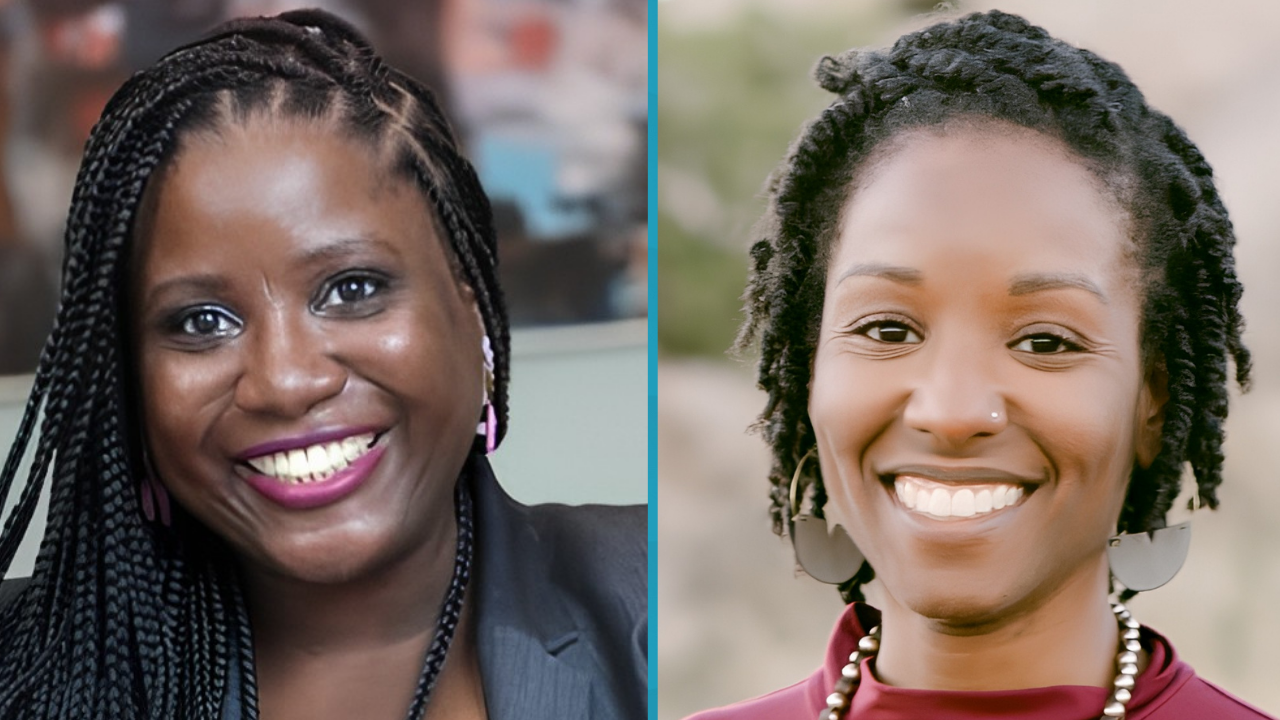
Liz Wayne
Hi everyone! Welcome to Office Hours with Liz Wayne, a podcast brought to you by the Biomedical Engineering Society. I'm Liz, an assistant professor in bioengineering. I'm going to introduce you to the world of biomedical engineering through my eyes or my voice. From genes to machines, biomedical engineers can do it all. We'll dive into how discoveries are made, how research becomes medicine, and what it's actually like working in academia today. So, whether you're a student, researcher, educator, or just someone who's curious about science and how the academic world works, you've come to the right place.
Today we're going to talk about something that I personally think is very fun, and sometimes engineers think it's fun. Students don't always think it's fun, and that's actually what I usually spend office hours going over, and it's math. So, what we also want to talk about is the way you think about math may not be the way that you should always think about math. Biomedical engineering does a lot of interesting things in math, or the way we use it is really-I think it's really fun. And no one knows more about how fun that is than our guest here, Dr. Stacy Finley. Mathematical models are increasingly shaping how biomedical engineers understand disease, predict treatment outcomes, and design effective therapies, especially for cancer. And so, in this episode, we'll talk with Dr. Stacy Finley about how her work developing computational and mathematical models of complex biological systems, and how these models are advancing areas like cancer research and drug development, and how quantitative thinking is becoming an essential part of the future of biomedical engineering, and certainly in cancer research. After this episode, I'm hoping that you'll fall in love with math, just like Stacey has. Welcome to the podcast, Dr. Finley. How are you doing today?
Stacey Finley
Very good. Thanks for having me. I'm excited to chat with you.
Liz
Me too. I run into you at conferences all the time. I'm always thinking, "Oh, I want this conversation to last longer.
Stacey
Aww, I'm excited, nice!
Liz
Yeah, and you know we're on the same coast now. So Dr. Finley is a named chair professor. So you are a Nicole and Thon Pham. You're a Pham professor and professor of biomedical engineering, chemical engineering, and material science. Wait, and quantitative and computational biology. So you're in four departments?
Stacey
Well, chemical engineering and material science is one department, so it makes three total.
Liz
Okay. Okay. All right. That's math one, two, and three. [both laugh] But this is really exciting, and so let's start talking about our math journeys, and maybe tell me a little bit about, like, I guess you can introduce yourself, who you are, and what you do, and how you became interested in math.
Stacey
Yes, so I am Stacey Finley. I'm a professor of biomedical engineering. That's my primary appointment at the University of Southern California, but I also have appointments in quantitative and computational biology because we use a lot of math and computation, and also chemical engineering and material science, mainly because my degrees are in chemical engineering and I can't stray far from my Chem-E roots. Gotta keep up. So yeah, so I run a research lab at USC that is focused on using computational tools to understand biology. That's pretty broad. We are specifically focused primarily on cancer research and trying to understand all of the complexities of cancer as or as much as we can. Cancer is a very complex disease. There are lots of different cell types that are in a tumor. It's not just one homogeneous tissue, and so there are interactions between cells. There are things, of course, that are going on inside of cells. How the cell receives signals and processes the signals. How the cells utilize nutrients in their local microenvironment and utilize metabolic reactions to take advantage of those nutrients, and so we try to better understand some of this complexity, so that we can have a data-driven approach for designing therapies or understanding why a drug works in some situations and not in others?
Liz
Yeah, that's really interesting. One of the things I was thinking about, and maybe you're about to answer it, but how does math help you understand that, right? So, you've got other people also in biomedical engineering who study those same interactions, but maybe they care about the molecules, or they're using like imaging or flow cytometry, and so why math?
Stacey
So why math? Because of the complexity. So, it's hard to account for all of those things that are happening inside of tumors using only an experimental approach. Now that's not to say that our models are not leveraging experimental data. Yes, of course. We collaborate really closely with cancer biologists and tumor immunologists to generate data that we can use to build the model. Once we have the model, we generate some nice predictions. Then we can go back with our collaborators and validate those predictions. But our main advantage of using modeling is that we can try out different things. We can perform different in silico experiments that might not be feasible in the wet lab setting, or might be very resource intensive or very expensive to perform. And so you have to be careful about which set of experiments you do. And so, we can maybe help prioritize or narrow down that list of the experiments that should be done, and also just do some things that may not be possible using only an experimental approach.
Liz
So, what I'm hearing you say is math lets you be creative. Math lets you have an imagination and explore anything that you want to do with your imagination?
Stacey
Yes, I think that's a really great way to put it because we can, for example, turn off a reaction. We can take out a cell type. We can do all these things that maybe we just imagine could potentially be important. We can test them out with our model, and then we can go back with our collaborators and say, "Here's a thing that you should try in the wet lab, here's our prediction of what will happen. Let's see how it plays out in cell culture or some in vivo experiment.”
Liz
Yeah, this is reminding me of how I first began to realize that math was actually fun. I’m going to tell you my story, but I want to maybe go back and think. Like, when did you first realize how powerful math was? Did you have an a-ha moment?
Stacey
Well, I think I learned how much I enjoyed math. Really, it was eighth grade. I had a fantastic math teacher, Mr. Dale May. I still remember his name. I still remember, you know, and it was very influential in just how I viewed math because he made it straightforward. He made it seem feasible to understand these visually complex problems, and he also made it a little bit fun. Now, of course, math is not always fun, but seeing the applications, and it was also nice because right around the same time I was taking a chemistry class, I was taking a physics class. So, this was probably ninth, going into 10th grade, and so I was seeing how math was fitting into these science disciplines and seeing the applications. So it wasn't as abstract as just doing a set of problems, but actually you see how it is used and applied in a real scenario. And so, I would say that you know planting a seed from Mr. May's class and then seeing how math could be applied in different contexts is really what got me excited. And then I was like, well, engineering is about math. Chemistry, all the things that I enjoy, and so that's what helped me decide to go into an engineering discipline. I also had a really transformative experience with math my first semester in college. So I went to Florida and in university in Tallahassee, Florida, and my calculus 2 teacher, Dr. Sonia Stevens, was a black woman. She was like on top of her game. She knew all of the math that I could ever ask about, and again, she engaged the class. She made it seem accessible, and so it was another time when I was even more determined to dig into this field and see how it could be applied in engineering.
Liz
I love that- really transformative teachers highlighting that role, but also being able to see those connections between different disciplines. I had a similar experience, and I also remember this teacher's name, but it was in my physics class actually in high school. Oh my God, Dr, Reed! What's his first name? I don't remember, wow. Dennis Reed, maybe. Oh my gosh. The point is, and I'm gonna sound like such a nerd, okay, Stacey. So we were doing this assignment where we were just measuring circular things, and we had to measure the diameter, and then we measured the circumference of it, like just a like a string and a ruler, right? And then we graphed it, right? So, like we had I don't know which one, like one was on the x axis, one was the y axis, and then the slope was pi, right? Because the relation two-pi-r, like the diameter, and you know this is why I'm like this, why I'm a nerd, because I actually looked up in class and I said oh my god wait is math the language for the physical world is that why we do math because it helps you just describe the relationships between things? We just like graphed it, and then we got a constant, and that constant was something I'd already I'd seen pi before, but now like this is just what it means, and equations. Yeah, it was, and it was like a every single equation or thing you do just is a relationship that you are describing, and that is the language for how we describe the world around us. This is how we know apples are falling from a tree, but how fast? Well, the math can tell you how fast. It can help you understand how fast and over what time if you have the right equations, which are just relationships. And that's why the units have to match so that you know it's the right relationship, like apples to apples, oranges to oranges. And that really clicked for me in a way that I don't know if the teacher meant. I mean, maybe he meant to do it. I think he meant to just say this is where pi came from. But for me, it was like a deeper like, oh, this is why math is useful. Okay, okay, I see what you're doing. Okay, I'll allow it. I'll keep doing this. I actually didn't think the assignment was really dumb at first. I was like, why we like a string? I thought we were doing some physics. You know, like you know, something more cool than just like measuring cans, but that really made sense for me.
Stacey
Yeah, I like the way you described it. As math is a way of describing the world around us, and we can put that into context for cancer, right? So, we have these models of tumor growth. We have models of how cells interact with one another in the tumor, and really what we're doing with our modeling is trying to represent what's happening in the tumor in a mathematical way, so that then we can ask questions about well, what happens if we change this parameter, or what happens if we remove one of the variables in our system, and how does that now change the trajectory of tumor growth, or how does that affect how responsive the tumor will be to treatment? So, it's very analogous, very analogous.
Liz
Yeah, and you know, let's keep talking about cancer, which is just a really, as you said, a very complex disease, and I think it lends itself to math really well in ways that maybe people haven't thought about before because it evolves over time, right? It is, and in some ways, it's an evolutionary disease, an evolutionary ecology, and what are some of the like ideas or theories about how cancer grows that you explain mathematically in some of your work.
Stacey
Yeah, so one type of model that we use, it's called an agent based model, and what it is -every cell in our tumor simulation is its own autonomous agent, and we describe. So, we write down what are the rules that govern that cell's behavior? So we just list out certain rules. So as an example, maybe the cell that we're talking about is a tumor cell. It can divide after a certain period of time. So we write down a rule and say after generally, let's say 24 hours, and the cell can divide and make a new cell. We say that the cell can move around in its local microenvironment, depending on what other cells are around it. We say that the cell can die if a natural killer cell or a T cell is close to it and interacts with it. So, we write down the rules of what the cell can do, and then because we can't predict just with equations, what will happen once we have the rules? Some emergent behavior can arise, so it's not even always predictable down to the equation level.
Liz
And what is emergent behavior? What does that mean?
Stacey
Yes, so emergent behavior meaning some population level outcome occurs, so we write down the rules and we throw them into our computer, and then with certain probabilities, those events can happen, and then we just see what arises. And so, because the tumor is this heterogeneous complex environment, we can't always say with certainty that just because a T cell comes close to a tumor cell, it will always kill the tumor cell. We have a probability we in quote that will occur with a certain probability, and we just see how that plays out over time. So, it definitely accounts for this evolution and trajectory of things changing, and also accounts for how cells can interact with one another and interact with their local microenvironment, and so you're very right that it's a ripe context to apply modeling so that we can write down what we know and then see what happens.
Liz
Right, and then you even mentioned this, and maybe I wanted to take some time so people understand we're moving from like just talking about math to modeling. Am I right in thinking those might be different contexts or just like how would you describe modeling to someone who doesn't know it?
Stacey
Right. So, I would say that modeling is using principles from math and physics and other science disciplines to represent a system. So, what we know right now at one point in time, and then use that model to predict what will happen at future times. So, modeling is more predicting what happens at subsequent times, and the math is very critical to it, right? Because we, just like you said before, we have to say, "Oh, well, how fast will something happen? With what probability will something happen?” So we put in those math facts, and then with the model, we can predict how that influences the future states of the system.
Liz
Right, and then kind of those facts are like having the rules and thinking about what the rules of life are, what just makes this nice intersection with like experiments or just other things that are commonly accepted to develop these rules of how cells behave. It's really interesting to think about the rules of nature and how do you find out these fundamental truths about how things work, or how do you even use models to discover whether your fundamental truth that you thought was actually right or not?
Stacey
Yes, that's a really good point. So, in my work, because we want our models to be realistic and to represent what's known in tumor biology, we have a lot of conversations with cancer biologists and immunologists and people who are doing the experiments that define the rules that we were just talking about, and so we first have to say what cells should we include, what processes should we include, what should the rules look like? And to go to your next point, it's also a way to test whether what we think we know is actually what happens. So that's another reason to use modeling is because we can have a whole family, an ensemble of models, each one that is slightly different because we might include a rule in one and not include a rule in another model, or we might slightly change that rule, and so we might have, let's say, 50 different potential models, and then we can run simulations. Right, predict what happens forward in time with each of those 50 models, and then compare what we would predict to what our experimental collaborators could measure. And that allows us to filter out and say, well, this model is not right because it's way off from what the experiments show, we can narrow down the family of models so that they more closely match the experimental data, and that's how we can say, well, maybe we need to refine our thinking or relax an assumption that we made in building this particular model.
Liz
Yeah, and along those lines, because you're describing like an interactive, recursive way to figure out which models to do, and I was even thinking about like how many rules could you apply? Like, how do you figure out how many things you can try at one time, or you know, which are even the most relevant rules to apply? Like, I’m assuming that you can make rules for anything or any level of cell behavior, but then that doesn't mean they're all meaningful.
Stacey
That's right. Yes. So that's also part of the conversation with our collaborators. It's always a good practice to start with the simplest model that can recapitulate experimental data. You want to be as simple as possible and not too complex, right? Because then it raises questions, or we might have to make assumptions about the complexity that you're introducing into the model. So, we start as simply as possible, see if that matches the data, and then we add in more rules or add in more complexity if we notice that the model is not quite matching our experimental observations, and so we start simply and then add in more complexity. But given the, you know, wealth of computational resources and computing power that's right at our fingertips now, it's not really a limit as to how many models we could build or how many rules we could incorporate. It's more making sure that we're more constrained to make sure that the models are matching experimental data.
[Music Break]
Liz
So, I'm curious about what you're working on now. I mean, I was looking a little bit at some of your work, but maybe we can just start talking about some of your research. So, you've been doing some modeling, interacting with clinical trials, and you seem to look at different types of cancers as well. What have you been finding recently, some of the models that you think are most interesting to you?
Stacey
Yes. So we have, I think, an exciting project in HER2-positive breast cancer, this is a type of cancer that, when it's diagnosed generally, it's already at a stage of where the patient has metastatic disease, meaning that the tumor has moved out of the breast tissue and is in the lung, or the liver, or the brain. And so there is an urgent need to be able to understand what's happening in this kind of cancer. And so, we have the kind of model that I was just describing, an agent-based model where we are looking at cancer cells and interactions with immune cells. And what we're finding is that it's not just important what cells are there; it's also important where they're located, how they're organized spatially, and what other cells are in their community. How close are the cancer cells to T cells, or how close are the T cells to a kind of immune cell that suppresses the killing capability of these, right? So, it's not just like that the T cells are there; it's also who they're talking to and who they're interacting with. So that spatial organization is really important, and the agent-based modeling that we're doing gives us that information. It tells us what cells are there, what state are they in, and also who is in their local? What other cells are in their local microenvironment? And so, we're finding that this is really important, particularly in this type of breast cancer, because of the immunosuppressive nature of some of the cells that are there. Just because there are CD8 positive T cells, which are meant to kill cancer cells, they're actually oftentimes neighbors with cells that are suppressing their capability. And so the model helps us to identify what communities are forming, and also, again, because we can test different hypotheses with the model, we can say, well, how might I disrupt this community to allow the T cell to become active and able to kill cancer cells. The nice thing is that the model that we've built is initialized with tumor imaging data that comes directly from our collaborator. So, she has a nice mouse model that forms spontaneous metastases to the lung, and she can take out the lung. She can section the tissue and look using immunofluorescent staining. We can see what cells are there, and we can initialize our model directly from that tumor image, so that the model is based and built on experimental data.
Liz
I love that. I was just going to ask because that's a beautiful way to compare, like not only preclinical data, but even clinical tumor samples where we take stains, and that's what pathologists do to grade them all the time. And actually, being able to take a biopsy or just kind of say like your cell distribution is indicating that this might be more immunosuppressive, right? Or like what kind of treatments you can give. I also like the idea that in terms of the rules, like before we were talking about rules, it felt more like I'm going to say what the cell can do. But you can also make rules about how they are spatially organized. You can make assumptions about how, like drug diffusion, or like what they're interacting with-not just what the cell's doing, but what the environment that they're in is doing. It's like you're making like a video game, an immersive environment, and you get to walk around and play and see what's happening, and that's just that's super cool.
Stacey
Yeah, I think- So, maybe going back to the clinical piece, what we're doing right now, of course, with preclinical in-vivo mouse studies, is really a bridge to show the feasibility and the proof of concept that this kind of modeling works. And then we will move to human samples. My collaborator is a breast oncologist who also in the research lab, she can and has been getting patient samples from breast cancer patients, and so we're showing that this is useful and generates valuable insights in the mouse model. But we're not really interested in mice, right? We're interested in human breast cancer patients, and so we want to demonstrate that this same kind of approach could be used for the imaging data that we would obtain from the breast cancer tumor biopsies.
Liz
Yeah, I'm curious how you work with this dynamic because a tumor, like a section, that's kind of fixed in time, but then the modeling you do, I guess, crosses time spans. And so, how do you, how do you make those two make sense together?
Stacey
Right. So, what we can do is we can initialize our model with the imaging data that we get from the tumor, and because of the probabilistic nature of the model, right? We say, oh, tumor cells and T cells can interact, but it's not with 100% certainty that the T cell would kill the tumor cell, so there's a probability that that happens, and that means that every time we run our model, we would get a different result, and so we can generate a family of simulations and try to understand how that that probabilistic nature gives rise to variability in the outcome. So then we are able to understand more about the heterogeneity of the responses and ask questions about whether you know how often the tumor would be completely eliminated or how often it would continue to grow.
Liz
That's really cool to be able to take one section in time and then be able to project, you know, without having that extra sample to do that. It's really exciting to think about what can happen clinically. But maybe we can go back to some of the findings that you had that whatever cells are in the environment are actually changing, or suppressing, like the T cells that should perform the function. Are you able to do this with just the cell populations, or are you thinking about like cytokines that the actions that the cells do on the other cells?
Stacey
So we have zoomed out a little bit to not directly look at the cytokines and other diffusible factors that a cell secretes, and the main reason for that is because if we were to include all of you know the family of diffusible factors that one cell type secretes, the complexity of the model just explodes. And so, what we do instead is say we have these two cells. Depending on how close they are, they can exert an effect on one another, and that is trying to account for the fact that a cell actually does secrete a diffusible factor, but that diffusible factor can only move a certain distance away from the cell. So, the distance between two cells is a proxy for how much or how influential a diffusible factor would be in order to affect another cell that's nearby.
Liz
And I love this because it's an example of you choosing the rules that you apply and how you apply them.
Stacey
Yes, we have to make some decisions about how complex the model should be so that we get to the question that we want to answer. It's not just about building a model to have the most complex and comprehensive model that we could build, but more so, can we build a model to answer a particular subset of questions?
Liz
Yeah, I was just in an inclusive teaching program, and we have someone who does math education, just studying how people learn math and looking at K-12, and one of the things that they came up with as a best practice was, or a challenge is we always focus on calculations instead of thinking about like the conceptual consideration of the problem. It’s not surprising that people in math classes get stuck on like which equation should I use again, and how do I do this? And instead of thinking like, wait, what does this represent? What does it mean? What do we do? Which you can see is really important, or is actually the fun part of math-the relationships that you're building and the rules and choosing how you like express or identifies a variable.
Stacey
No, I completely agree. Like trying to understand the context. That's why all of our collaborations first start out with conversations. What do we want to know? And then that helps us to answer a question about well, what kind of model should we apply to answer this question? Right, not all models are the same, and they don't give us all the same type of information. So, we also have to think about what's the best modeling approach to answer that question. But you're right. Let's talk about the biology first, and then think about well, how might I represent this mathematically?
Liz
What are the most important relationships, and what is like the most accurate but not the most helpful? Because it is possible to be extremely accurate and extremely not helpful. As a physicist, I know that very well. [Both laugh] We do a lot of things that are like very accurate, and then no one wants to talk to us ever again. So, these are some interesting cancer like questions that you're asking. And I, before we move on from cancer, I notice that you also study not just breast cancer, but you might look across different cancers. Are there any kind of similarities or things you find across cancer types?
Stacey
So, another kind of cancer that we study in the lab is colorectal cancer. The origin is often-I mean, it's very different from breast cancer, and if anything, what we're finding is that you know that local tumor microenvironment is really influential, and it shapes how the tumor grows and whether it's responsive to treatment and whether it can be infiltrated with immune cells. And so, I wouldn't say that there are so many similarities, except that location matters, and that that microenvironment is very influential in shaping the trajectory of the tumor.
Liz
Location, location, location.
Okay, wait. I said one more cancer thing, but do you remember the very first hallmarks of cancer? I think it was like in 2000. So, I read it again, and one I think the whole hallmarks are just kind of funny because they come out every 10 years. The first one, this is the five hallmarks, and if you fix those, we will cure cancer, and in 10 years there won't be any more cancer. And then 10 years passed, and they're like, my bad. So anyway, there's actually more hallmarks. There's some emerging hallmarks, and then like in 10 more years, they were like, "Okay, now here's like two pages worth of hallmarks. Like they kept making it more complicated, but in that first one, they really mentioned that like one of the complexities of cancer is the etiology that it matters like which mutations occur first, and then the way so the way your cancer evolves depends on which things happen first. So, you could have multiple features that develop tumors, but the reason why everyone has different phenotypes is because of that local environment. What happens first, and then next, and what causes the next, the next, the next to happen, and that's how you get like 50 million different diseases, even though it's like one tissue.
Stacey
That's exactly right. Even within breast cancer, right, there are many different subtypes. Or even within colorectal cancer, every tumor is slightly different because of the environment, because of the host, right, the patient, and so yeah, it's the sequence of events that happens that's also directly linked and dependent on the local microenvironment.
Liz
Yeah. So modeling is like a really great place to see how things play out, right? And then see how therapeutics or any of these other interventions can play out, because the only way to really recapitulate something that is just so stochastic in a sense, it's almost impossible to do that to really replicate someone as disease when it's so unique.
Stacey
Yeah, I do think that's one advantage. You know, a power of mathematical modeling for sure.
[Music Break]
Liz
We talked a lot about the power, and what I have learned now as someone trying to collaborate with modelers is that people get modeling wrong a lot, and it can be hard. You mentioned a lot about having conversations, and I'll just say, when I first started, I think I might have had the oh, this is powerful, let's use this tool, and oh, or I think I understand modeling, and I think I understand the rules. Let me just tell you the rules, and then you give me back some data. And it was wrong because it didn't capture the whole essence of trying to conceptually understand the questions you're trying to answer and how you're trying to approach it. So, I'm curious for you, as someone who is a modeler and you have this very powerful toolset. What do you think people get wrong about modeling and collaborating with modelers?
Stacey
So maybe the first thing is that a modeler or a person who does computational modeling, more like a technician or just analyzing data, and actually I'm part of you know a research consortium right now that's trying to change that paradigm between computational researchers and experimental researchers and how we can initialize or how those initial conversations should be brought up or broached. And so really, the scientific development of a project. If you're going to have computational modeling as part of that, then the modeling component and the experimental component need to start from the very beginning, thinking about what are the biological questions? It's not enough to say, "Here's some data, figure it out, and give me a model back.” And even from the modeling side, it's not enough to say, "Well, here's a great model, you should just use this thing.” Right? Yeah. To come from both sides and thinking about the questions and thinking about the right modeling approach and also the right data and the right experiments, then to go back and test and validate the model, as we talked about it being an iterative cycle. And so, I think the very first thing that we should acknowledge is that it requires this partnership between both sides, and acknowledging that deciding and designing the project itself needs to have input from both sides.
Liz
Yeah, in the inception, in the model, they're not like an add-on.
Stacey
Exactly, it's not something to tack on. It's not just a bioinformatician or a technician or data scientist. It's someone who wants to be intimately involved in the development of the project.
Liz
Because we just we talked about this earlier, but the rules you have to think about the rules of how the cells behave, what environment do they behave in, and then how right or wrong is this, and then what the best method to apply. So, it's the relationships, and you can't skip the relationship part. You can't skip the relationship part. So that's something to realize. And I think part of that is also steeped in the idea that modeling is its own science. It is a science and a discipline. And if you don't treat it as like a discipline and only like as a tool set, then then you're really missing like the key here to the deeper insights that you could get from this.
Stacey
Yeah, I think that emphasizing the relationship between the modeling component and the experimental component is very important. I think another piece here is recognizing that models, mathematical models, are not a monolith; they're not all the same. So even the modeling that I was just describing, agent-based modeling, that's very different from differential equation models, or from other kinds of computational approaches to study biological systems. And so, I think the next piece, and it's very tied to the relationship building is once we can better understand what questions we want to go after, that helps us to decide what is the appropriate modeling approach to use to answer that question, so that we get to the heart of what we want to uncover, and we're using the appropriate tool, modeling tool, to do that.
Liz
And I think the next thing we're going to, I would say, is AI is not modeling. I get a lot of eye rolls, or I hear a lot of it. It's just kind of annoying because machine learning has been around for a while-
Stacey
A long time.
Liz
A long time. And modeling, they are not- They're not synergistic. They're not like interchangeable words. And so, what would you say to help people understand how to contextualize what modelers do in this era where everything that involves a computer seems to be AI or coded as AI?
Stacey
Right. So I think one way that I think about it is that like AI and machine learning can be a first step to building a model because maybe it can they can identify- well, what are some key features of this data set or key processes that are happening or what are some relationships between different components of this system that we're able to measure, and then we go with mathematical modeling to dig in and say, well, if I have a hypothesis about not just that these two components are correlated and related, but actually how they're related, so it turns that like black box kind of correlation analysis into a gray box or even a white box, right? Opening up the box and trying to understand the mechanisms by which these two pieces are related to one another, and so not to say that these, you know, AI and machine learning is completely separate from the kind of mathematical modeling and computational modeling that we've been discussing. More so, let's think about how we can make a good handshake between them and how the how they complement one another.
Liz
Yeah, like they should fit in the same context of you've already had the conversations about the biology of the conceptualization of the question, the kinds of rules you like to input your experimental data, what you know and don't know, and AI or other machine learning techniques might help you integrate the bridge between the experimental what you know and don't know, and then like defining the model, the conceptual like model of how things work.
Stacey
Yeah, so maybe just an example, like going back to our conversation, our earlier part of the conversation when we were talking about the spatial organization. So, let's say that you have single cell RNA sequencing data, and you find that the expression of a gene in an immunosuppressive cell, like myeloid derived suppressor cells, is correlated to the expression of a gene in T cells that gives a marker for exhaustion. So, we know that MDSEs, the phenotypic cell type, is affecting the exhaustion phenotype of T cells. We know that it's happening. They're related. So now let's take that knowledge that we may get from data analysis or machine learning AI, and then go to a mechanistic model to say, well, how or what does that relationship look like, and how can we exploit that relationship to improve the efficacy of immunotherapy? So, it can form a nice pipeline to identify relationships and then go to mathematical modeling to understand more the mechanism behind those relationships.
Liz
I love that. It's a really good example. Have you ever been to the Find Your Inner Modeler conference?
Stacey
I haven't, but someone who helps organize it. Dr. Belinda Akpa is a friend of mine, so she speaks so highly of it. But I have not been before.
Liz
Yeah, it's gonna be it's in UC Irvine again, so it'll be in your neck of the woods. But I went last year for the first time. Also, Dr. Akpa invited me here, and we've been collaborating. So she's been the one educating me. She's done the hard work of educating me and an experimentalist on like how to give modeling the proper respect it deserves, and the conference was really interesting because there were a mix of students there, and I'm just going to call it people who are novices but want to learn, and then there's a lot of experts there, people who are you know, like you, they know the field really well, and now they're kind of at this comfort of like introducing new technologies or new methodologies with more ease. And I felt like there was a tension between people who were trying to learn and were- I won't say they were afraid of AI, but more like how do you learn something when like there's a black box there that everyone wants you to adopt, and it felt like people were saying, "Oh yeah, this is great, and I use this to do all these other things”, and then people are like, "Wait, but I want to learn how to do them, and I don't know how to do it.” Maybe what I'm asking, or I'm kind of curious about, is like what you think the onboarding is for becoming a modeler, and what skills do you think like people who are starting the field need to do that successfully?
Stacey
Yeah, I think so. Something that you know is very basic and important is just to have an inquisitive nature, right? So, wanting to learn more. So, when students come to me and say, "Oh, well, I'm thinking about maybe possibly computational research, and maybe I might be interested in your lab.” Well, first I ask them, “do you have questions that you're interested in answering?” It doesn't matter that you don't already have modeling experience because these are things that you can learn. But if you have a desire to learn and an interest, then that's the first prerequisite. I think the next thing that might help is just to pick up a primer on what are the different kinds of models. Just like we were talking about, once you have the question in hand, then you need to pair it with the right modeling approach. And so, I think it's helpful just to know well what's the range of different modeling tools that are available, so that when I see a question, I can think about. Oh well, I believe that agent-based model is really appropriate here. So, I think that's probably a good place to start. Just taking a survey of what are the modeling approaches that we can bring to bear to answer certain biological questions. I think with ChatGPT and other AI tools, writing the code or at least getting a start for learning how to write code is not as big of a barrier as it was in the past. So that's why I think it's important to know well what kinds of models we can build, what kind of modeling tools are at hand, and then thinking about okay, well, what's the coding language and what's the framework that sort of comes secondary.
Liz
I see. I actually think I appreciate that because that is a good foundation for people to start, especially if they feel intimidated by the amount of information or feeling like you have to be really good at something to know, or simultaneously, if you can do coding with AI, then what? What do I learn now? What do I need to be?
Stacey
Yeah, I think we won't be able to get away from the human piece of knowing what modeling tool to pair with what question, and then of course, like even defining the question, that's something that I don't think AI can do. Yeah, more the mechanics of writing code is where you know we can lean more on AI, but of course, it still has to be checked and validated, which was another piece to think about too.
Liz
Absolutely, you have to validate. You have to check for uncertainty. But this is all really interesting, and I think that yeah, I do think as someone who didn't learn how to code formally, that like it's been useful to work with certain agents and then like go back and forth because there are some things I like well, and others are like, oh, I just want to build it myself. So, I see it, but at least I can like copy or paste or like have something to read or edit to look at. So, you are a full professor, right? Yes. That's like I'm so excited. I'm going out for tenure now, so every time I'm like, oh my god, how do people do it? You're amazing. But one of the nice things about being a leader in the field is that you were also like serving on all of these committees and on national grants, and so you're also helping shape how biomedical engineering and computational modeling is evolving, right? And so, what do you think, like from this level that you have now of being on like society boards or like these are high membership, and certainly a part of the NIH Humanity Unlocking Biomaterials Consortium. Not sure the right word for that is. It's a consortium. It's a group. It's a big project.
Stacey
Yeah, I think it's fun to be able to have, you know, still what I think are very exciting research projects going in the lab, and also bring people on board about the power and the impact that modeling can have, with this example that you mentioned, the Humanity Unlocking Biomaterials. I know 0% about biomaterials, but it's exciting to think about. Well, let's talk about the kinds of gaps or the things that we want to be able to answer in the biomaterials space, and how we might be able to use computational modeling to do that. And so, it's fun for me because I'm learning about a new research area, but also bringing people along to better appreciate the role that mathematical modeling can play in driving scientific discovery, and so I do think that that is you know a nice benefit of progressing in your career, where you can look outside of the lab that you're directing, the research that you're directing, and think more broadly about well, what kind of impact might I want to have in my career, and maybe it's not all going to be in my case in computational modeling of cancer, but more broadly about how we can use these kinds of tools in biomedical engineering across different kinds of fields and different questions.
Liz
Have you found anything interesting about like translating this for biomaterials?
Stacey
You know, we're still, I think, in some of those first conversations, or that first piece that I mentioned about let's better understand what questions are being posed and pairing that with the right computational model. And thinking about how machine learning and data-driven approaches could be applied here too. So, I'm first learning: well, here are the things that biomaterials researchers want to know, and now I can think about well, here are the places or the kinds of mathematical models that can be used to answer those questions. And the fun part for me too is that it's not just me working on it, but I get to work with some really nice colleagues and friends, and I have the chance to sort of pair biomaterials researchers with colleagues of mine who might be doing the right kind of modeling for their question. That might not be the expertise of my lab directly, so it's been fun, and I think just more broadly, right? Just trying to bring mathematical modeling even more to the forefront of biomedical engineering is a fun endeavor.
Liz
Yeah, I'm super excited. I mean, I think the same applies in cancer, but we've reached this point where we've developed such amazing therapeutics, and we have really great diagnostics. And the problem now isn't that we don't know how to treat certain things, but maybe we can't predict how people respond to that treatment that evolves, or we can't figure out who needs which drug at which time period. Right? That's so. That's the application specificity, not necessarily like, do we know what a tumor looks like? And I think the same is for biomaterials, where we've developed so many different chemistries, we've developed different architectures, and we can do lots of amazing things. But we're still failing at the clinical translation because they're developing fibrotic responses, having like tissue rejection, I'm really excited about what the role of computational and like mathematical modeling can do to our creativity and our ability to design as well as diagnose and to make better drugs for everyone.
Stacey
I agree. Yeah, maybe let's just reiterate again that it allows us to be creative, to try out different things with a mathematical framework that might not be possible with just experiments alone.I like this piece because then it also links the nerd with more of the artist creative type. So that's a good connection to emphasize.
Liz
Oh yeah, that helped me get through my teenage years. When like, like I'm not a nerd; I'm an artist. So, like, you know, those two parts of the job wheel are very close to each other. You have to be able to think creatively and like use your mind to be able to envision equations. And I think being a scientist really is being an artist. Like, we don't know what molecules look like, and yet we think about molecular or cellular things every day, right? Yeah, I think you have to be very creative to do that. So, I could have been an artist, but I became a scientist, which is kind of the same. So happy in the end. Thank you so much for coming and joining me for this conversation. Doctor Finley, this has been amazing. You have such a nice, calm, like I was gonna say spirit, but I just learned so much from you. I definitely want to talk to you about some like macrophage sensor stuff and your spatial like information. But are you going to any conferences this year? Maybe I'll see you this year.
Stacey
I'll be at BMES for sure. I think that's yeah, that's the major one coming up.
Liz
Alright! If you enjoyed today's conversation, be sure to subscribe wherever you get your podcasts, and visit bmes.org to learn more about the people and ideas shaping the future of biomedical engineering. We'll see you next time on Office Hours with Liz Wayne.
[Outro music]
If you have questions or ideas for a future episode, feel free to email us at communications@bmes.org. You can also stay up to date by following us on social media at bmessociety and visiting our website at bmes.org /podcast/officehours. We look forward to hearing from you and hopefully featuring one of you on the podcast.






.svg.png?width=39&height=39&name=Podcasts_(iOS).svg.png)