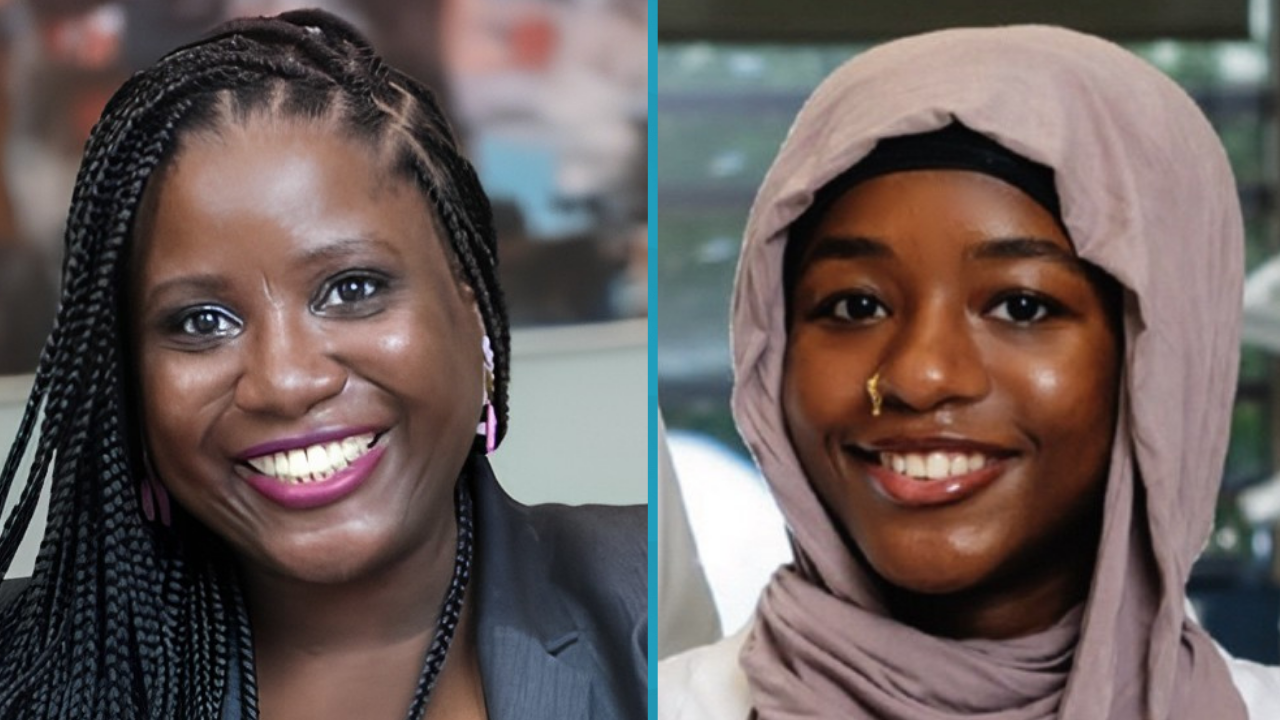
Liz Wayne
Hi everyone! Welcome to Office Hours with Liz Wayne, a podcast brought to you by the Biomedical Engineering Society. I'm Liz, an assistant professor in bioengineering. I'm going to introduce you to the world of biomedical engineering through my eyes or my voice. From genes to machines, biomedical engineers can do it all. We'll dive into how discoveries are made, how research becomes medicine, and what it's actually like working in academia today. So, whether you're a student, researcher, educator, or just someone who's curious about science and how the academic world works, you've come to the right place.
Hi, listeners! Welcome to another episode of Office Hours with Liz Wayne. I'm obviously Liz Wayne, and this is Office Hours, which I occasionally show up to on time for my students. Sometimes, other times they get mad, and part of the reason why they get upset is because they've got so much stuff to do. Researching is really hard. Teaching and being a grad student is really hard. You have to do experiments. You're taking classes. You have to analyze data, and then just working in a lab, it's a lot. But I've also been really inspired by how students find a way to balance all of that, and then still think, what is the institution that they're in? What is academia, and how do I fit into it? And it can be really challenging to think about how to develop your leadership skills as well as managing your academic responsibilities. And so, I brought a guest who can help us navigate those very pathways. None other than Amal Shabazz. Welcome to the show, Amal.
Amal Shabazz
Hi Liz, I'm so excited to be here.
Liz
I'm excited to be here too, and I was excited, you know, when I heard you’d be on the show or wanted to do it. I kind of looked up a little bit about you, but I was like, yeah, this is a great person to do this. So thank you so much, and why don't you just start by at least telling us about yourself?
Amal
Yeah. So, my name is Amal Shabazz. I am currently a fourth-year PhD candidate at the University of Maryland. I'm studying bioengineering with a focus on tissue engineering, and so my research focuses on 3D printing a nipple for patients that have had mastectomies. And my part of the project is focused on functionalizing the implants by embedding tissue-specific cells to kind of control the movement of the tissue as it's printed.
Liz
Okay, that's pretty cool. And the first thing I'll say is like breast reconstruction is a huge deal, and it's very important to learn how to reconstruct that, given all of the people who have to deal with that for lots of disease reasons, and I’m also interested because it’s something I've never thought about before. I'm curious from a scientific perspective, what are some of the challenges or needs for reconstructing a nipple?
Amal
Yeah, so that's a really important question for the field of tissue engineering as a whole, so I would say that the biggest challenge is trying to recreate a tissue that's on the order of the scale that you need to reconstruct the actual tissue, right? So, the nipple itself is millimeters in size, and so when you're trying to print a tissue that's millimeters in size, you have to make sure that the tissue is vascularized, that all of the cells have nutrients, that it's porous enough for the cells to move through and integrate into the tissue efficiently, which is one of the major challenges in the field that we haven't yet been able to reach.
Liz
Awesome, and so you're in College Park. What has your experience as a grad student been like? You're kind of coming out of the COVID era and then post-COVID era.
Amal
So, I studied biomedical engineering at NJIT, New Jersey Institute of Technology, and so I focused in tissue engineering there. So I did a little bit of research experience before the COVID interruption happened, and so yeah, that kind of just put everything on pause for a while. And so, in the meantime, I had done some industry experiences, worked at some internships, and I had always been leaning more towards industry as a result of those experiences. But I did have some mentors that were kind of involved in my research experiences at NJIT, and all of my mentors had their PhD, and all of them had encouraged me to apply to graduate school to earn my PhD. And so, very last minute, I submitted some applications to graduate programs, and I ended up at UMD, where I am now.
Liz
Awesome! Time and time again, that role of mentorship and being exposed, and someone kind of looking at you and saying, "Hey, I think you would be good at this.” Without people like that, I think half of us wouldn't be here. So I'm glad that that experience happened for you. And so, you got into research, and then you got into tissue engineering, and undoubtedly doing some great things. And then you're also a NSF GRFP [National Science Foundation Graduate Research Fellowship Programs] fellow, right?
Amal
Yes.
Liz
Which was exciting. What was that process like applying?
Amal
So, I actually applied only one time in graduate school during my first year, and I think that that was a great time for me to apply because I had started working with my research advisor already, and so I already kind of had a direction, a sense of direction for the research that I wanted to do during graduate school. So, preparing the research part of the application, he worked with me on, and we were able to put together a strong draft for the research plan, and then I had already gone through the process of applying to graduate school and applying to other fellowships my first year, and so reworking some of the personal statement, I just kind of pulled elements from different parts of applications that I had applied for. I worked with the Center for Scholarships here at UMD to make that application a lot stronger. And yeah, submitted it, and I was lucky enough to get it on my first try.
Liz
Yeah, that's exciting. I mean, you say lucky, but I'm going to probably say that everything you did, it sounds like you were just very talented and very good, and you give yourself credit.
Amal
Thank you.
Liz
And that sounds really awesome. And I'm excited to see what research you do here. And so you talk a little about your then your path into biomedical engineering, and maybe I'll say as a follow up, you mentioned that you were thinking about industry as a path, and so now what do you think you want to do when you're finished with your PhD?
Amal
Yeah, so I'm thinking now as a result of some of the mentorship that I've had during graduate school, and then also some of the continued relationships that I had during undergrad. I've kind of been pushed in the direction of academia, actually. So, I'm thinking of pursuing a postdoc and then kind of continuing in the field to maybe eventually become an academic researcher and professor.
Liz
And what's making you do that push for academia?
Amal
Yeah, so I actually really did enjoy my time in graduate school. I think that number one, having the NSF GRFP has been really instrumental for my graduate career because it gives me the freedom to actually choose the direction of the research that I want to do, and so I've had a lot of freedom to kind of explore the project that I want to focus on, and I've been enjoying a lot of that experience. So yeah, I think that just having the ability to kind of control the direction of the research and the work that your group does is really appealing to me. And so, I think that is something that I would consider doing as a career.
Liz
Yeah, that's exactly what being a faculty is like: when you think you have a question you can answer for 20-30 years, when you want to set the trajectory of an entire program or shape a field. Those are definitely academic questions, and very exciting that you want to pursue them. And I'm also encouraged because I would say that some aspects of COVID and the kind of inconsistency or chaos of funding situations sometimes make people feel like this is less of a stable career to go into. And right now, it sounds like you're kind of saying you're either unfazed or you're kind of like, no, I still want to try.
Amal
Yeah. So, I think that you could say that for a lot of careers. I think industry right now is very shaky.
Liz
That's true.
Amal
Yes, consulting, government jobs. I think the future of them is very uncertain right now, and so the odds are- you know, they're always hard. It's always going to be difficult to get into certain careers in certain areas, but yeah, I think that exactly what you said-that it's worth the try. It's worth going for the opportunity rather than letting it pass.
Liz
You've been getting a lot of experience with, I guess, being a faculty. So, you've obviously been talking about the research you're doing, but then you've also been doing some leadership and thinking about, again, how to develop a program, why don't you tell me about some of the leadership experiences that you've been a part of?
Amal
Yeah, so I had always been one of those students that did a million things simultaneously. When I was in undergrad, I focused on you know obviously I was taking classes, I had a part-time job, I did some internships. I also did research experience, and I held leadership positions. And it definitely wasn't easy for me. But I think over time, I had grown accustomed to just doing a lot of things at once.
Liz
In what ways was it not easy for you?
Amal
Well, it's a lot to juggle, and you have to really be on top of your time management. And so, I think, at least at first, I struggled with, you know, dedicating time to certain things and making sure that you're not falling behind on certain tasks and responsibilities that you have. And also, I think that I am really interested in mentorship and giving back to the community. Those are things that you don't necessarily get credit for, but they're still important to me. So, I had to figure out how to loop those things into the commitment that I had with the time that I had outside of the classes that I was already taking and the responsibilities that I already know that I needed to do.
Liz
That's such a good lesson. I'm so happy to hear you expressing this early on. I frequently think about how to integrate the- I call them like the social things and leadership things that I'm interested in with the research, because I have to figure out how to both make this job sustainable because I'm just one person, and I also have to figure out how to make the stakeholders that I'm accountable to, which are the grad students and students that work under me, the classes I teach, as well as like other faculty, and you know, all the way up to the funders. I have to also make them happy. You always have to do that, and so it's interesting for you to talk about how you're trying to navigate those spaces and a whole count hold those relationships. So, you said you were doing lots of leadership opportunities in undergrad, and then what about grad school? Because now it's a fresh slate. So how did you decide what you were going to start?
Amal
Yeah. So, I think in graduate school now, my priority is ultimately research and my education. So, right, I'm currently the Student Representative for the [BMES] Board of Directors. The first word in that title is student. So, I have to make sure that I'm meeting my needs and requirements academically, or else none of the leadership experiences will matter, or you won't really be seen as credible for those experiences, and that philosophy kind of continues throughout your career.
Liz
Before we move on, I'm kind of curious. So, for me, I learned that lesson the hard way. How did you learn that lesson? Can you give an example, maybe?
Amal
I think that I definitely learned that, thankfully, not the hard way but through my mentors. So, I have different mentors that I go to for different things now at this point, and so I have mentors that I go to for academic advice, for career advice, for mentorship, or for leadership. And so, all of my mentors usually are either in the field that I'm interested in, so in academia or tissue engineering, and so this is something that they've learned that they've then passed down to me simply, so that I didn't have to go through the same things.
Liz
That's amazing. You’ve got some great mentors, and I can tell you're going to be a great mentor. So, when I say I learned the hard way, I was burning out. I was trying to do everything. I didn't know how to say no, and then the real kind of stick for me came when I realized that I wanted to be acknowledged for my science, and then people weren't associating me with the science. It just kind of came to a head where it was like really thinking about the whole thing in a more broad context, or how I felt validated or like appreciated for the things I was doing, and also just like I'm burned out. I got issues. This is tiring. In my case, when you're good at it, they'll ask you to do it. So, they'll like, “oh, you're really great at science communication, so you should keep talking. Like, oh yeah, come speak here, come do this, come mentor this person, come do this.” And I started to recognize that I was being asked to do things, and other people weren't being asked, and they got to focus more on other things. But I was also being judged by the same standards, so I had to look at that. And I also I had mentors, and they would come to me and say, "Well, Liz, like you've already organized a conference, so you don't need to do another one.” If you're going to do different leadership, you should build a different one and like build out your skill set and learn something new, but don't keep doing the same thing over and over again because then you're just doing service. And unless that service is important to you or like in your mission, like you got to, you should pick different things to do.
Amal
Right, exactly.
Liz
Hard lessons to learn.
[Music Break]
So, you mentioned that you are on the Board of Directors for the National BMES, and then you're the student representative. I want to know what it entails, but also how did you get into this? Because it's like the national level. How did you get on this scale, and then tell me what it means to do this job.
Amal
Yeah, so the BMES student representative for the board of directors is a nominated position. So, I was nominated for the position and then I was selected as the representative. And what it entails is essentially you are a voice for the students during the Board of Directors meetings, where the direction of the society is decided. And so, for me, I like to approach that the way that many engineers would approach problem solving or medical device development or some type of therapy development to get through the FDA or to get approved. And what I mean by that is that when you're developing a therapy or when you're developing a device, you want to have the end user in mind. So if you spend 10-15 years developing some type of therapy, get it through the FDA, get it approved, get it on the market, and then the end user, which is the patient, if they do not want to use it, if maybe it's a wearable and they don't find it aesthetically pleasing, or if it's something that they wouldn't want to put in their body, then it's basically a waste of time in essence.
Liz
Yeah.
Amal
So the way that I approach the student representative position is to kind of know your audience. So know what the students would actually want from the society, what students are actually looking for, and then take that to the meetings and kind of be the voice for those students or be the voice for those that are not in the room with me.
Liz
Wow- so you are doing some canvassing. You are really trying to reach out to be the voice of the student. How do you find their voice? Because the U.S. is broad, right? There's different types of institutions and different sizes of school, different types of like subdisciplines. How did you get that information about students broadly?
Amal
Yeah, so a lot of that experience comes from my own leadership positions. So, I am a student currently. Yeah, one and then you know I work with a lot of students in my department, in my school, in my university. My university has a BMES chapter that I interact with, so mostly through there, and then through my experiences as an undergraduate, and then I think another big thing is through the Annual Meeting, so it's a very busy time for everyone. So my role there is to really connect with students outside of my immediate circle and just kind of figure out what they're looking for, what could be better about the meeting, what's missing, or what could improve the society in that time, so very busy time for this society.
Liz
And I have to ask, what is your intel? What do students want right now?
Amal
Yeah, so I have been really interested in doing more for the high school students, right? So the undergraduate chapters, there's a large representation across the United States in that space, and I feel that the high school representation could be a bit greater. We're doing very great already, right? So, we have maybe 19 or 20 chapters across the U.S. which Kaitlyn [Baich] works very closely with. But I think that that's an area where the society could definitely grow, and we can do more for some of those students and kind of grow the chapters over there. So, I think that that's something that I've been working on.
Liz
Yeah, that's really interesting, and I know that at the annual conferences and maybe even some of the regional conferences, we try to have high school participation to keep that pipeline going and to keep people motivated to really connect. So, one thing that students struggle with, or actually we all struggle with it, but the perspective here is the student, is feeling like they sometimes have to choose between being a strong researcher or being a strong leader. Have you ever felt that tension?
Amal
Yeah, definitely, definitely. So, my approach is to focus on being a strong researcher, right? Because once you're a strong researcher, you are considered credible, right? So, maybe you're publishing, or you have some type of experience where you're collaborating with people at other institutions or throughout your department. You're gaining leadership skills through those efforts, and so you're kind of setting yourself up for leadership experiences in that way. They definitely go hand in hand to me. So, being a strong researcher will put you in the position to be a strong leader.
Liz
Right. I like how you frame that because you're also highlighting that you can build your leadership skills through the scientific community, and I actually have told this to my students sometimes. Like you want to work on your leadership skills. Well, we have a collaboration, so I want you to actually set the tone with emails, consistency, developing themes and guidelines, and following up, and really setting the pace. That is leadership, and that was, for this student, more compelling than you know go join this group because they just were thinking about how to align these topics. But they are the same skill sets, and then you kind of said a couple of times this idea of being a strong leader is important because of credibility and making sure you build that. Can you speak a little bit more about that?
Amal
Yeah. So, well, I'll use myself as an example. So, being interested in an academic career, there's a lot of emphasis placed on your output, your publications, your network, and how established you are in your field. And so, building your credibility through research will kind of position you to be more attractive when you are on the job market, looking for maybe a postdoc or an academic faculty position, or even an industry experience. So, you kind of have to have the background to show that you're credible, that you can do the science and do the science well. So, I think building your credibility that way, while also maintaining your leadership opportunities, is really important. But yeah, I would stress that the research and the academic credibility will take you further, even if you do decide to go down another path later on.
Liz
Yeah, I definitely agree, and I thank you for expanding on that. I found it challenging as a student, and I know that when I talk with other students, they find it challenging because sometimes the leadership things that you do are what connects you or makes you feel more connected to being a biomedical engineer. Like, say, if you are like the only woman in your group, you might feel very attached to making a group for women of engineers, or maybe starting a suite chapter. Or like, if you're the only Black person, if you are the only person of a certain religion, or LGBT, being a low-income student, and so like all of these things that help you feel like you belong are reasons often why people start groups. But then you have to make sure that you remember the primary reason why you're here, or at least figure out how to merge them. The same analogy, like making sure that when you leave school, you can have leadership, but you can't have leadership at the expense of science.
Amal
Right.
Liz
And how important that is, and how hard that is to separate.
Amal
Yeah, balancing all those things simultaneously is extremely difficult for anyone. So yeah, I think that maintaining your status as a student will have to come first in any environment, and even if you can't lead the organization when you're a part of those groups, I think that it's still worth being a part of them. And then maybe if things shift down the line, then maybe the leadership position does open when your schedule is more free. But yeah, there have definitely been times throughout my academic journey where I was just on the membership side because I know that you know I only have X amount of time to dedicate towards extracurricular activities, but it's still definitely worth it to be a part of those spaces.
Liz
Right. I like what you said there because that was my next question for you was kind of think about balance and what does it mean to balance? It's sort of like when people say you can have it all, but not at the same time. So, thinking about how that balance looks, what does it look to be balanced?
Amal
Yeah.
Liz
And maybe say in a year for you, like a year of your PhD.
Amal
So, I had a really great conversation about this recently. So, I think balance to me looks like sustainability. So, it's whether or not you can maintain the pace that you're going at right now. It doesn't necessarily mean that, you know, your personal life or your academic life or your social life or your yet your hobbies are all equally balanced at 20% right? But it means that the pace that you're moving at right now, you're happy with maintaining and sustaining for a long period of time. And I think once you can reach that point, then you're at a good point with all that you're doing, and it means that you're balancing things pretty well. So, if it's sustainable, then you know that you can continue doing it. So, I think that's the goal for me.
Liz
That's a wise goal. I'm going to write that down. No, I like that framing. Something else I wanted to add to this was that balance is something that changes over time. I guess when I think about balancing on one foot, like from afar, it looks like I'm pretty sustained, and I can sustain that, and I'm moving, but if you really zoom in, I might be shaking a little bit, right? My arms, you know, like it might be hard, or like planking. It might be hard for me to hold that plank, and I think that balance also has to be something you have to be willing to reevaluate. So, in other words, something that works for me in fall when I wasn't teaching may not work when spring semester comes, and now I'm teaching my junior level 100-person difficult math course that I know students… like you got to execute differently, and it might be different than when I'm teaching my grad level class. And something I used to run into a lot was this idea of not wanting to say no, and not just because I don't want to say no. I don't like failing and it felt to me if I said, "Hey, I was doing- I know I was a leader, and I know I told you I was going to do this. I don't want to go back on my word, so I'm going to keep doing it.” When maybe like it would have been okay to say, "I can't do this right now. I could do it for you then. I can't do it right now.” And so, learning how to balance or how to shift once you realize that it's not sustainable anymore. I think that is a part that is a struggle, and it's to be more of a practice than like you got it down all the time.
Amal
Right. Yeah, I think that's a great point, Liz. So I think that similarly, your balance does shift throughout my academic career. So, I would say that you know the balance that I had during undergrad looks very different from the balance that I had in my first year of grad school versus now, right? So, your priorities shift as you move through time, and yeah, you just kind of have to adjust for those changes throughout time. So, I think that that's a really good point.
Liz
Yeah, I'm even remembering now in graduate school. So, I organized a conference for undergraduate women in physics, and it was fun. It was a lot of work, but I remember at the time, you know, having a conversation with my advisor to kind of say, "Hey, I'm doing this. Are you okay with this?” So, number one, because that was completely not a part of the protocol, right? But it was good. And the other thing that I knew at the time was that I was in an experimental phase where I had figured out the kinks, and my experimental protocol was pretty reliable. Which is like I really could budget how much time my experiment would take and how to analyze it and how to do it, and I actually knew how much time I had to do something else. So it was like a good space, and that's different from let's say if that happened a year before and it's like no, I'm still figuring this out I'm still working around the clock to figure out like the right protocol and optimizing and figuring out like what the timing looks like, like the flow wasn't there and it would have been a different situation and also another project had just ended so it was just like a nice phase and I was also doing some writing, right? And when you're in your writing data analysis phase, I had a bit more flexibility than I did when I was in trying to figure it out and deepen the annals and deepen - like I need to follow someone every day and learn from them. And so, you might think about like even those micro details of like what is going to take most of my mental time. Do I have the mental energy to do something? Because even though I was still deep in experiments, they were figured out, and I really could do certain things, which it wouldn't have been that nice to do at another stage.
Amal
Yeah, and I think something that really helped me with that is actually naming your short term and your long term goals. And for me, I am more of an artistic person, and so I like to do that in the form of pictures, right? So I have, you know, a vision board where I have one, maybe that's for the next year or so, or the next few years, and then I'll have another one which I update monthly, and I say what are my priorities, or what things do I want to focus on for the month, and then I'll change that as the year goes on. So, it's kind of you have the sustainability with the long term goals, but then you have the short term balance with the the changing month-to-month goals.
Liz
I love that. I want to see your vision board now. How do you manage this with your advisor. So, I mentioned a little bit that when I did a conference or when I take on a big role, like something that's more than like just a one-off thing, I learned sort of the hard way, but not the hard way. That I really need to make sure that my advisor, the people who are formally paying me, you know, that they are on board what I'm doing. And so, I'm curious how you navigated having those kinds of conversations around like the leadership things you're doing.
Amal
Yeah, so I'm actually very grateful to have a really supportive advisor. I think that's one of the most important things to consider when going to grad school. And so, yeah, my advisor has been very supportive of my leadership experiences throughout my career, he actually is the chair of our department right now, and so he does a lot of yeah. So, he has a lot of leadership experiences going on himself, and so he kind of does push me and encourage me to go into those spaces, and I can see through him kind of a mirror of what that balance looks like, and so I do learn a lot from him through that as well.
Liz
What advice would you have for people who may not intrinsically have an understanding advisor? Like, let's say, yes, I think you know where I'm getting it, but what advice would you give on how to have that conversation for other students whose labs are maybe are not outreach or leadership kind of oriented?
Amal
Yeah, so I would say that the priority there should be to have that conversation early and as often as possible. So. What I'll do is usually we'll have a meeting in the beginning of the year where I say, okay, this for this year my goals are to accomplish X, Y, and Z, and so you have that transparency and you have that accountability with your advisor from the forefront to say that okay, you know we've had this conversation, so you know that these are my goals with leadership experiences, but just know that you know I'm going to dedicate my time research-wise and make sure that I have X, Y, and Z milestones to accomplish something in the research sense. Yeah, so you can say conferences, publications, and also leadership experiences. Having those conversations at once, so that you say, okay, yeah, I'm I am considering doing this extracurricular activity, but I also am going to compensate it with you know these outputs in the research center.
Liz
Oh my God, I did that too. I would like I would hand them together, and now people even say that even if you want to go on vacation, it was like give them something good and then ask for what you want. Do them at the same time, like even hold data if you have to, so that like you know you can hold it and you can kind of contextualize this.
Amal
It helps, yeah.
Liz
It really helps. And as a PI now, I definitely get it, and I both try to give my students the grace that I was given, like I'm paying it back, and I'm also like, oh, I think I understand that tension now. I think I understand how I could have handled that conversation better. Or here's how I need to make sure I articulate what's important to me as a PI, so that they understand what's happening. Because if I just do the, you know, I want to support you and help you do what you need to do. They will literally do what they want to do and misinterpret that as a deadlines aren't real, money grows on trees, you know what I mean. I can graduate without a paper, right? Like those kinds of things. Like actually, this is not in your best interest, and let's just reform this conversation.
Amal
You don't want it to go too far, yeah.
Liz
Right. So as a dual communication, I had to learn how to be a better communicator, like it's actually it is my job actually to say, "Hey, I don't think you should do that now.” Usually, that's what I say. I say, "I don't think this is the right time for you,” or "I want you to like. Let's think about why you're doing this and how, and let's think about those scientific goals” rather than saying, "Absolutely not, you can't do it.” But I do. I think I've gotten better at those conversations, and I have more grace for like my PI. I had grace for him, but now I have understanding. That's the better way to say it.
[Music Break]
What have you learned about setting boundaries and protecting your time?
Amal
That’s a good one.
Liz
Giving all the good gems, like you're -I hope the faculty listen to this because they. I'm learning today.
Amal
As far as boundaries, I would say that boundaries are everything. Number one, boundaries with yourself, boundaries with your advisor, with your friends, with your family, everyone that is involved in your life. Especially during grad school, it's very important to have these boundaries set and in place.
Liz
Why do you say, especially grad school? I'm curious.
Amal
Yeah, because I think that my boundaries have shifted between undergraduate and graduate school. Because you know, during graduate school, you have to- again, right? If I'm going to my advisor in the beginning of the year and saying I want to get X, Y, and Z done, then I have to have the boundaries in place with everyone else to make sure that I can accomplish those goals, but also the boundaries with my advisor to say, okay, you know, I'm progressing throughout the year, and so I need time to, you know, spend on my personal life or yeah, other things that you're interested in at the time that don't involve just research, so that you're well-rounded. So, I think having those boundaries in place with everybody would be ideal to kind of make sure that your experience in grad school is as well-rounded as you can be. Because yeah, five years is a very long time, and so whether it goes faster or slower kind of depends on those boundaries that you set and the interactions that you have with those that are close to you in that time.
Liz
Yeah, it's long, but it's also short, and it's a special time that you won't get back. And that's true for any period of time. Like we won't get back the first part of this podcast that we listen to. But I think speaking of listening to mentors, I love listening to the senior grad students, and I loved hearing them and like really trying to understand what they were saying. And sometimes I didn't get it, but I was like, "Remember this, though. I don't know, like they seem really upset right now, and they're ready to go. And I don't get it because I'm just so happy to be here, but I'm going to listen to them till you know it kind of makes. And then part of that, like what people would go back and say is like when you graduate, like you're going to have more and more responsibilities, and you won't have as much time to just dictate what you want to do the way you want to do it.
Amal
Exactly.
Liz
And then with the only true goal being intellectual satisfaction or intellectual fulfillment, like that kind of like self-actualization is a privilege in the sense that people don't really get to experience that as a primary, or even secondary, goal in the way that graduate education at least currently still is. We care about whether you get better so there's training programs and there's a whole ecosystem around to make you better even if you feel like I don't make enough money like you also do get to do these things, so just remembering that, like, okay, well, how do I use this to the best of my ability? How do I grow and become? How do I use this time? You know, this five years in the basement. How do I make sure that I don't look back and say I don't like how I spent my 20s?
Amal
Exactly.
Liz
A lot happened to me, but I was happy and I was grateful for my experiences and the things that I learned. And I also thought about failing: fail fast, and fail when no one's looking or really cares. Because now, as a faculty, I'm doing things that I was practicing in grad school when nobody cared. But now, as a faculty, it feels like everyone's looking, or like whether I do well or not depicts whether I get money from my lab, right, or publication.
Amal
Yeah, I think that's really important, and yeah, it's key to remember that you know we kind of have this mentality that maybe things will get easier later on. Once I finish undergrad, it's going to just get easier, and I'm going to be able to manage everything. But I think that's definitely a myth. Like things do not get easier. You just have to learn how to manage them better, manage your time better. Again, it comes back to those boundaries. So set boundaries better, so that you are able to handle whatever does come next, because it's not going to be easier.
Liz
And this goes along with that time management conversation. I find now, now that I have a different purview, and I can not only see how I behave, but I can see multiple people because I'm in charge of their mentorship and growth, that you see that boundaries and time management are related, like your ability to manage time, your ability to show up, and like even your ability to know, hey, I'm not going to finish that by the deadline you said. So, but I know that like three weeks ago, three weeks before it happens, right? Like the ability to kind of plan and have conversations about them-they sound like leadership things, but it helps you be a good scientist too.
Amal
Right.
Liz
You need that.
Amal
I think even day to day, right? So maybe you have multiple time points that take a certain amount of time, and you know sometimes I will go chat with my friends during my time points, and then when my timer goes off, I'm like, "All right, I'll see y'all later.” So yeah, you have to be able to set the boundaries and have those in place to be able to do both of those things simultaneously.
Liz
So we're going to close up here, and I'm thinking about like what student leadership and BMES could look like, and maybe actually, this is a great time to ask you this question: What would a world without biomedical engineering look like?
Amal
Yeah, so I think that a world without biomedical engineering would be a world where students don't have access to the opportunities that they need to succeed, right? So, whether that's education, whether that's funding sources or training programs or even mentorship, right? These opportunities are really important to have to develop a society where innovation can live, and in the biomedical world, that will most certainly trickle down to the healthcare system and exacerbate disease and injury burden. Yeah, we would definitely be moving backwards.
Liz
Moving backwards. Do you have any advice for students who want to get involved in leadership things? And maybe I would say if you could answer that both locally and then nationally next.
Amal
Yeah. So I would say number one, I think it's really important to remember that our voice matters collectively, like each and every one of us, and I don't think that a lot of people realize that. So, I would say first you have to advocate for yourself in whatever capacity you can, and that will ultimately translate to advocating for those that don't have the ability to do so, right. So, follow your passion, and once you advocate for yourself, it'll kind of lead you down that path. And yeah, realistically, as students, institutions wouldn't run without us. So, there's a baseline level of you know needing to be seen and needing to be heard that you have to make sure that you put forth, and that will kind of translate to other opportunities to do that on a local or a national level. So, I would say start there. Just make sure that you are advocating for yourself to the best of your abilities, and then take that to the rest of your community and see how you can do that for them in that capacity.
Liz
I like this. The other thing I would think about in becoming a leader is that as you are advocating, you should also be educating yourself, which is to say, you should be then accruing all of the knowledge and information you can about the topic that you are going to advocate for, such that you know, like, for instance, what are the right talking points, what are the current solutions that are in place, and why aren't they working? Or if they're working, who are they not working for? There are worse things, but when you become a leader, your leadership will be limited by your lack of knowledge on a topic. It's like if you literally got a march, you got everyone, and you got them motivated to do a march just to get to the front door, and they're like, "Wait, we already did that yesterday, though.” Actually, if you go to the website, it's right there, and right. So, like, you kind of want to make sure that you are knowledgeable and you know who it affects, how much it affects, and you kind of have some sense of this impact, so you know who you're representing as you become a leader, because leadership also does represent more than just you at that point.
Amal
Yeah, I think that's a great point, and I would also say that communication is a really important skill to develop too. Right. So, as a biomedical engineer, when you're advocating for these people, you have to be able to communicate to not just the engineers, but the patients who maybe have limited knowledge of the jargon that you're using for your research, right? You have to be able to talk to other people in leadership areas who maybe you need to work with very closely to get your point across. So you have to be able to communicate to different groups of people to be able to achieve the solution and actually advocate and represent the people that you have in mind.
Liz
Yeah. So I came into being a faculty thinking, oh, I want to be a voice for students. I want to be supportive and helpful. I remember what it was like being a student, and I'm here to like help and do this. And then I would run into these situations where students, it felt like there was some antagonism, like it's either faculty versus students, and then we weren't talking, and I was not expecting to be seen as the person who they had they felt like they had to fight to get something done across, or like sometimes as a faculty you have more information about things, but it's not because they're necessarily trying to withhold information. Some of it might be like confidential. It might involve other students, and like there's all these things happening, right? Or like there's a bureaucracy process where you need to make sure it helps everybody. And so that one thing that they wanted, actually seven other people didn't want it, or was going to hurt other people. And you have to allow people to do the whole process to talk to everybody, and then sometimes that was seen as like not being supportive. When actually, like if you would talk to us, we'd have this conversation. I'm just thinking about like it helped me really think about my leadership differently. And again, some of the conversations I had as a student, and thinking about like why some things didn't seem to work as well, or like communication. How do you still go into a conversation, think about what their buy-in is, or what they want, or what is the process of the system, and that can be hard. That can be hard.
Amal
Yeah, I'll also add that networking is really important in this space too, especially for leadership opportunities. I'll use the annual meeting as an example, I think that you know a lot of students go there and you know maybe try to keep to themselves, or are maybe shy or nervous to talk to professors, or maybe an industry representative for a company you're interested in, or even you know if you're sitting in a session and you're sitting next to somebody that you don't know, I think that a really good opportunity would be to introduce yourself, especially in those spaces where the whole biomedical engineering community is gathering in one place. It's really important to talk to people and to network and to just get to know as many people as you can and communicate your research and your interests, because you never know what opportunity the next person may have for you. So, yeah, I can't stress that enough.
Liz
I love that, Amal. You've been like fantastic. You've personally given me so much good advice and so much insight into leadership, and I'm really excited that you've been the voice for students at the national level for these last two years, and I'm really excited to see you know what your postdoc and faculty position look like in the future.
Amal
Yeah, thanks for having me, Liz.
Liz
Thank you. If you have questions or ideas for a future episode, feel free to email us at communications@bmes.org You can also stay up to date by following us on social media at bmes society and visiting our website at bmes.org/podcast/office hours. We look forward to hearing from you, and hopefully. Featuring one of you on the podcast.





.svg.png?width=39&height=39&name=Podcasts_(iOS).svg.png)