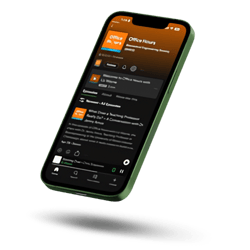
In this episode of Office Hours, Liz Wayne talks with Shelly Sakiyama‑Elbert, Vice Dean, Research and Graduate Education, Professor of Bioengineering at University of Washington, and President of the Biomedical Engineering Society.
From nerve regeneration and stem cell biology to academic leadership and professional service, Sakiyama-Elbert shares how she balances research, mentorship, and administration while helping shape the future of biomedical engineering. Together, Wayne and Sakiyama-Elbert unpack what it really means to build strong academic ecosystems, lead with purpose, and support the next generation of engineers in a rapidly changing world.
Office Hours: Episode 7

Nerve Regeneration and Academic Leadership —
A Conversation with BMES President Shelly Sakiyama-Elbert
Available on: .svg.png?width=39&height=39&name=Podcasts_(iOS).svg.png)

Podcast Addict | Podcast Index | And Other Podcast Players | Download the Episode
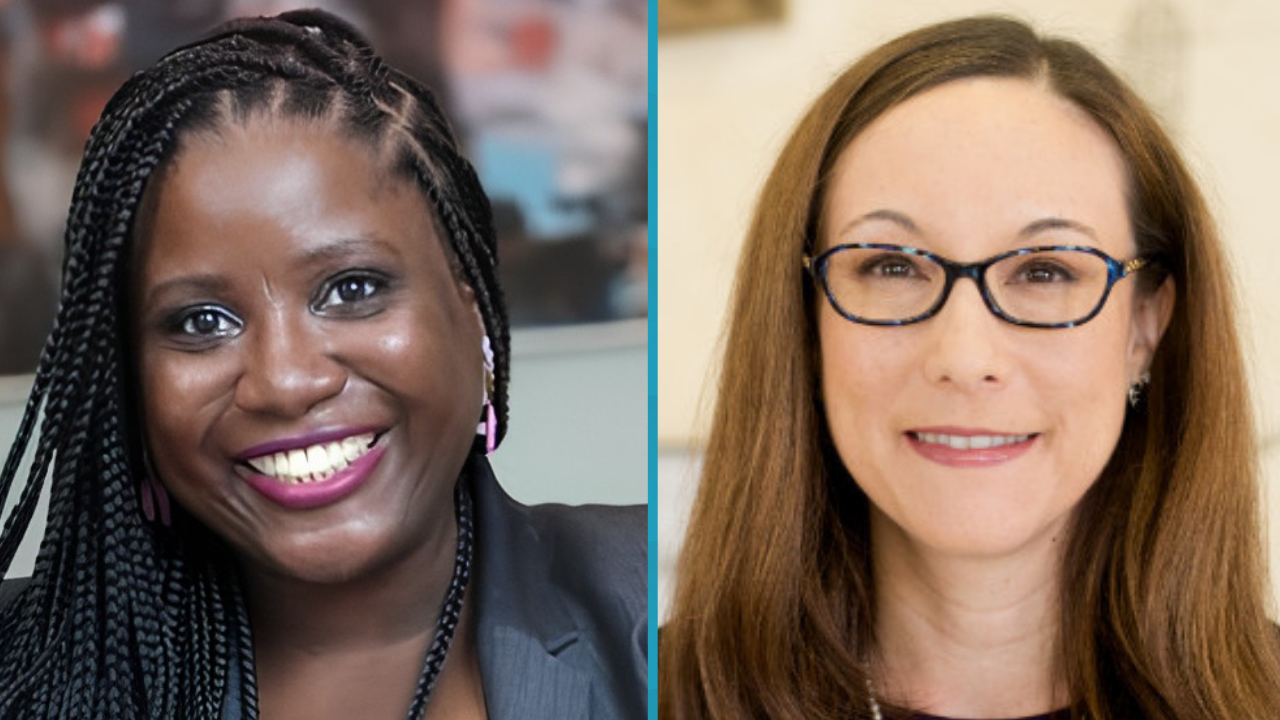
Dr. Liz Wayne, Office Hours Host & Assistant Professor at University of Washington; Dr. Shelly Sakiyama-Elbert, this month's guest, BMES President, Vice Dean, Research and Graduate Education, Professor of Bioengineering at University of Washington
Episode Extras
-
Learn More About Dr. Shelly Sakiyama-Elbert
Shelly Sakiyama-Elbert, Ph.D. is the Vice Dean for Research and Graduate Education in the University of Washington School of Medicine and Professor of Bioengineering. In her current role, she oversees all research activities, research space assignment, and PhD programs in the School of Medicine. She earned a S.B. in chemical engineering and biology from Massachusetts Institute of Technology, and a M.S. and Ph.D. from California Institute of Technology. She joined the faculty at Washington University in Biomedical Engineering in 2000 as an Assistant Professor, where she advanced to the position of the Joseph and Florence Farrow Professor of Biomedical Engineering and Vice Dean for Research in the School of Engineering. She served as Department Chair and Professor of Biomedical Engineering at the University of Texas at Austin from 2016-2022. Her research program focuses on developing biomaterials for drug delivery and cell transplantation for the treatment of peripheral nerve and spinal cord injury. She was Co-Director of the Center of Regenerative Medicine, as well as a member of the Institute of Materials Science and Engineering at Washington University. Her honors include Senior Scientist Award - TERMIS AM (2023), Fellow of the National Academy of Inventors (2017), Society for Biomaterials Clemson Award for Basic Research (2017), Outstanding Faculty Mentor from the WU Graduate Student Senate (2015), WU Distinguished Faculty Award (2013), and WU Dean’s Award for Excellence in Advising and Mentoring (2008). She was elected Fellow of the International College of Fellows in Biomaterials Science and Engineering in 2016, the American Association for the Advancement of Science (AAAS) in 2015, the Biomedical Engineering Society (BMES) in 2013, and the and the American Institute for Medical and Biological Engineering (AIMBE) in 2011. She served as the President of the Society for Biomaterials (2020-2021) and is currently the President of the Biomedical Engineering Society (2024-2026).
Links to Dr. Sakiyama-Elbert's Work
-
Read the Transcript
[Music]
Liz Wayne
Hi everyone, and welcome to office hours with Liz Wayne, a brand new podcast brought to you by the Biomedical Engineering Society. I'm Liz, an assistant professor in bioengineering, and I'm going to introduce you to the world of biomedical engineering through my eyes or my voice. From genes to machines, biomedical engineers can do it all. We'll dive into how discoveries are made, how research becomes medicine, and what it's actually like working in academia today. So, whether you're a student, researcher, educator, or just someone who is curious about science and how the academic world works, you've come to the right place. I'm so happy to have you here for our next episode of office hours with Liz Wayne. I am Liz Wayne, and with us we have Dr. Shelly Sakiyama-Elbert. She is a Professor and Vice Dean of Research and Graduate Education at the University Washington School of Medicine. And in her spare time, because she has so much, she actually is also the current president of the Biomedical Engineering Society. So, she's here to talk to us in a very informal office hours, to share her secrets, lessons learned and how to be so stylish when wearing so many hats. So welcome Shelly.
Shelly Sakiyama Elbert
Thank you. Liz, it's great to be here.
Liz
It's always good to see you. Happy New Year. Are you having a good new year? Is it happy?
Shelly
Well, it's off to a busy start this year. And I always feel like, you know, on the quarter system, which University of Washington is on the quarter system, I always feel like it's a very abrupt transition back from the holidays because we start classes so close to the new year. So, it always just feels like zero to 60 here. But excited to be in the winter quarter here and keep things going.
Liz
Yeah, I'm excited, and I'm still adjusting to the quarter system as well, I think. I always sign a petition to be on semester system if they could do it. And also, the beginning of the year always brings crazy traffic. You know, that usually calms down the first month or so, but it's always hard when I forget that everyone is just- the traffic patterns are different. It's going to take you 30 minutes longer to get to campus, than it usually does if you're trying to drive, but that's neither here nor there. That's just the coffee. So I was mentioning that Dr. Sakiyama-Elbert, who I will call Shelly, wears so many different hats. And so one of the things I like to talk about, maybe starting, is actually talk about what some of those hats are that you wear, and so the first one that you started doing was your role as a professor, and I'm really curious about your work in stem cell biology and nerve regeneration. So maybe you could start by describing in your own words what your research is.
Shelly
Sure. So, my lab looks at nerve injury and thinks about how we can use biomaterials for drug delivery and cell transplantation to improve regeneration. And I really got into this area because I was interested in biomaterials. The lab I worked in for my PhD did a lot of biomaterials work, but not a lot of nerve work. But when I was actually a senior in undergrad, my very last semester I took this elective course on tissue engineering with Linda Griffith, and my project for that class I ended up doing on nerve injury and nerve regeneration, and so that got me really excited about that as a topic. And there was one other person in the lab working on nerve injury, and I decided I wanted to join that project, because I was so intrigued from that reading that I did when I was finishing off undergrad.
Liz
Yeah, and I think that's really cool, because I don't know it's kind of hard to think about how you can heal nerves, and how it feels like when people have spinal cord injuries, it feels so permanent. And so there must have been something that you thought maybe my research or things that I can do can actually help people heal and maybe be able to gain function afterwards. So why is nerve healing so hard?
Shelly
So that's a great question. So, my lab actually works on both peripheral nerve and spinal cord injury. And so peripheral nerve is really interesting because it does regenerate, not exceptionally well, but it can regenerate. That's an interesting place to start. That was where I started.
Liz
Wait, and then peripheral, you mean other parts of the body, right? Like arm, legs?
Shelly
Exactly, anything outside the brain or the spinal cord. Yeah. So, your hands, your legs, torso, pretty much anything else besides the spinal cord or the brain. So that's interesting and when I started off my career at Washington University, bioengineering was so new there that we didn't have a building. There were like four faculty, and so I ended up in Department of Surgery. The division of plastic and reconstructive surgery. That's where my lab was, because the people who repair nerves clinically, the peripheral nerves, are plastic surgeons and so I always thought it was really funny to say I was a plastic surgeon, but it was actually really great for collaborations, because there were tons of people who were doing nerve reconstruction clinically, and lots of really eager medical students and residents to collaborate with for animal work. So, it was a great space to be starting in. So I started off both in grad school and then early in my faculty career, doing a lot of peripheral nerve work, but was really interested in spinal cord partly because one of my brother's friends in high school had a spinal cord injury from body surfing, and then also, just because it's such a challenging problem, you know? I mean, we still don't have great therapies for people with spinal cord injury, so really trying to understand, like, what are the barriers there, and what are all the pieces we need to fit together to solve that problem? So, I think it's good to pick a really hard problem, because, you know, if you solve it in five years, what will you do with the rest of your career? So, I think it's been interesting. And I think the advances of our understanding in terms of stem cell biology, how the nervous system works. You know, all the different cells in the nervous system. And really, people starting to think more holistically about the role of both cells, molecular cues and also electrical cues, right? Stimulation and sort of absence of normal electrical cues. I think all of that together is probably the key to really solving the problem and figuring out how to put a really complex system together, right? I think engineers are really good at those kinds of problems, so I think it's fun to think about some of those challenges and how to integrate all those cues.
Liz
I see. And so that's why you would say nerve regeneration would be so hard, because it's not just cellular, it's also mechanical and electrical. And being able to recapitulate the human system is really hard. I imagine some of this also has to do with, like, I don't know, developmental stages, like, like, can we regenerate as humans, or, I mean, as adults, or is it something that kind of, some of the biology stops as a baby, or whatever, and then you were really trying to recapitulate what happens. Can we make what happens as a baby happen as an adult? I don't know.
Shelly
Yeah, I think that's a great comment there too, because we do think about that a lot, especially in the context of using stem cells, or stem cell derived progenitors or neurons, as part of our approach to treating nerve injury is then by using these immature cells, then, does it change the rules, right? Because adult cells don't necessarily like to regenerate, but if we're putting in immature cells, are those inhibitory cues still a barrier? So, I think there's a lot of really interesting questions to ask there, and what makes something a barrier? Maybe if it's immature, they just don't even see the inhibitory molecules, they don't have the receptors right? So, I think there's so many interesting questions in that space to think about in terms of, how do we really tackle the challenge? And then, of course, the other question is, can you then sort of fast forward the aging right and turn them into the right kind of mature cells at the right time, because if you transplant progenitor cells, you don't want them to take 10 years or 20 years to behave like adult cells, right?
Liz
Yeah. Oh, that just sounds so challenging. And so, I know some of your work you actually do, try to do. I know the right word is develop, but right you differentiate, you characterize, you develop stem cells that you would transplant ideally, and then you have to think about the biomaterial, which would be the scaffold, so you're trying to make tissue that they can incorporate into. What types of therapies would be useful for the kind of neural stem cell biology that you're working on in biomaterial strategies?
Shelly
I mean, we primarily think about spinal cord injury, and probably not right after injury, but probably, you know, weeks to months after injury, because patients usually have a lot going on. Often the injury is from a traumatic incident, so they kind of need to stabilize first. I think the other space we also think about peripheral nerve injuries, so there's lots of different peripheral injuries that could be relevant. And then I think the other spaces that we think about that sort of might interface too, are thinking about degenerative diseases. So ALS, as an example of one disease that might also be interesting, especially because some of the neuron populations that we study are known to play a role in ALS as it progresses. So I think ALS could be interesting, and maybe even to some extent, MS as well.
Liz
That's really interesting to think about. I was thinking about your comment about peripheral nerves, and I was actually thinking about people who have hand tingling or these sensations. Or let's say if you have diabetes;I think people think diabetes, you have challenges regulating sugar, but then that ends up affecting all of the vasculature, cardiovascular systems, which also ends up hurting the nerves in those areas. Is this a technology you could help with those people with these symptoms?
Shelly
So for peripheral neuropathy, I think that's another area where some of the approaches for peripheral nerve could be useful. And I think also, oftentimes when we think about regeneration of tissues, and I'm thinking kind of more wound healing now, but people focus in on sort of healing of healthy tissue, but a lot of times you have these compound injuries, right? Like you have people who have diabetic neuropathy, they can't necessarily feel their foot or their hands so well. So, then they have an injury, right, that's caused partly, or they don't realize how severe it is, and maybe they don't get it treated right away, because they can't feel the pain, right? And so then it's worse. And I think that's, again, kind of an extra challenging situation about how do we promote regeneration when there are these extenuating factors that make it harder for recovery to occur?
Liz
Yeah, I was asking, I think with some time we talked before, and I asked you about what has changed since you first started this research to like, where you are now? And you kind of made a comment, I was hoping you could expand on just about, like, the time it would take you to say, develop cells now versus what people can do now with stem cells. Can you talk about that?
Shelly
Sure, yeah. So, I think we were talking specifically about developing new cell lines and CRISPR, I think has just, you know, made such a difference for many groups and how they approach genome engineering. And so, for us, one of the challenges when we started first doing these spinal cord injury studies was we would do these differentiation protocols and we'd get maybe, like, 40% or 60% of the cells differentiating into the right kind of progenitors. And then we kind of had this soup of other cells, right? It was just a real mixture. Think of it like a minestrone soup or something, where you just had all these different vegetables, right? But we only really wanted, say, the carrots. So, it was a real problem. And the problem too was that these other cell types could make tumors, potentially, if you transplanted them. And we saw that happen one time when we left them in for a long time. So, I think that was a real challenge. But literally, there were the first kind of cells that we worked on in this area, before CRISPR came out. It took, like, a year to make the cell line, and then, you know, longer to characterize it. It was a major part of that person's PhD project just to make the cells and it took a collaborator who really had that expertise in genome engineering, whereas now with CRISPR, you can make the cell lines so much faster, it's so much more efficient, and then if you have the right screening strategies, you can screen them pretty quickly. So, our ability to make just a whole plethora of different cell lines. It really became an enabling technology. And I think it was amazing to watch, because if you think sort of the seminal papers for CRISPR were published in 2012 and by 2015 we were using it in our lab like it was commonplace enough that someone who wasn't an expert in that space, was able to use that technology and do it so three years, which, as you know, is just so fast on the scale of science.
Liz
I know, and there's thinking about what that means for our PhD students’ work, and then the scale of the kind of questions that we can answer, and I think even the expectation of how fast we should be answering questions now. Yeah, I find it really interesting to think about, even in my PhD, what has changed, where I thought, okay, I learned how to use this technology, and I can use it really, really well. And then maybe a year or two into being a professor, oh, wait, now there's a new technology. And actually, you don't have to do that by hand anymore. You can buy that instrument, right? So, it's really interesting and exciting. Because, wow, I wish I could have had that then. But then also trying to learn the technologies, and again, like figuring out, like, where that new edge of discovery is can be challenging, I think.
Shelly
Exactly, I'd say another thing is sort of similar, you know, it's just like our DNA sequencing technology, and then, you know, and how that moves over into RNA-seq, you know, and other kinds of Omics technologies, right? I remember when gene chips were like the cutting edge, you know that you could have this panel of probes, and not just like specific PCR probes that you had intentionally put there, and now we can sequence everything, right? So, I mean, that's just amazing. And not just RNA, right? Like, the other day, we sequenced the microRNAs and exosomes. So you can really get just so much information about what's happening in the cell with all these different kinds of molecules. I think that's still amazing to me.
Liz
Yeah. And how do we figure out what's most important and what to do with this information?
[Music Break]
Liz
You work as a professor, and you're really, I still think, doing cutting edge work on, how do we actually make neurotransplants that are actually going to have longevity and function and be successful in the clinic, and how do we understand, like the cell, the neurobiology that is necessary and for my biomaterial incorporation to make this happen, make it a reality for all these people that could benefit from this. And at some point, you thought, okay, I like the research, and I've been in academia for a while, and now I like this ecosystem, and I want to figure out how to help make this ecosystem for research better. What was this process for you? And how do you decide to kind of start pursuing admin as well.
Shelly
You know, I think I'm bad about saying no. I'm bad at saying no, but I think I'm also somebody who likes to jump in and help with things. And for me, it really started off when I was an assistant professor, I was on the Graduate Admissions Committee. It's kind of a self serving committee, because it means you get to pick which grad students get admitted. So, you can kind of be looking for the ones that would be really great for your own lab, right? But after being on that committee for a while, I thought, well, there's things I could do better here, like we could change this, or that would be more efficient. This would help us really get students in different areas. And so, then I was like, oh, well, would you like me to chair this committee? I'd be happy to take this over. The department was pretty small then, so there weren't a lot of people who were, like, jumping up and down with their hands in the air. I think the chair of the department was chairing that committee at the time. So, they were like, sure, you take this right? So I did that - five years of running admissions, and I got tenure in that time period. And then I started thinking, Well, I'm running admissions, and also I was doing the recruiting weekends. But I thought, well, but then those students get here, and I see some of the things that we could be doing better to support them once they were here, like, how could we help them get acclimated better? And how could we help them make sure that they're navigating their milestones for the program, like finding a lab and, getting through their qualifying exams and their thesis proposals and all that. Like, how do we make sure that they are really navigating that with support?
So then I proposed, well, I'd be interested in being the graduate program director, and so I took that over after about five years. So I really had the opportunity to think about what could we do better here? How could we make this more efficient? And the program had gotten, in that time, had grown from a pretty modest program when I was starting because there weren't that many faculty, and then it grew to, like 100 students. So, there were a lot of people coming in every year to keep track of, and make sure they found labs and make sure that people weren't slipping through the cracks and things like that. So, I think it was a really good experience for me. And there's a lot that you're touching on, obviously helping students navigate a curriculum. But there's also a lot of interpersonal challenges between PhD students and their mentors, right? So I was learning how to navigate that, helping students navigate all different types of crises. You know, there were always students who had challenges, whom, as they were hitting that deadline to pick labs - so helping them learn to navigate that and learning how to partner with other people in the university and provide them support. So I think that was a really good experience about starting to think about, how do we make this field better for everyone, and how do you learn to navigate the system outside sort of just your department or your little research area, which you obviously need to learn to navigate as well. And that got me interested in thinking about leadership. So I was doing this for a graduate program. But you know, what about a department? Or what about at the school level?
Liz
It just kept going. I see the trend here. I see where you're going, Shelly. But I mean, this is awesome, especially now, again, when your roles as Vice Dean of Research and Graduate Education and seeing how they all fit. As a professor now, I think I'm having the same kind of like thoughts that you're having, like you're teaching, you're doing research, you're grant writing, you're doing all of the things that this job encompasses, and some of the things you do are self-serving or like, yeah, you want to pick students because you want to be on the committee. You want to find good students. But you're also thinking about how systems and structures could work better. I think one of the misconceptions I had when I started the job, and I say misconception, but I think I just didn't even think about it at all, was that this was a job. And by that, not necessarily that personally, I was putting in work. You know, I knew I was working. I knew it was a job. But I think the idea that academia itself is like an organization that is like a company that is cohesive, that has structures and works together, because so much of academia, at least in like, the public sense, people feel like I can do whatever I want. I'm a lone person, and I'm like, not working, and I'm curious, like, what your ideas, or maybe ideals, are about what it means to view academia as a organization that could be improved is, versus the individual, personalized pursuit of like, I use this forever and I want. Does that make sense when I'm asking?
Shelly
I think so, yeah. So I'll kind of start, and then you jump in if I'm like, way off. So, I think it's challenging, because I think you know to excel and get to the point where you're a faculty member in academia, you have to be really on top of your game. You have to really know the science and the engineering, right? You have to be a good researcher, a good writer. You learn to be, usually, you learn to become a good teacher, right? So, there's all these pieces that, you know, I mean, obviously there's supports there, but there's a lot of work that you do individually. And I feel like a lot of things in our system sort of recognize individuals for what they do, you know, kind of as an individual unit. So, I think it's challenging because we don't live in a vacuum. We don't work in a vacuum, right? We're teaching students, we're training the next generation of researchers. We're usually working on research teams, even be on our own labs, and then thinking about how do we work across universities, through professional societies, through engagement with government and our fields? And then how do we share this back to society? Like, how do we make sure that the important work that we're doing gets shared out and that people understand what we're doing? And so, I think it's hard, because I think a lot of what academia rewards are those individual things, right? And what we hold up as excellence is sort of these individual things. But I think the reality is we are part of a system of a large organization, and in almost every institution, there are things that they do well and things they could do better, right? And so, I think it's about figuring out what we could do better, and then figuring out, is that a priority for that institution? Where do we get the resources to do that? And where do you find the team to support that at work? And sometimes the answer is that isn't a priority, and I think it's really hard to hear that sometimes, but I think it's important to realize that, right? Because if you're really fighting for something that isn't a priority, that can be a really frustrating situation. But I think there are a lot of folks who are really thinking about how do we train the next generation of people? How do we make academia a place where more people feel comfortable and sort of demystify a lot of the unwritten rules that are in academia? I think that's really important work that we need to keep that continuing.
Liz
I like that you were talking about demystifying. And I think for many people, higher administration in a university can feel like a mystery, and it can feel... I've heard, right? There's always that whisper like: those higher ed people, they don't know what they're doing. They're not talking to people, you know, there's all these things. And so I'm hoping that you'd be willing to share what, in your mind, you think is the role of higher admin and education, the roles that they serve, and why it's so important to have that leadership.
Shelly
Yeah, so I've been at three universities as a faculty member and two other ones as a student, so I think you definitely do get to see a whole variety of leadership on display at different places, at different times. And I think you get to see what a difference good leadership can make, right? One of the ways I ended up in leadership is because I'm not very good at keeping my mouth shut. So, I will share them, and that's how I ended up on the first dean search committee I was on as an assistant professor. Later, I was like, are assistant professors supposed to be on a dean search committee?
Liz
They are now.
Shelly
But when the chancellor calls you don't say no. But I think it is valuable, as a leader, to be really plugged in and getting the information. And I think it's really challenging, because I think the higher up you get in leadership, the further you are away from a lot of people, and the harder it is to know what's really happening on the ground. So, I think that's one really critical thing for leaders is, as they move up, how do they stay connected to students, to everyday faculty, to staff, right? And how do they know what the real challenges are in the different spaces? Because if you're at a big university like University of Washington, there's so much variety between departments, between schools and so I think knowing what's going on in the different spaces is challenging.
Liz
What is the role of higher admin for universities? I know it's philosophical, but...
Shelly
That's a good question. So I think part of it is defining what is the focus and the mission, and what are the goals at that particular time? So, sort of strategic planning, right? Having a strategy and a plan and a vision for what that institution is going to focus on. And I think at Burbank University, like UW, that's complicated, right? Because we've got research and education in so many different areas. So obviously, research and education are important, and we have, a healthcare system that's part of our university. So obviously clinical care is important there too, and service more broadly. But I think within those spaces, you have to define what are the priorities and for everything that you're going to do, you also have to think about, what are we not going to do, right? And those are really hard choices. And, I think you have to think about how am I going to wrap my head around this big place, right? There's all these people. And understand all the amazing things that are happening here. So, I think that's a challenge. I think it's also really critical right now to be thinking about, especially at public institutions, we're here to serve the public, right? We're here to serve the state, right? We're here to serve the nation. And so, are we accomplishing those goals? Are we training the next generation of leaders? Are we educating the public in our state, and beyond, and are we doing that in a way that's really meeting the needs, because they're going to transition; going to be here for four years, they're going to graduate, they're going to join the workforce. Are we treating them for their futures, and again, realizing those are often so broad, right? So are we giving them opportunities that are really going to prepare them in all different areas, not just, obviously their majors, but also like leadership, and engaging with the community, and in learning to think broadly, which I think is so important as well. I think that's a really challenging problem. And then how do we convey that back to the public, right? I think right now there's so much antipathy towards higher education. So, I think it's also so important, and we've seen this this last year, to be making sure that we're really communicating all the good things we're doing and all the work we do to engage with the community and what a difference we make, you know, in all these different areas. You know, I obviously think in the health space, but there's so many different spaces where we have impact, and the university also has a big economic impact on the region, too. If we think about the research money, the jobs at the university, the technology that's spun out and commercialized, so thinking about which of those pieces are we doing well, and which of them do we need to do better, and you only have so much time and money. So where are you going to focus those resources?
Liz
Right. And then admin, as you mentioned, the leadership here is important in helping guide those conversations. I like that you mentioned the research, the importance to society and to the community, and making sure those get reported back out, both to the government, where a significant amount of our federal funding comes from, the state government that funds and also supports tuition for our public universities, private foundations, alumni. And how do you make those hard decisions about where to prioritize? This is all super important and really, really hard to do. And I think the last okay, I would say the last year, but I think every year has really brought something about what those new challenges are.
[Music Break]
Liz
So, you've been in this role now for two years, three years?
Shelly
Three years, yeah.
Liz
Three years! Is there something that surprised you about this job?
Shelly
That's a great question. So, I love this job that I'm in right now, because I get to support the research for the whole school of medicine. And it's so fun, because every week I learn something new that we're doing, something new that we're studying. So just the breadth I mean, it just continuously amazes me, how many things are going on. You know, when you have 1000 PIs like, there's always someone new, whose work you're learning about That's the fun part for me. I'm always intrigued too, because we're very decentralized, so we've got 31 departments in the School of Medicine, and you do things 31 different ways.
Liz
It’s Baskins-Robbins.
Shelly
It is, right! And so, I think sort of trying to figure out what's going on over here and what's happening over there. I think it's really interesting. And I think for me, I've really enjoyed getting to know not only the more basic research in our preclinical departments, but I've also just been amazed by the spectrum of work in our clinical departments too. So, I think getting to know that work better has been really interesting.
Liz
That is so huge. And then you also helped shape some of the portfolio for the School of Medicine's research and thinking about initiatives that transcend multiple departments. This just sounds like a lot of fun and a lot of responsibility. The first thing I thought was, like, how do you do this? And I think every time I see an admin, and I'm using that to refer to anyone that's above faculty levels, even department chairs, how do you do this? Like, logistically and because you're still a professor and you still have a research program, how do you choose what's important in your day or week, month, year? How has it changed how you do your job?
Shelly
Yeah, so I think it's definitely shifted, you know, as the roles have shifted over time, and it's kind of been like a gradual- like the frog and the pot of boiling water, maybe a little bit, but definitely, I do have to block out some time each week to make sure I do have time to think about research and meet with people from my lab, and have lab meeting, and be working on those things. It is hard to hold that time, so I think that is a challenge, but I think sort of finding that balance, and I think you also need to be part of a team, right? So, I think as I transitioned, especially to be department chair, and now into a vice dean role, I think really having a great team that you work with, faculty and staff, that are supporting those efforts. So, when I was department chair, having a great team of associate chairs who were leading graduate programs, were leading faculty search, you know, were leading undergraduate programs, et cetera. I think that was really critical, and the staff that was supporting all of that. Realizing you don't have to do everything yourself, right? And I think for me, in this new role, I also have- well, I guess it's not so new now, but I really have a great team of faculty and staff that support my work here. So, we, especially this year, we've just been asking a lot of questions and doing a lot of data analysis and trying to understand when things are moving really quickly; how's this going to impact us? Realizing that I have an amazing data analyst, and so I don't need to try to figure out how to get this out of the database. I just need to ask a question and partner with him to figure out how to get the answer, you know? And he's amazing at doing that. He's been saving our bacon here. And having a great partner, I'm not an expert in clinical research, but I oversee clinical research, so having an expert that I can partner with on the clinical research side to really help addressing some of the issues there. So, I think that's one of the keys, too, building a great team of people you know that you enjoy working with, that you trust, that are all pulling in that same direction.
Liz
And I think honestly, as you say this, I just wanted to point out that this is actually what everyone should be doing. Like, the answer to how you do anything at any stage of your career is actually about having a good team, learning how to delegate, focusing on the goals and, like, shifting priorities so it doesn't matter, like, how many more tasks you get, necessarily, it's about your ability to manage them, and you do it as a team, not individually.
Shelly
Totally, and I think one of the hardest times is when you're starting a faculty position, and you're taking on all this new responsibility, and you've got a lot of things you don't necessarily know how to do well. So, I think one of the keys is building your team there, right? And you may not necessarily have that many people who are working for you. Or that you're sort of at the top of the org chart there, but I think building that network of peers, and of mentors to get advice on writing grants, or mentoring students, or just tackling different challenges that come along can help you become a better teacher, right? I think it's that peer and mentor network that's so important to build. And if you build it, it will evolve over time as your career progresses, right? But I think you always still need that.
Liz
So true. And I'm thinking about like, how this applies to me and things I should be thinking about. And I think one of the things that's hardest about starting a new lab is that it's hard to delegate very many tasks, because you're actually the most skilled person in the room oftentimes, or you're just the most knowledgeable, and it's hard to actually delegate certain tasks at such an early stage based on the strengths of the academic ecosystem, and like, our goals and missions about education and research. But then things get easier over time. So, you have a lot of experience and thinking about how education can be improved and how research and aligning university goals so that they're serving their community. But then you've also got admin experience in a different kind of community, which actually spans multiple research universities, which is being president of the Biomedical Engineering Society. And so, some of our listeners, hopefully know, because they're listening to a Biomedical Engineering Society sponsored podcast. But what does BMES do? Like, what does being president of BMES entail?
Shelly
Exactly sure. So, yeah, so as president of BMES, I oversee everything that we're doing, and work really closely with executive director and all of the staff to execute various different activities, work with the board, the executive committee. I think it's a fun role, I really feel like it's giving back to a community that, for me, has been there, mentoring and supporting me since I was an undergrad. So, I don't think I would have gone to grad school if I hadn't sort of almost accidentally ended up giving a poster at BMES my senior year. The grad student that I worked for ended up not being able to present his poster, and so kind of at the last minute I went. It happened to be in town, so I went and presented his poster at Boston University. They were hosting BMES that year. That was back when it was small enough that you still had it like in the Student Union.
Liz
That's very cool, though.
Shelly
Yeah. So, I went and presented a poster there, and was talking with different people who were coming around. And I still remember one faculty member who came around and was talking to me about the poster and kind of worked in a similar area, and at the end he said, “Oh, what year grad student are you? Are you like a third year grad student?” “I’m an undergrad.” And then he very quickly switched gears to, well, you should really apply to my university. And I was like, oh, I mean, I was thinking about applying to graduate school and that sort of laid the foundation, you know, for what I needed to do to do that. But I wasn't really sure about doing a PhD at all. And that was really one of the two sort of tipping point things for me, was that experience, and then my mentor, Linda Griffith, we went to dinner that night with the lab, and she picked me up, and we were driving there, and she was asking me what I was going to do the next year, and I said, I don't know. I'm applying to grad school and I'm applying for these jobs. And she was like, “you have to go to grad school. You have to” and I was like, Oh, okay. So, you know, having those reinforcing voices, right, I think, is really important. So I think we got a little off track with this story.
Liz
It’s a BMES love story.
Shelly
Yes! The point of my story is that BMES was a really pivotal place for many people to kind of get that first chance to present their research as an undergrad or as a graduate student, and then to also make connections to mentors and leaders in the community, and see what's out there for them beyond their own institution, to see that there's a path forward for them, and so I think it's really critical for our fields, and I feel like it's- for me, I think it's really an honor to be thinking about how do we continue to grow and build and sustain this organization that I think is important to so many of us and has had a big impact on our careers. So here I am now as president. I sort of did the Assistant Professor things, you know, you review abstracts, you chair a session, and then one day in the summer, I was at a Gordon conference, and I got an email from someone who is very distinguished in the field, and was on the leadership and asked me to run for the board, and I was like, oh, okay. But I thought, well, not that many people know me. But I did, and I ended up on the board. And I think that was a really great insight into what was happening at a higher level of the society, and at that particular time, like all the board members were supposed to be on at least one or two committees, and then after a while chair a committee. So I think that was also insight into getting leadership in some of those other spaces too, at BMES, and thinking about the field more broadly.
Liz
I love that, I love that you share your first insight into BMES and how it was really pivotal, and you deciding to go to grad school, which ultimately led you to having this wonderful career. I was a physics major in undergrad. I didn't know what engineering really was. I knew what physics was, and I loved physics, as nerd, but I actually learned about bioengineering because a lot of my friends were in Biomedical Engineering, and they had a fancier building, and I would end up hanging out with them a lot more often. So eventually, I was looking at grad programs, and I looked at a lot of places, and eventually ended up at Cornell for biomedical engineering and then my advisor invited me to go to my first conference. And it's like, I remember my first BMES conference, and I remember San Diego and the experience of being there and in the room, and how I met people, that then led to meeting other people and just feeling like the more you go, the more it's a community of people that you know you respect, you feel happy to see. You feel more invigorated about the research and the field, and so supporting the society is about building that community that spans more than just what your lab is, and remind you what you're doing, and yes, helps you connect, and helps the next generation kind of keep the torch going. And so it must be pretty exciting to be in the boardroom to now think about those decisions, about how things are done, and what keeps this experience going for people. What are some of the challenges- I don't want to say challenges, because it sounds so negative, but I imagine that it's not always nice being in the boardroom, or you have to, similar to being in higher admin, in higher education, be making difficult decisions, because it's a lot of work And a lot of money to run a big conference and to run smaller conferences and memberships and awards. So, what kind of challenges or goals or next frontiers that societies face, professional societies?
Shelly
Well, I think the thing with professional societies is you always have to be thinking about who are your members? Who are you really there to serve, right? And are you serving all the different groups? I think in BMES we have a lot of students that come to our meetings. We have a lot of student members, and they're a key lifeblood for our society, because we always need new people coming in at the same time, many of those students graduate, and then they go on to industry, and they don't necessarily stay engaged. So, I think one of the ongoing challenges for BMES that we're still working on is how do we stay relevant for those students as they go into different fields? And how do we think about who else might be great to have engaged. And what would excite them, to bring them in and have them involved. So I think those are sort of challenges, but they're sort of fun to think about too. I think over the last five, well, I guess now six years, I think there have been a number of challenges for societies. First Covid, managing all the adventures there, which were not unique, but everybody thinking about how to deal with meetings and going online, and then trying to deal with coming back, and what was the right format there. That has definitely been one challenge. And I think the other thing professional societies are looking at right now as well is in this current funding landscape of uncertainty, people are cutting back on travel. They are cutting back on different things. If universities are having tight budgets, how's that going to impact some of the other activities we have at BMES? We have a lot of universities that are advertising for grad students. People don't have as many grad students they're recruiting. How's that going to- what's our exhibit going to look like next year? So I think thinking about how to address those issues and stay relevant in a changing environment, and how to continue to meet members’ needs. You know, you normally go to four or five conferences a year, and you don't have as much money this year, you're probably going to go to two or three, right? So how do we stay on that list of two or three?
Liz
I love that, because I love that research in our basic labs are not the only way. So we could think about innovation and fostering the new frontier of knowledge, and design and expertise, and it's really interesting to think about the importance of keeping the structures that allow us to do that individual exploration available, which is what professional societies like BMES and the role of higher administration people do, because that's again, it keeps the ecosystem going, and we need the innovation and creativity to think about that, because every year, every generation will bring new challenges, and it's about facing them and thinking about what do people need now. I'm happy that someone like you, Shelly who is thinking about these things are actually at the helm, leading us in this direction.
[Music Break]
Liz
As we start to close, I'm kind of curious what you’re most excited about these days? You know, besides the Seahawks.
Shelly
Besides the Seahawks, number one seed in the playoffs. So, I think this is an opportunity for us to think about how we do things now, and to maybe ask a few more questions than we normally do. Universities are kind of stuck in their ways of how we do things, you know, a little bit, right? So I think it is a time for us to think about, how are we doing things? Is that really the best way to do them? Could we do them better and how do we continue to hold up the things that are most important, even in a challenging, changing landscape. So I think I really appreciate our provost, because I think she's really taken that mindset and that focus of we are going to be resilient. We will come out on the other side of this. Things will look different, and universities, in general, have lived through turmoil and challenging times, many times before, right? I mean, many universities have been around 150 years or longer, right? Thinking about obviously they don't look the same as they did 150 years ago, and I don't think either of us would be sitting here 150 years ago.
Liz
No, I was gonna say it.
Shelly
So, many things have changed. How do we preserve the things that are good, the things that are most important, and the things that we are passionate about continuing in the face of challenges? And what are the opportunities there? So, it's not all like spring and roses and happy times all the time, right? I mean, I think many universities are also looking at budget cuts in addition to what's happening federally. So, I think figuring out how to be resilient in these times, and how to emerge with our most important things, with us as we come out on the other side.
Liz
Yeah, and I would argue, what does education look like now? What do people need? And yes, it's because of AI, and ChatGPT, things like this. But I would also argue the rise that has been happening for over a decade of like YouTubers and just the wealth of digital information and the content has improved dramatically. And I think that if academia still wants to be the person that has the stakehold in saying, this is where you go to get education, this is where you go to learn critical skills. We also have to innovate how we educate in the classroom and outside and engagement before we get completely trumped or silenced in this conversation. And you know now, people say, I don't need University. I have YouTube. I have Khan Academy, right? So for me, that's something I think about a lot. What is the rationale? What is the pain point, the price? Or how are we actually establishing the value of what we do? Because we are not the only people who can generate knowledge. And I think that goes for teaching. It also goes for research, or pharma, or industry.
Shelly
I think that's a great point. Like, as you were saying, that it got me thinking, remember when the first MOOCs [Massive Online Open Courses] first came out, like everybody was like, This is it, this is the death of the university. If you can take, you know, whatever, computer science from MIT, no one else will ever need computer science ever again, things like that, right? I mean, I'm exaggerating, but only slightly.
Liz
No, that was happening.
Shelly
And so, I think everyone was really freaked out. And then, how can we make our version of this? And I think the reality is those things serve a purpose, right? Like, if you want to learn certain content, like very specific content, I think there are many ways you can learn it right, and it doesn't have to be necessarily in the classroom at a university, but I think there is an interactive piece, there is a community piece, there is a piece of collaborative work, you know, the brainstorming and just the great ideas that come out, and the experience. That doesn't necessarily come from online learning experiences. So I think figuring out, what parts can we do just fine with that. You know, maybe we don't need to have didactic lectures anymore. Maybe we do. But I think figuring out, what things are learned more efficiently, like asynchronously online, and what parts do we really need that interaction and discussion and debate and collaboration to learn most effectively? And those are the parts that that I think we need to focus on, because that's the part you can't necessarily replicate online as easily. And so, yeah, I think that we're all asking those questions and trying to find that space and trying to find the balance there, but yeah, I agree with you, I think education is definitely evolving. I see it. I see it with my kids, who are in high school and college, and how they're learning. But it's also super interesting to see what circles back, right? Like when my high school son's English teacher wanted them to really focus on their writing skills, she made them write with a piece of paper and a pen in class, and their essay had to be entirely in class, because she wanted them to synthesize it totally from their brain and not with AI, right? And, and just think about what can you synthesize in a short period of time? I mean, it was actually super helpful for them when they took the AP, because that's the AP environment, right? You have to sit down and write an essay in a short period of time. But I think it also helped them be better writers, because it helped them think about, how do I synthesize without these other tools? And they can certainly use those other tools, right? There's a place for those tools. There's a place for using AI in your writing, but I think sometimes it does make you think, like, where do we need to go back and where do we need to learn how to add these tools in to make it even better?
Liz
Yeah, I agree completely. And I think that as educators, we have to make sure that we're at the forefront of that conversation, or we need to be involved, how about that? Not being involved in it is the worst way to shape the conversation, to shape any conversation, or to be still part of the picture.
Shelly
Exactly. And it is moving so fast right now, it's hard to keep up. But it's important.
Liz
I bet there's someone on your team, or someone in higher ed who's thinking about these things that help us when we come along. I try to read the emails. I don't always. Here's how I deal with the emails. I develop a team of other faculty who I know do read the emails, and then I talk to them, and then they say, “have you read that email?” And I say, “No”. And if they say, “don't worry about it”, I don't worry about it. And if they say, “Oh no, that you should read that one”, I say, “Okay, I'll go read it”. I mean, I read most of them, but you know, it's helpful to have different ranges of friends who read different emails, because out of maybe 10 of you, one of you read each of those emails. I don't know, maybe I shouldn’t be admitting this.
Shelly
You need your team to get all the information.
Liz
Right, my team of email readers. Oh my gosh, that sounds terrible. Thank you so much. Shelly, this has been really heartwarming and informational and I actually feel like I'm more excited about academia right now. We can do this.
Shelly
We'll make it through. And I think we got to make it through together, right?
Liz
Absolutely. Thank you so much.
Liz
If you have questions or ideas for a future episode, feel free to email us at communications@bmes.org you can also stay up to date by following us on social media at BMESociety and visiting our website at bmes.org/podcast/office hours, we look forward to hearing from you and hopefully featuring one of you on the podcast.
-
Want to Advertise with Us?
Reach our growing community of biomedical engineers, researchers, and students by becoming a podcast sponsor. For advertising inquiries, email us at communications@bmes.org.
Share Your Thoughts!
Have questions, comments, or great ideas for the show? We'd love to hear from you! Contact the BMES team at communications@bmes.org.