

Skip to the main content.
About Us

BMES serves as the lead society and professional home for biomedical engineers and bioengineers. BMES membership has grown to over 6,700 members, with more than 110+ BMES Student Chapters, three Special Interest Groups (SIGs), and four professional journals.

BMES Hub

Welcome to the BMES Hub, a cutting-edge collaborative platform created to connect members, foster innovation, and facilitate conversations within the biomedical engineering community.

BMES Hub

1 min read

NANOGELS DEVELOPED AT U OF TEXAS COULD DELIVER NUMEROUS THERAPEUTIC TREATMENTS TO TREAT CANCER

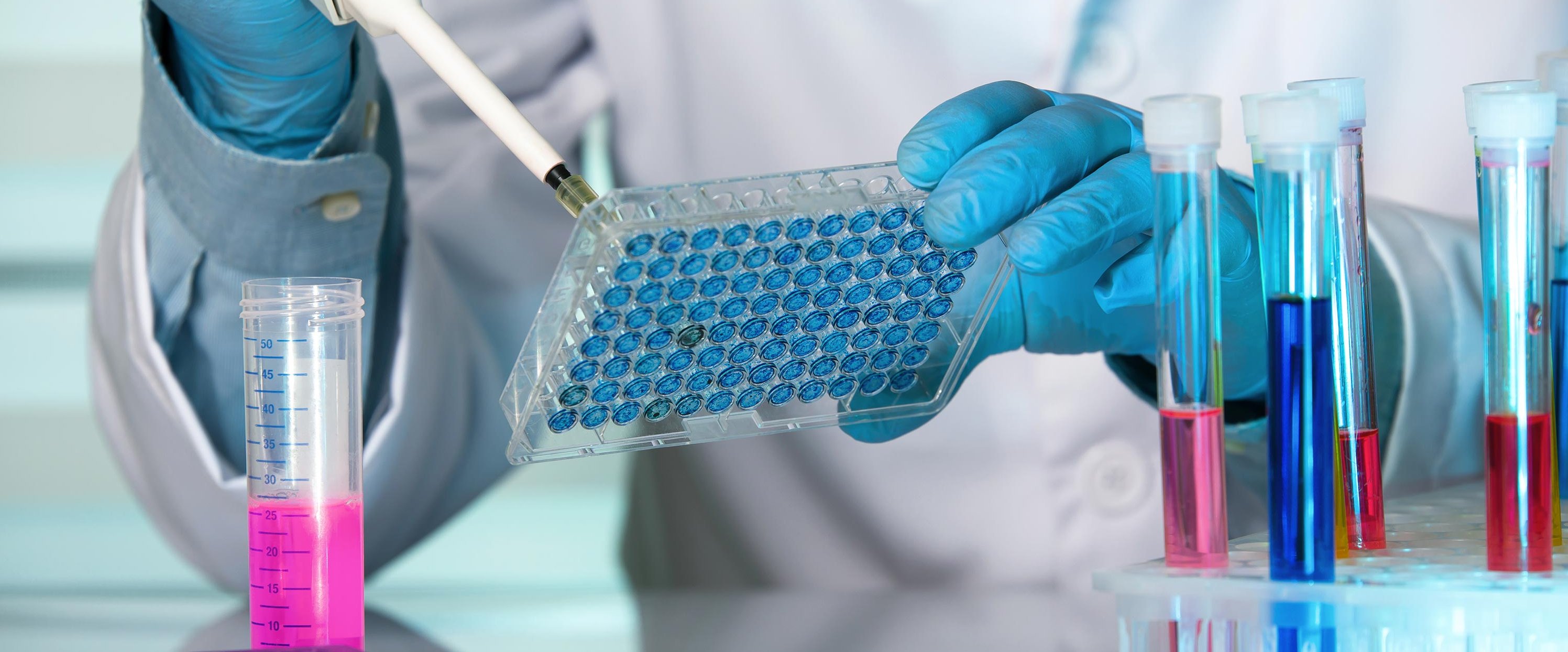
Researchers at The University of Texas at Austin have developed new guidelines for fabricating nanoscale gel materials, or nanogels, that can deliver numerous therapeutic treatments to treat cancer in a precise manner, the university announced.

In addition to enabling the delivery of drugs in response to tumors, the nanogels can target malignant cells, degrade into nontoxic components and execute multiple clinical functions, the article states.

The most important characteristic of the engineering researchers' nanogels is their ability to be chemically modified or “decorated” with many bioactive molecules, the article continues. These modifications give the decorated nanogels more diverse physical and chemical properties than any other existing technique, despite their identical origin. Such systems, which have the potential of being tailored to specific diseases or even individual patients, could be a useful tool for oncologists in the future.

A study published in Science Advances details the work. 

The research team is led by drug delivery pioneer Nicholas Peppas, a professor in the departments of biomedical engineering and chemical engineering and a BMES fellow. 

The UT College of Pharmacy and the Dell Medical School, conducted the study over four years at UT's Institute for Biomaterials, Drug Delivery & Regenerative Medicine, which Peppas directs. 

“One way to think of our nanogel is like a blank canvas,” said John Clegg, who was a Ph.D. candidate in the Cockrell School when he worked on the study and is currently a postdoctoral fellow at Harvard University. Clegg is also a BMES member. “Untouched, a blank canvas is nothing more than some wood and fabric,” he said in the article. “Likewise, the nanogel is a simple structure (made of polymer-joining agents and water).  When it is modified, or decorated, with different bioactive groups, it retains the activity of each added group. So, the system can be quite simple or quite sophisticated.”

Read more HERE.

Announcing the Co-Chairs for the BMES 2027 Annual Meeting

Announcing the Co-Chairs for the BMES 2027 Annual Meeting

BMES is pleased to announce the appointment of the Co-Chairs for the 2027 BMES Annual Meeting in Columbus, Ohio: Dr. Jonathan Song, Professor of...

Read More
Where Science Meets Service: Princess Imoukhuede’s Approach to Impact

Where Science Meets Service: Princess Imoukhuede’s Approach to Impact

Impact in biomedical engineering is measured in lives changed. Princess Imoukhuede, BMES Member and Hunter and Dorothy Simpson Endowed Chair of...

Read More
BMES Launches American Health Discovery

BMES Launches American Health Discovery

Biomedical engineering has become the backbone of modern medical advancements. As we mark the 250th anniversary of the United States, we want to...

Read More
NORTHWESTERN RESEARCHERS FIND DISORDERLY DNA HELPS CANCER CELLS EVADE TREATMENT, DISCOVERY COULD HEL

1 min read

NORTHWESTERN RESEARCHERS FIND DISORDERLY DNA HELPS CANCER CELLS EVADE TREATMENT, DISCOVERY COULD HEL

A new Northwestern University study has discovered that the packing of the three-dimensional genome structure, called chromatin, controls how cells...

Read More
NORTHEASTERN ENGINEERS INVESTIGATE USING NANOPARTICLES TO TREAT COVID-19 AND OTHER VIRUSES

1 min read

NORTHEASTERN ENGINEERS INVESTIGATE USING NANOPARTICLES TO TREAT COVID-19 AND OTHER VIRUSES

Northeastern chemical engineer Thomas Webster, who specializes in developing nano-scale medicine and technology to treat diseases, is part of a...

Read More
HANDHELD 3D PRINTERS DEVELOPED AT UCONN TO TREAT MUSCULOSKELETAL INJURIES

1 min read

HANDHELD 3D PRINTERS DEVELOPED AT UCONN TO TREAT MUSCULOSKELETAL INJURIES

Biomedical engineers at the UConn School of Dental Medicine have developed a handheld 3D bioprinter that could change the way musculoskeletal...

Read More